Loading
Watercolor Daily · Guides
Watercolor Paper Buckling: Why It Happens and 6 Fixes
10 min readBy Arthur Sterling
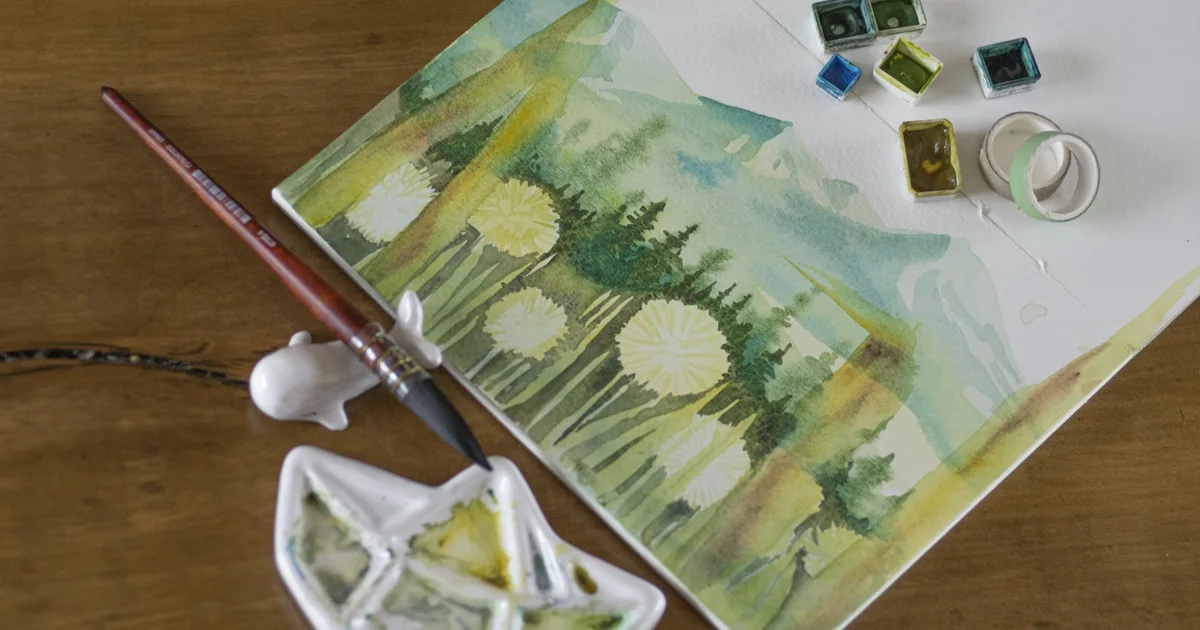
Photo: Elena Mozhvilo on Unsplash
Review
Watercolor Paper
Watercolor paper buckling is what happens when part of a sheet swells with water and the rest doesn't. The paper rises into ridges, the wash runs into the dips, and it dries with dark lines where it pooled.
This guide explains why paper buckles, gives six fixes sorted by paper weight, and shows how to flatten a painting that has already dried wavy.
In short: Paper buckles because wet fibers expand and dry ones don't. Loose sheets under about 356 gsm need help: tape all four edges to a board, stretch the sheet, or switch to a block glued on four sides. Paper of 425 gsm or more usually stays flat without preparation. To rescue a dried, wavy painting, mist the back, press it under a board and weights, and change the damp cover paper every two hours.
What causes watercolor paper buckling? (quick answer)
Uneven wetting. Wet fibers swell and dry fibers stay the same size, so the sheet can't lie flat. Thin paper buckles most. Fix it before painting with heavier paper, a block, tape or stretching, or flatten the finished painting under weights.
Overview
Watercolor paper buckling starts in the fibers. Paper is a mat of them, and each fiber swells when it takes in water. Strathmore, the paper maker, describes two ways this goes wrong. In the first, you paint the middle and leave a dry border. The center expands and the border doesn't. In the second, the whole sheet gets wet, but by different amounts, so parts of it dry at different rates.
The technical name for the result is cockling, the wrinkling and ridging of the sheet. Winsor & Newton calls cockling "notoriously difficult to fix", which is why most of the fixes below happen before the first wash.
Weight decides how much help a sheet needs. Paper weight is given in gsm, grams per square meter, and heavier paper is stiffer. A materials guide from UCL's Slade School of Fine Art says paper under 356 gsm (260 lb) should be stretched before use or it is likely to warp. St Cuthberts Mill, which makes Saunders Waterford and Bockingford, suggests 425 gsm or heavier if you want to avoid stretching. The common 300 gsm (140 lb) sheet sits below both lines.
For the fixes you need a rigid, sealed board larger than your paper, tape, and clean water. For flattening a finished painting you need a spray bottle or sponge, plain sketch or copy paper, a board and some heavy books.
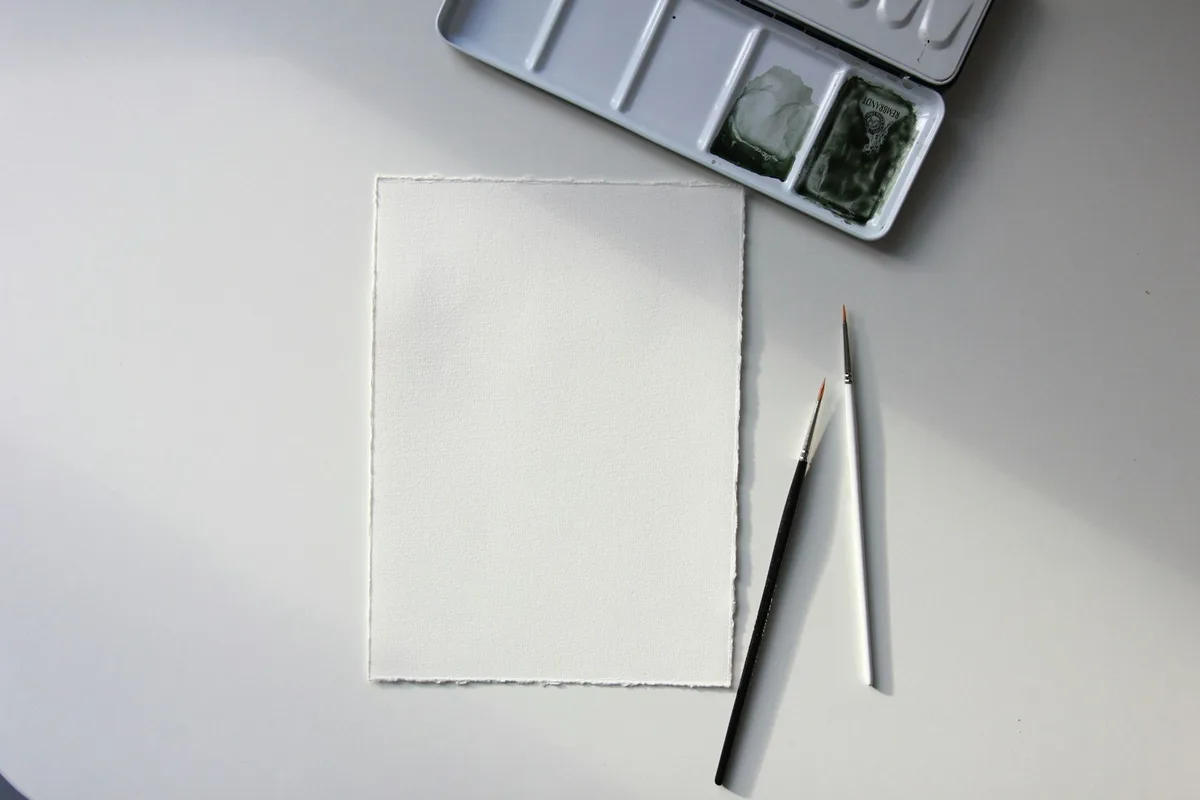 A loose sheet has nothing holding its edges, so it is free to rise when the middle gets wet. Photo: Angèle Kamp on Unsplash.
6 Fixes for Watercolor Paper Buckling, Before You Paint
The table lists six fixes for watercolor paper buckling and the paper each one suits. Start at the top and stop at the first one that fits your paper and budget.
| Fix | Best for | What it costs you |
|---|---|---|
| 1. Heavier paper, 425 gsm or more | Large, very wet paintings | A higher price per sheet |
| 2. A block glued on four sides | Travel and quick studies | Waiting for each sheet to dry before you remove it |
| 3. Tape all four edges, dry | Light washes on 300 gsm | A taped border, some rippling under heavy washes |
| 4. Stretch the sheet | Wet washes on 190 to 300 gsm | Ten minutes of work and a night of drying |
| 5. Wet the whole sheet evenly | Wet-on-wet painting | Less control over hard edges |
| 6. Use less water, or work smaller | Sketchbooks and thin paper | Smaller, drier paintings |
Heavier paper. A 640 gsm (300 lb) sheet is stiff enough to resist the pull of wet fibers. It's the simplest fix and the most expensive one.
A block. A watercolor block is a stack of sheets glued on all four edges. The glue holds the sheet while it dries. Leave the painting on the block until it's completely dry, then slice it free.
Tape, dry. Tape along all four edges and press the tape down firmly. Corners alone leave the sides free to lift. The masking tape guide covers which tapes come off without tearing the surface. Tape holds the edges but the middle can still rise under a very wet wash.
Stretching. You soak the paper, tape it wet to a board with gummed tape, and leave it to dry. It shrinks as it dries and pulls tight, so later washes have little room to lift it.
Even wetting. Strathmore's own advice for preventing buckling is to soak the entire sheet before you put paint down. An evenly wet sheet expands evenly. This suits wet-on-wet painting, where the whole surface starts damp.
Less water. A thin sketchbook page usually ripples under a flooded wash whatever you do. Use a damper brush, work in smaller areas, or accept a little movement.
 A sheet fixed to a rigid board has its edges held while the middle takes the water. Photo: Jelleke Vanooteghem on Unsplash.
GODEEPER: Stretching is the most reliable fix for loose 300 gsm sheets. The stretching guide gives soak times by weight and three ways to hold the sheet. How to Stretch Watercolor Paper: 3 Methods by Weight →
Step-by-Step: How to Flatten a Buckled Watercolor Painting
This is Strathmore's pressing method for watercolor paper buckling that shows up after the painting has dried. The aim is to dampen the whole back of the sheet, then let it dry at one even rate under weight. Wait until the painting is completely dry before you start.
1. Mist the back. Turn the painting over and mist the back lightly with clean water, or wipe it with a damp sponge. Strathmore says not to over wet it, because water that soaks through can dissolve the paint on the front.
2. Lay it face down. Put a sheet of clean sketch or copy paper on a flat surface. It should be larger than the painting. Place the painting on it, image side down.
3. Cover it. Lay a second sheet of sketch paper, or a towel, over the damp back.
4. Add a board and weights. Put a board larger than the painting on top, then stack weights on it. Heavy books work.
5. Change the paper every two hours. Lift the board, replace the damp cover paper with dry paper, and put the board and weights back. Strathmore says this usually takes four to six rounds, until the cover paper stops wrinkling and no longer feels damp.
6. Leave it to dry. Put down one more dry sheet, replace the board and weights, and leave the painting for 24 to 72 hours.
Sarah Cray's five-minute video above, from Let's Make Art, shows how she flattens watercolor paintings after painting.
GODEEPER: Weight is the first thing to check on a paper label, and the lb figure can mislead. The paper weight guide explains how gsm maps to lb. Watercolor Paper Weight Comparison Chart: GSM vs lb Guide →
Tips
Match the fix to the wash. Light glazes on 300 gsm need only tape. A flooded sky on the same sheet needs stretching or a block.
Use a rigid, sealed board. The board has to stay flat while the paper is wet. A sealed wooden board or a sheet of acrylic does; soft cardboard bends with the paper.
Paint to the edge when you can. A dry border beside a wet center is the first cause Strathmore names. Wetting the whole sheet, border included, removes the difference.
Dry the painting flat. Leave it taped until it is fully dry. Lifting the tape while the paper is damp lets the sheet curl as it finishes drying.
Treat the iron as a last resort. Strathmore's second method uses an iron on medium low over the covered, dampened back. It calls this the more drastic solution and says to test first, because too much heat can ruin the paper.
Prevent it where you can. Pressing takes a day or more and puts the painted side at risk. It's easier to stop watercolor paper buckling before painting than to repair it after.
Frequently Asked Questions
Why is my watercolor paper buckling? Wet paper fibers swell and dry fibers do not, so the sheet can no longer lie flat. Strathmore names two common patterns: a wet middle inside a dry border, and a sheet wetted unevenly so parts dry at different rates. Thin paper shows it most, because it has less stiffness to resist the pull.
How do I stop watercolor paper from buckling? Pick the fix that matches your paper. Use a sheet of 425 gsm or more, or a block glued on all four sides, and you can skip the preparation. For loose 300 gsm sheets, tape all four edges to a board or stretch the paper first. Wetting the whole sheet evenly also helps.
Does 300 gsm (140 lb) watercolor paper buckle? Yes, under wet washes. A materials guide from UCL's Slade School says paper under 356 gsm should be stretched before use or it is likely to warp, and 300 gsm sits below that line. It stays flat enough for light washes and small studies, especially when taped down on all four sides.
How do you flatten a buckled watercolor painting? Strathmore's method is to mist the back lightly, lay the painting face down on clean paper, cover it, and press it under a board and weights. Swap the damp cover paper for dry paper every two hours, about four to six times, then leave it for 24 to 72 hours.
Can I iron a watercolor painting flat? You can, with care. Strathmore describes it as the more drastic option and says to test first, because an iron that is too hot or sits too long can ruin the paper. Dampen the back, cover the painting, use a medium-low setting, then finish under weights.
Does taping watercolor paper stop it buckling? Taping dry paper to a board reduces buckling but does not remove it, because the paper still swells between the taped edges. It works for light washes on 300 gsm sheets. For heavy wet washes, stretch the paper first: it is soaked, taped wet, and dries tight before you paint.
Related Reading
- Best Watercolor Paper for Beginners: Why 100% Cotton Matters: which first sheets to buy, and why fiber matters as much as weight.
- Hot Press vs Cold Press Watercolor Paper: 3 Surface Types: how surface texture changes the way a wash sits.
- Best Watercolor Sketchbooks: 4 With 100% Cotton Paper: sketchbooks whose paper takes a wet wash with less rippling.
References
- Strathmore Artist Papers: How to Flatten a Buckled Painting, by Karen Jerome
- Winsor & Newton: Do I need to stretch watercolour paper?
- UCL Slade School of Fine Art: Watercolour Paper
- St Cuthberts Mill: How to soak and stretch watercolour paper
- Let's Make Art: Tips On Flattening Watercolor Paintings, Watercolor 101 with Sarah Cray (YouTube)
- Unsplash: photo by Elena Mozhvilo (hero image)
- Unsplash: photo by Angèle Kamp
- Unsplash: photo by Jelleke Vanooteghem
Was this guide helpful?

Written by
Arthur SterlingSupplies & Reviews Editor
Arthur Sterling writes Watercolor Daily's supply reviews and brand comparisons: paints, cotton papers, and brushes, compared on published specifications.
NextKeep reading
Features / 11 min
Watercolor Block vs Pad vs Sheets: Cost per Square Inch
Features / 9 min
Best Watercolor Paper for Card Making: 7 Picks Ranked

Guides / 11 min
How to Stretch Watercolor Paper: 3 Methods by Weight
Features / 14 min
Watercolor Paper Weight Comparison Chart: GSM vs lb Guide
Guides / 12 min
Rough Watercolor Paper: Granulation, Dry Brush and 6 Steps
Features / 12 min
Best Watercolor Sketchbooks: 4 With 100% Cotton Paper
Features / 11 min
Hot Press vs Cold Press Watercolor Paper: 3 Surface Types
Guides / 9 min
Best Watercolor Paper for Beginners: Why 100% Cotton Matters
Disclaimer
This article is published for informational purposes and is not professional advice. Product formulations, pigment sources, packaging and store listings change. Check the details that matter to you (price, pigment content, regional availability) with the manufacturer or retailer before you buy.