Loading
Watercolor Daily · Guides
Best Watercolor Paper for Beginners: Why 100% Cotton Matters
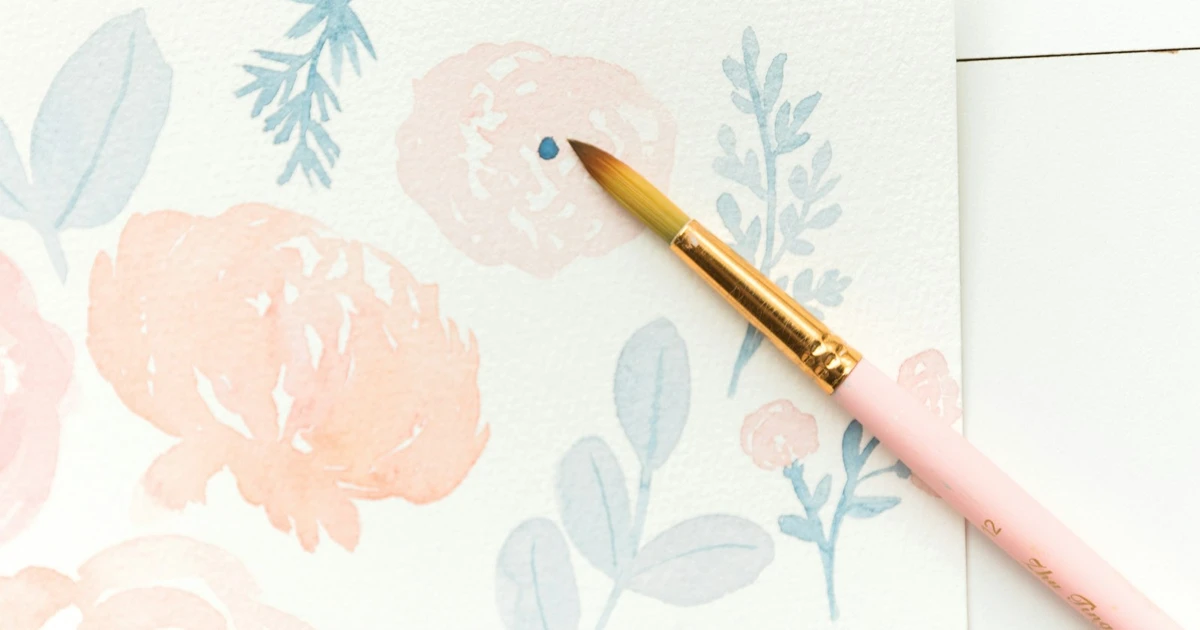
The best watercolor paper for beginners is 100% cotton, 300 gsm (140 lb) and cold press. Paper decides how a wash behaves more than paint or brushes do. That surprises most people, because art shops put the expensive paints and sable brushes up front. This guide explains why cotton matters, what weight and surface to pick, and how five common papers compare.
In short: Buy 100% cotton, cold-press paper at 300 gsm (140 lb) before you spend money on better paint. Budget cotton blocks such as Baohong Academy give you real cotton at a lower price per sheet than the big European mills. Glued blocks also save you from stretching paper.
What is the best watercolor paper for beginners? (quick answer)
A 100% cotton, cold-press sheet that weighs 300 gsm (140 lb). Baohong Academy is a good budget choice, and Arches is the classic reference paper. Avoid wood-pulp pads for anything wetter than a sketch.
Overview: Why the Best Watercolor Paper for Beginners Is 100% Cotton
Most student pads in craft shops are made from wood pulp. Paint tends to sit on top of that kind of paper. It then runs into the low spots and dries with hard, ragged edges, which painters call backruns or blooms. Try to soften an edge or add a second layer, and the surface can roughen and pill.
Cotton paper behaves differently. Water soaks into the sheet evenly instead of pooling on top. That gives you a few minutes to soften edges, drop in a second color while the first is wet, and build clear layers. For a beginner, that extra time is the difference between a smooth wash and a blotchy one.
Choosing the Best Watercolor Paper for Beginners: Weight, Sizing, and Texture
Three things describe any watercolor paper: its weight, its sizing and its surface.
1. Paper weight: why 300 gsm (140 lb)
Weight is given in grams per square meter (gsm) or in pounds (lb). You will see three common weights:
| Weight class | Metric | Imperial | Buckling when wet | Stretch first? |
|---|---|---|---|---|
| Light | 185 to 200 gsm | 90 lb | A lot | Yes |
| Medium | 300 gsm | 140 lb | Slight | Usually not, for sheets under 11 x 14 in |
| Heavy | 640 gsm | 300 lb | Almost none | No |
300 gsm (140 lb) is the right weight to learn on. It takes several wet washes without curling off the table. Heavy 640 gsm paper stays flat, but the cost makes everyday practice stressful. Light 190 gsm paper needs soaking and taping to a board first, which is one more hurdle when you are starting out.
2. Sizing: what it does
Sizing is a coating, usually gelatin or starch, that controls how fast paper soaks up water. Without it, watercolor paper would act like a paper towel and every brushstroke would spread into a fuzzy blot.
Mills add sizing in two ways. Internal sizing goes into the pulp before the sheet is formed, so it runs all the way through the paper. Surface sizing is applied to the finished sheet and coats the outside. Many good cotton papers use both. Internal sizing helps the paper survive lifting and gentle scrubbing, because the fibers below the surface still resist water.
3. Surface: cold press, hot press or rough
- Cold press (also called NOT) is pressed without heat. It has a gentle, bumpy texture that holds paint, slows drying a little and spreads water evenly. It suits flowers, landscapes and buildings equally well, which is why it is the best choice for beginners.
- Hot press is pressed between hot rollers until it is smooth. Paint dries fast and leaves crisp edges. Botanical artists love it, but it shows every hesitation of the brush.
- Rough has the strongest texture. Paints that granulate, meaning their pigment settles into the grain, collect in the dips and look speckled. It is great for rugged landscapes and hard for fine lines.
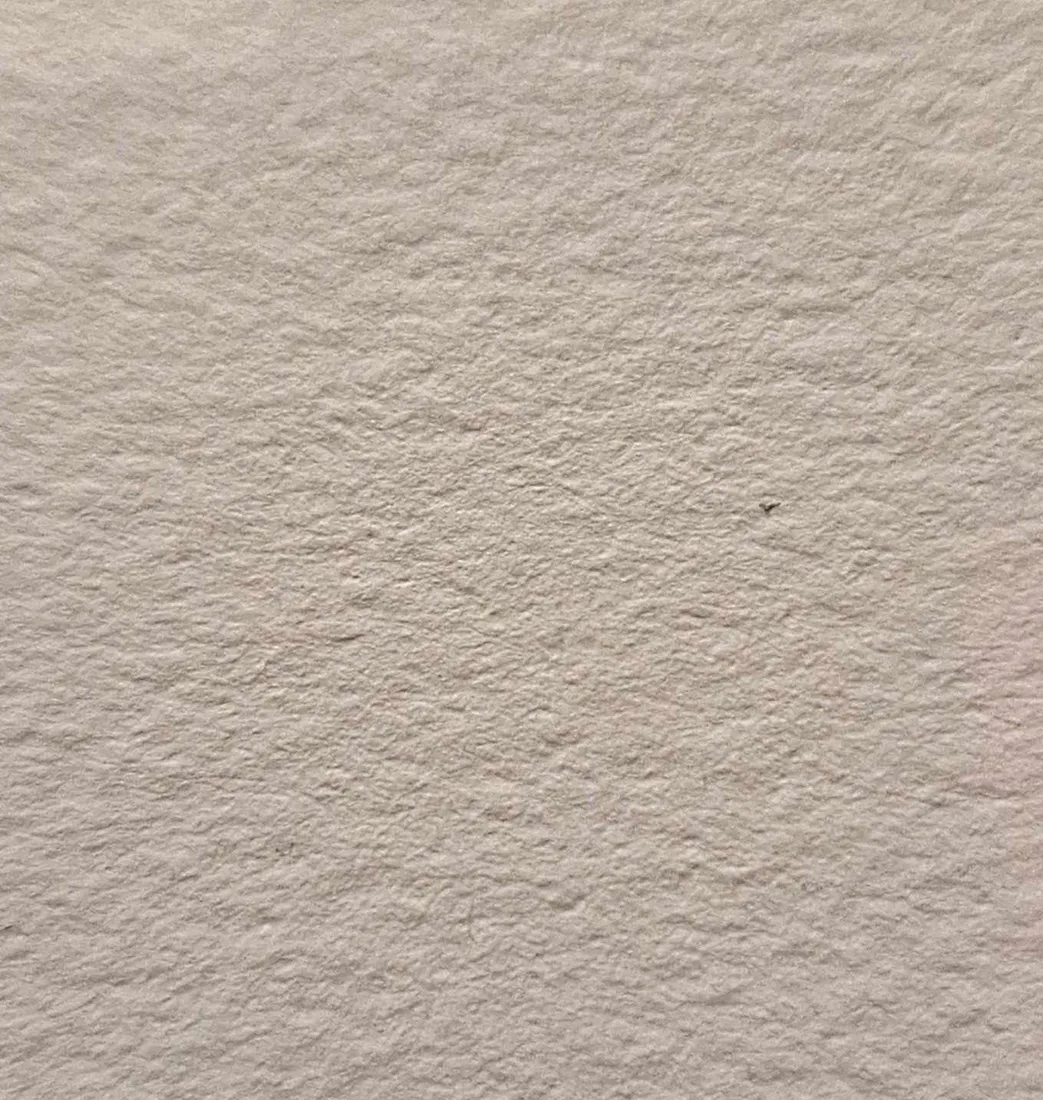 Les.aqua, CC0 via Wikimedia Commons. The surface of a fine-grain 100% cotton watercolor sheet. The raised tooth is what catches pigment and slows a wash.
Comparison: Five Beginner Watercolor Papers by Specification
The table compares five widely sold papers, using what the mills and their retailers publish. "Not confirmed" means we found no published figure. Prices change often, so check a current listing before you buy.
| Brand & product line | Made from | How it is made | Sizing | Overall value |
|---|---|---|---|---|
| Baohong Academy Grade | 100% cotton | Not confirmed | Not confirmed | ★★★★★ (top budget pick) |
| Arches Aquarelle Cold Press | 100% cotton | Cylinder mould-made | Gelatin, sized to the core | ★★★★★ (the reference paper) |
| Fabriano Artistico | 100% cotton | Mould-made | Synthetic (no animal products), internal and external | ★★★★☆ (vegan friendly) |
| Strathmore 500 Series | 100% cotton | Not confirmed | Hard sizing | ★★★★☆ (reliable US brand) |
| Canson XL Watercolor | Wood pulp | Not confirmed | Not confirmed | ★★☆☆☆ (fine for sketches) |
Baohong Academy: cotton at a student price
Cotton paper used to mean paying European mill prices. Baohong's Academy line is one of the few student papers made from 100% cotton, and it costs less per sheet than the French and Italian mills. Painter reviews generally rate it close to artist grade. Some report the surface roughening under heavy wet-on-wet work. On a tight budget, it is the paper to try first.
Arches Aquarelle: the reference paper
Arches is made in France by a mill that dates its history to 1492. Its gelatin sizing runs through the whole sheet, which makes it good for lifting color back out. It costs more, but many teachers recommend it to beginners who want a paper that rarely gets in the way.
Canson XL: fine for sketches, not for washes
Canson XL is everywhere in schools and craft shops. It works for sketches, ink and color swatches. It is made from wood pulp, though, and washes on it tend to dry duller and streakier. Beginners often blame their own mixing when the paper is the real problem.
Step-by-Step: Testing Watercolor Paper Quality at Home
Before you start a painting on a new pad, run these five quick tests on a scrap.
1. Paint a flat wash. Mix a big puddle of French Ultramarine and brush it across a dry quarter sheet of cold-press paper in four strokes. A good paper gives an even tone without streaks. 2. Try wet-on-wet. Wet a three-inch square until it shines evenly, then touch a brush of strong red to the middle. Watch whether the color spreads in soft, feathery edges. 3. Test a glaze. Paint a blue stripe and let it dry completely. Brush a yellow stripe across it. The blue underneath should stay put and not smear. 4. Scrub and lift. Scrub a dry dark patch five times with a damp, stiff brush, then blot it with a paper towel. The color should lift without the paper shedding little balls of fiber. 5. Check masking fluid. Put a small dab of masking fluid on the paper and let it dry, then rub it off the same day with a rubber cement pickup. The paper surface should not tear.
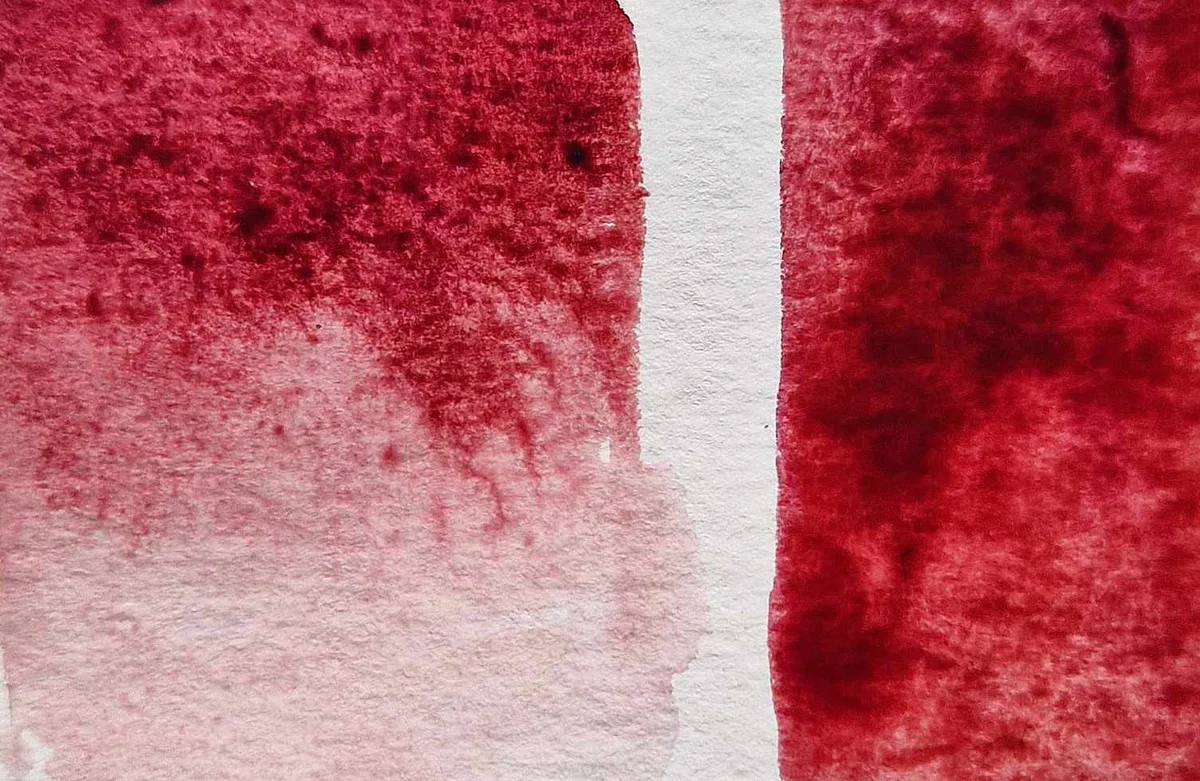 Les.aqua, CC0 via Wikimedia Commons. Two red washes on one sheet: a graded wash fading to pale on the left and a denser, darker wash on the right. Test swatches like these show how a paper takes a wash before you commit a painting to it.
Tips: Buying Paper Without Overspending
Paper costs add up fast. Three habits keep them down.
1. Buy glued blocks, not spiral pads
A watercolor block is glued on all four edges. The glue holds the sheet flat while you paint. It may buckle a little while wet, but it pulls flat again as it dries. When the painting is dry, slide a blunt knife into the gap in the glue and run it around the edge to free the sheet.
2. Tear full sheets into quarters
Buy full 22 x 30 inch sheets of cotton paper and tear them yourself against a metal ruler: in half, then in half again. One full sheet gives you four 11 x 15 inch quarter sheets, usually for less per sheet than a pad.
3. Pair good paper with a short palette
Cotton paper makes clean colors look their best. Pair it with a small split-primary palette and you get clean mixes even with modest student paints.
Frequently Asked Questions
Why is 100% cotton paper better for watercolor painting?
Cotton paper takes in water evenly through the sheet, so a wash stays wet long enough to blend and dries without hard rings. Cheaper wood-pulp paper keeps more of the water on its surface, which makes smooth washes and wet-on-wet blending much harder.
What paper weight is best for beginner watercolor artists?
300 gsm, which is the same as 140 lb. It takes wet washes with only slight buckling, and small or medium sheets usually do not need stretching first. Lighter 190 gsm paper buckles quickly, and 640 gsm paper stays flat but costs much more.
What is the difference between cold-pressed and hot-pressed watercolor paper?
Cold-pressed paper has a gentle texture that holds paint and slows drying a little. Hot-pressed paper is pressed smooth, so paint dries faster and every brush edge shows. Cold press is easier to learn on, while hot press suits fine detail and botanical work.
Is Arches paper worth the money for beginner practice?
Arches is a long-standing reference paper and pleasant to paint on, but you do not need it to learn. Cheaper 100% cotton papers such as Baohong Academy or Strathmore 500 cost less per sheet and still give you real cotton to practice on every day.
Can you paint watercolor on normal mixed media paper?
You can, but most mixed media and student watercolor pads are made from wood pulp, not cotton. Washes on them tend to streak and dry duller, and the surface roughens if you rework it. Use it for sketches and swatches, and save cotton paper for real paintings.
Related Reading
- Essential Beginner Watercolor Supplies: The Practical Starter Kit
- Daniel Smith vs Winsor & Newton: Professional Watercolor Review
- Hot-Pressed Watercolor Paper Guide and Techniques
References
- Handprint: The Manufacture and Testing of Watercolor Papers - Bruce MacEvoy on paper fiber and gelatin sizing.
- ASTM D5067 Standard Specification for Artists' Watercolor Paints and Supports - ASTM International standard for watercolor paints.
- Arches Paper: Technical Specifications and Heritage Mould-Made Process - The mill's own documentation on its 100% cotton mould-made paper.
Was this guide helpful?

Written by
Elena VancePigments & Color Editor
Elena Vance writes Watercolor Daily's pigment and color coverage: Colour Index codes, lightfastness ratings, transparency, and palette building.
NextKeep reading
Features / 11 min
Hot Press vs Cold Press Watercolor Paper: 3 Surface Types
Features / 12 min
Best Watercolor Sketchbooks: 4 With 100% Cotton Paper
Guides / 12 min
Rough Watercolor Paper: Granulation, Dry Brush and 6 Steps
Features / 12 min
Watercolor Paper Weight GSM: 190 vs 300 vs 640 Explained
Guides / 11 min
How to Stretch Watercolor Paper: 3 Methods by Weight
Features / 11 min
Watercolor Block vs Pad vs Sheets: Cost per Square Inch
Guides / 9 min
Watercolor for Beginners: Essential Supplies & Buying Guide
Guides / 11 min
Dry Brush Watercolor Technique: 8 Tips for Broken Texture
Disclaimer
This article is published for informational purposes and is not professional advice. Product formulations, pigment sources, packaging and store listings change. Check the details that matter to you (price, pigment content, regional availability) with the manufacturer or retailer before you buy.
Brands in this article
Arches