Loading
Watercolor Daily · Reviews
Daniel Smith vs Winsor & Newton: Pro Watercolor Review
Daniel Smith vs Winsor & Newton compared on strength, granulation, transparency and value, using each brand's published color charts and pigment codes.
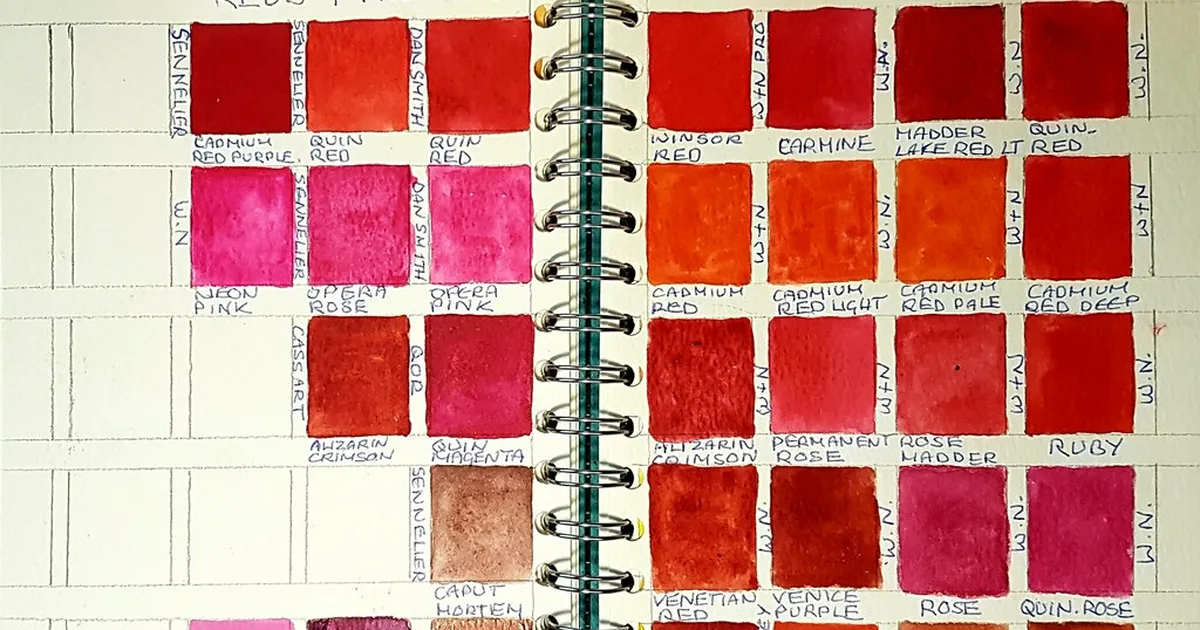
Photo: CharmaineZoe's Marvelous Melange, Flickr, CC BY 2.0
Review
Daniel Smith Extra Fine Watercolors
Daniel Smith Artists' Materials · Seattle, WA, USA
9.4
Score / 10
- Grade
- Artist Grade
- Format reviewed
- 15ml Tubes & Half-Pans
For
- 272 colors across the Extra Fine, PrimaTek and Luminescent lines, including granulating PrimaTek minerals
- Strong, concentrated color that painters report re-wets easily from dried pans
- Pigment codes and a lightfastness rating published for every color
- Soft tube paint that fills palette wells quickly
Against
- Higher price per tube for the Series 3, 4 and 5 mineral colors
- Strong tinting can overpower delicate mixes unless you dilute carefully
Verdict
Daniel Smith suits landscape and loose painters who want textured, granulating color, while Winsor & Newton suits botanical and detail painters who want smooth, predictable washes.
This Daniel Smith vs Winsor & Newton review compares the two most popular artist-grade watercolor brands on color strength, granulation and handling. We worked from each maker's published color charts and pigment codes, not our own lab tests. Both make excellent paint. The real difference is the look each one leans toward.
In short: Daniel Smith is the brand for strong color, dramatic granulating minerals and a huge range (272 colors across three lines). Winsor & Newton Professional is the brand for smooth, clear washes and controlled layers, which suits botanical and detailed work.
Key Takeaways
- Different styles. Daniel Smith leans toward modern pigments and textured, granulating minerals. Winsor & Newton leans toward the clear, smooth washes of traditional British watercolor.
- Color strength. Daniel Smith is often described as stronger, so a little paint goes a long way.
- They mix together. Both are gum arabic watercolors, so you can use them side by side.
- Paper matters. Granulation only shows properly on good cotton paper, like the sheets in the best watercolor paper for beginners guide.
- Mix and match. Many painters buy a few colors from each brand instead of choosing one.
Daniel Smith vs Winsor & Newton: which is better? (quick answer)
Neither, overall. Pick Daniel Smith for loose landscapes and textured, granulating color. Pick Winsor & Newton for smooth washes, fine detail and botanical work. Both are artist grade and mix well together.
Overview: Two Paint Makers, Two Approaches
How each company makes its paint explains why the two feel different on the brush.
Winsor & Newton (founded 1832, London)
William Winsor, a chemist, and Henry Newton, an artist, founded the company in London in 1832. It was one of the early makers of moist watercolor, the soft paint we still use today. It aims for the same paint in every batch, so a color feels the same year after year. The paint is known for clear, smooth washes that layer well.
Daniel Smith (founded 1976, Seattle)
Daniel Smith began in Seattle making inks for printmakers. Later it launched its Extra Fine watercolors. It is best known for its PrimaTek colors, which are made from natural minerals. The brand likes paints that act in unusual ways. Some granulate strongly, some split into two colors, and some are bright modern pigments.
Performance: Daniel Smith vs Winsor & Newton on Pigment Strength and Granulation
Both brands sell many of the same pigments under the same pigment codes, so you can compare like with like. The points below reflect how painters and the brands describe the paints, not a controlled test of our own.
1. Color strength
Color strength is the difference painters mention most when they switch brands.
- Daniel Smith Extra Fine is known for very strong color. In Phthalo Blue (
PB15:3) and French Ultramarine (PB29), it is often described as giving deeper, richer color. A tiny amount tints a whole puddle. - Winsor & Newton Professional is usually described as a little gentler. That makes pale, delicate mixes easier, because the paint does not take over the mixing well.
2. Granulation
Granulation is when heavier pigment particles settle into the dips of the paper instead of drying flat. It is one of the clearest differences between the brands.
- Daniel Smith is the best-known brand for dramatic granulation. Colors like Lunar Black, Moonglow and Green Apatite Genuine split into two or three tones within a single wash.
- Winsor & Newton has cobalt and ultramarine colors that granulate too. But nothing in its range splits apart the way Moonglow does. Its washes dry smoother, which botanical painters like for petals.
Painter Kristy Rice compares the two brands side by side in this video:
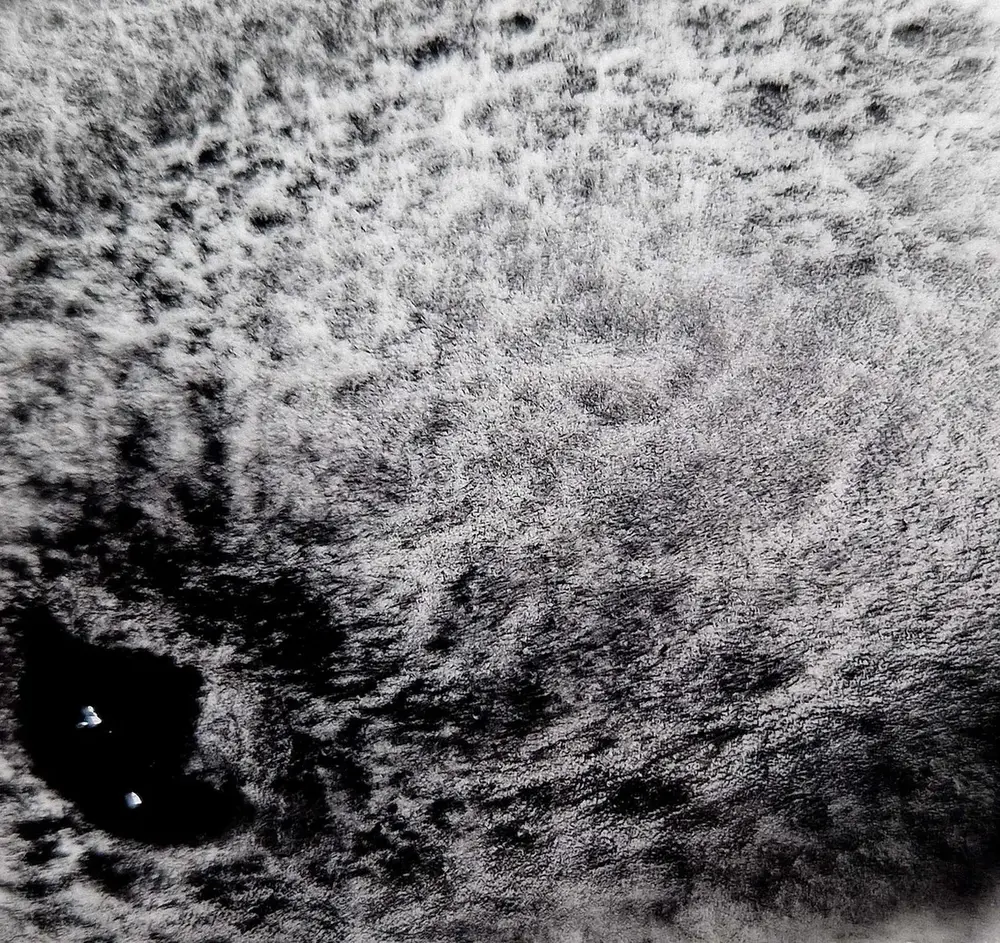 Les.aqua, CC0 via Wikimedia Commons. A swatch of Lunar Black, the Daniel Smith color named above, showing the heavy granulation it is known for.
Daniel Smith vs Winsor & Newton: Specification and Value Comparison
| Category | Daniel Smith Extra Fine | Winsor & Newton Professional |
|---|---|---|
| Range | 272 colors across Extra Fine, PrimaTek and Luminescent (Daniel Smith calls it the widest watercolor range in the world) | Over 100 colors |
| Special colors | PrimaTek minerals, Luminescent, Duochrome | Classic single-pigment colors |
| Tube sizes | 5 ml and 15 ml | 5 ml and 14 ml |
| Lightfastness data | Every batch tested for lightfastness, per Daniel Smith; check each color's rating before buying | The brand's own permanence rating for each color |
| Pricing | Priced by series; PrimaTek minerals sit in the higher series | Priced by series |
Re-wetting and Palettes
If you squeeze tube paint into a travel palette or a plastic or ceramic palette and let it dry, how it re-wets matters.
- Daniel Smith in pans: painters commonly report that it dries slightly soft and matte, and a damp brush picks up strong color without scrubbing.
- Winsor & Newton in pans: tends to dry into harder, glassier cakes. They still dissolve, and a light mist of water a minute before you start helps older pans soften.
Both brands sit happily side by side in half pans, for example in a six-color split-primary palette.
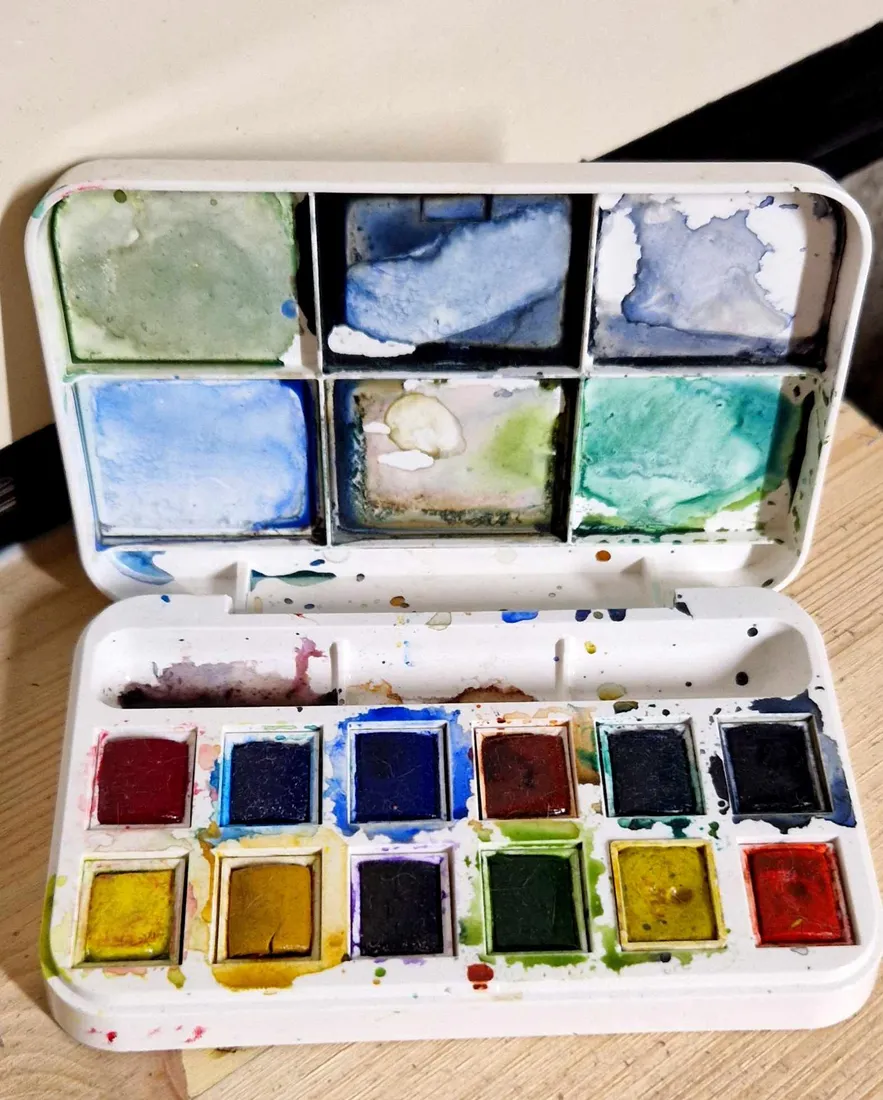 Les.aqua, CC0 via Wikimedia Commons. A travel palette of half pans, the setup where re-wetting matters most: every session starts by waking dried paint with a damp brush.
A Mixed Palette: The Best of Both
Many painters pick favorites from each brand:
- From Daniel Smith:
- Buff Titanium (
PW6:1): a semi-opaque, creamy off-white for sand, stone and fur. - Moonglow: a granulating mix of viridian, ultramarine and a deep red that makes soft, atmospheric shadows.
- Quinacridone Gold (
PO49/PY150): a clear, warm gold for sunsets and autumn leaves.
- Buff Titanium (
- From Winsor & Newton:
- Winsor Lemon (
PY175): a very clean cool yellow. - Permanent Alizarin Crimson (
PR206): a lightfast replacement for the old alizarin crimson, which faded. - Cerulean Blue (
PB35): a soft sky blue with gentle granulation. Jay Nathan's cerulean blue comparison video swatches it next to Daniel Smith's.
- Winsor Lemon (
Whichever brand you buy, single-pigment paints keep your mixes clear.
Final Verdict: Which Brand Should You Choose?
Both brands make true artist-grade paint with published pigment codes and lightfastness ratings.
The Good
- Daniel Smith: strong color, the widest choice of granulating minerals, easy re-wetting in pans, and a slightly larger 15 ml tube.
- Winsor & Newton: smooth, even washes, long-standing consistency, and easier control of pale layers.
The Cons
- Daniel Smith: the strong color can surprise beginners, and the Series 4 and 5 PrimaTek tubes are expensive.
- Winsor & Newton: dries into harder cakes in the pan, and the range is less adventurous.
Our recommendation: if you paint loose landscapes, mountains, dramatic skies or textured scenes, choose Daniel Smith. If you paint botanical work, buildings or careful layered washes without much texture, choose Winsor & Newton.
Frequently Asked Questions
Is Daniel Smith watercolor better than Winsor & Newton Professional?
Neither is better overall. Daniel Smith is known for strong color and dramatic granulating minerals, which landscape and loose painters love. Winsor & Newton Professional is known for smooth, consistent washes, which botanical and detail painters often prefer. Choose by the look you want in your paintings.
Can you mix Daniel Smith and Winsor & Newton watercolors together?
Yes. Both are gum arabic watercolors, so you can put them on the same palette and mix them freely. Many painters use a few colors from each brand. If a mix looks odd, compare the pigment codes, which tell you what is actually in each tube.
Which brand re-wets better when dried in a pan?
Painters commonly report that Daniel Smith softens faster with a damp brush, while Winsor & Newton dries into harder cakes that respond better after a light mist of water. Neither brand publishes a re-wetting measurement, so treat this as painter experience rather than a tested result.
Why is Daniel Smith famous for granulation?
Its PrimaTek range uses crushed natural minerals, and colors such as Lunar Black and Moonglow separate strongly into the paper's texture. Granulation means the pigment settles into the dips of the paper and leaves a speckled look instead of a flat, even wash.
Which brand offers better value for money?
It depends on the colors you buy, because both brands price each color by series. Compare the price per milliliter of your exact colors at a current retailer. Daniel Smith's 15 ml tube also holds 1 ml more than Winsor & Newton's 14 ml tube, which adds up over time.
Related Reading
- Essential Beginner Watercolor Supplies: The Practical Starter Kit
- Cold-Pressed Watercolor Paper Guide and Sizing Standards
References
- Handprint: Watercolor brand comparisons and pigment notes - Bruce MacEvoy's reference on watercolor paints.
- Winsor & Newton: Professional Watercolour - Range overview, permanence ratings and tube sizes for each color.
- Daniel Smith: Extra Fine Watercolors - Range size across Extra Fine, PrimaTek and Luminescent, and the batch testing Daniel Smith describes.
- Paintcrush with Kristy Rice: Winsor & Newton vs. Daniel Smith (YouTube)

Written by
Elena VancePigments & Color Editor
Elena Vance writes Watercolor Daily's pigment and color coverage: Colour Index codes, lightfastness ratings, transparency, and palette building.
NextKeep reading
Features / 10 min
Student vs Artist Grade Watercolor: 6 Pigments Compared
Features / 12 min
Granulating Watercolors Explained: 7 Pigments That Settle
Guides / 12 min
Watercolor Pans vs Tubes: What to Buy First, Priced per ml

Guides / 9 min
Watercolor for Beginners: Essential Supplies & Buying Guide
Guides / 11 min
Dry Brush Watercolor Technique: 8 Tips for Broken Texture
Guides / 14 min
How to Clean Watercolor Brushes: 7 Steps, 3 Ways to Dry

Features / 14 min
12 Easy Watercolor Flower Ideas Sorted by Brush Stroke
Features / 14 min
10 Watercolor Birthday Card Ideas From 3 Tubes of Paint
Disclaimer
This article is published for informational purposes and is not professional advice. Product formulations, pigment sources, packaging and store listings change. Check the details that matter to you (price, pigment content, regional availability) with the manufacturer or retailer before you buy.