Loading
Watercolor Daily · Features
12 Easy Watercolor Flower Ideas Sorted by Brush Stroke
Easy watercolor flower ideas, 12 flowers from four tubes, grouped by the one brush move each needs. Pigment codes, paper, time and three steps for each.
14 min readBy Marcus Reed
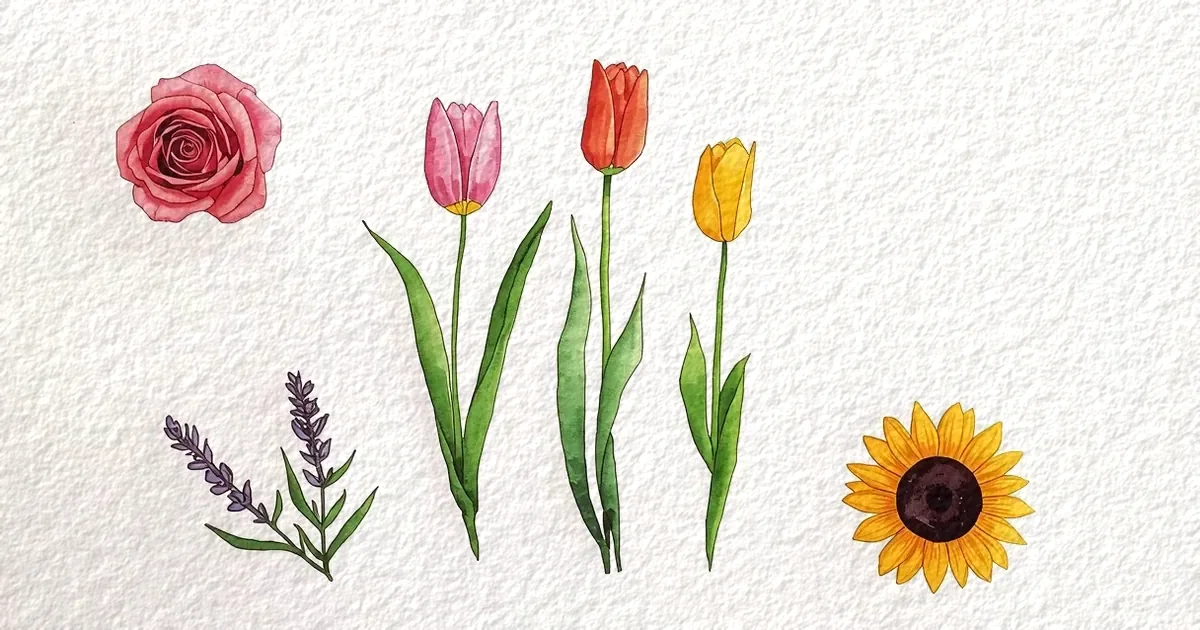
These 12 easy watercolor flower ideas are sorted by the one brush move each flower needs, because that is what actually makes a flower easy or hard. A daisy is five presses of a round brush. A peony is a wet-on-wet blob. A tulip is a single pulled stroke. Learn the move and the flower follows.
Every flower uses the same four tubes, and each idea below gives you the colors with their pigment codes, the paper, a rough time and three steps. Most flower lists give you a picture and a name. This one tells you which stroke to make.
In short: Buy four tubes: Quinacridone Rose (PV19), Hansa Yellow Medium (PY97), French Ultramarine (PB29) and Phthalo Green Blue Shade (PG7). Paint on 300 gsm (140 lb) cold-press paper with a size 8 round. Start with the pressed-brush flowers, the daisy and the cherry blossom, which take about 10 minutes each. Save the peony, the hydrangea and the wreath for last.
What are the easiest watercolor flower ideas? (quick answer)
The pressed-brush flowers: a daisy, a cherry blossom and a cosmos. Each petal is one press of the brush's belly, so there's nothing to draw and nothing to blend. A wobbly petal still looks like a petal. Paint those three first, then the pulled-stroke flowers, then the wet-on-wet ones.
Overview
Every one of these easy watercolor flower ideas uses the same short supply list.
Paper. Cold-press watercolor paper at 300 gsm (140 lb). Cold press means the surface has a light tooth, or texture, that holds a pressed petal cleanly. The wet-on-wet flowers need a sheet that stays damp for a minute or two, which cotton does better than cellulose. The paper guide for beginners explains the difference.
Brushes. One round brush with a good point, around a size 8, does every flower here. The pressed petals use its belly, the stems use its tip. A small round, around a size 4, helps with stamens and lavender dots.
Paint. Four tubes from Daniel Smith's Extra Fine range, each a single pigment rated lightfastness I (Excellent) on the maker's page.
- Rose, Quinacridone Rose (PV19): a cool, transparent pink-red. Watery it is a cherry blossom, strong it is a rose.
- Yellow, Hansa Yellow Medium (PY97): a clean mid yellow for sunflowers, daisy centers and every orange and green mix. Low staining, so it lifts if a petal goes wrong.
- Blue, French Ultramarine (PB29): a warm, transparent blue that granulates, meaning the pigment settles into the paper's texture as a fine speckle. That speckle looks right in hydrangeas and lavender.
- Green, Phthalo Green Blue Shade (PG7): a deep, strongly staining blue-green. Never use it alone for leaves. A touch of yellow turns it into a leaf green, a touch of rose dulls it to an olive.
Four mixes do most of the work. Leaf green is green with yellow. Coral is rose with yellow. Violet is blue with rose. Stem grey is green with a touch of rose. The split-primary palette guide explains why these clean primaries mix brighter than a boxed green or purple.
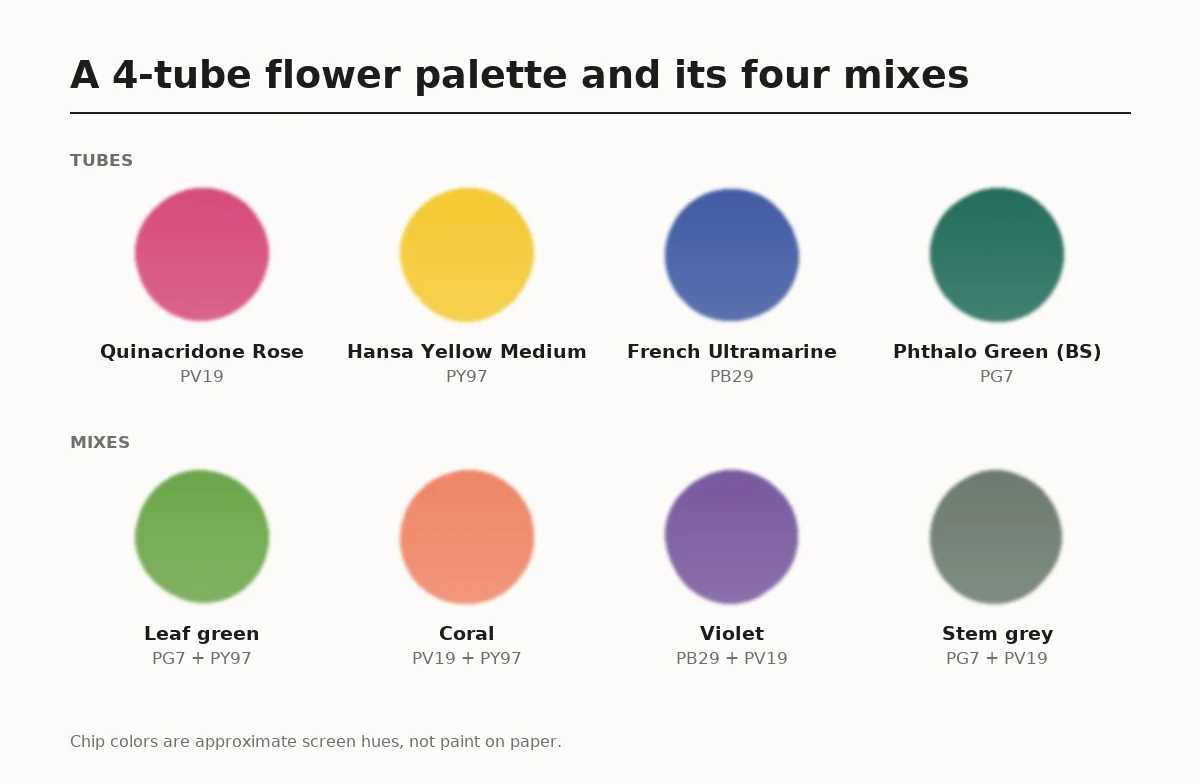 Chart of the four tubes and the four mixes used across the flowers. Chip colors are approximate screen hues.
Easy Watercolor Flower Ideas With a Pressed Brush
These four flowers are made by pressing the belly of a loaded round brush to the paper. One press is one petal. Start with these.
1. Five-Petal Daisy
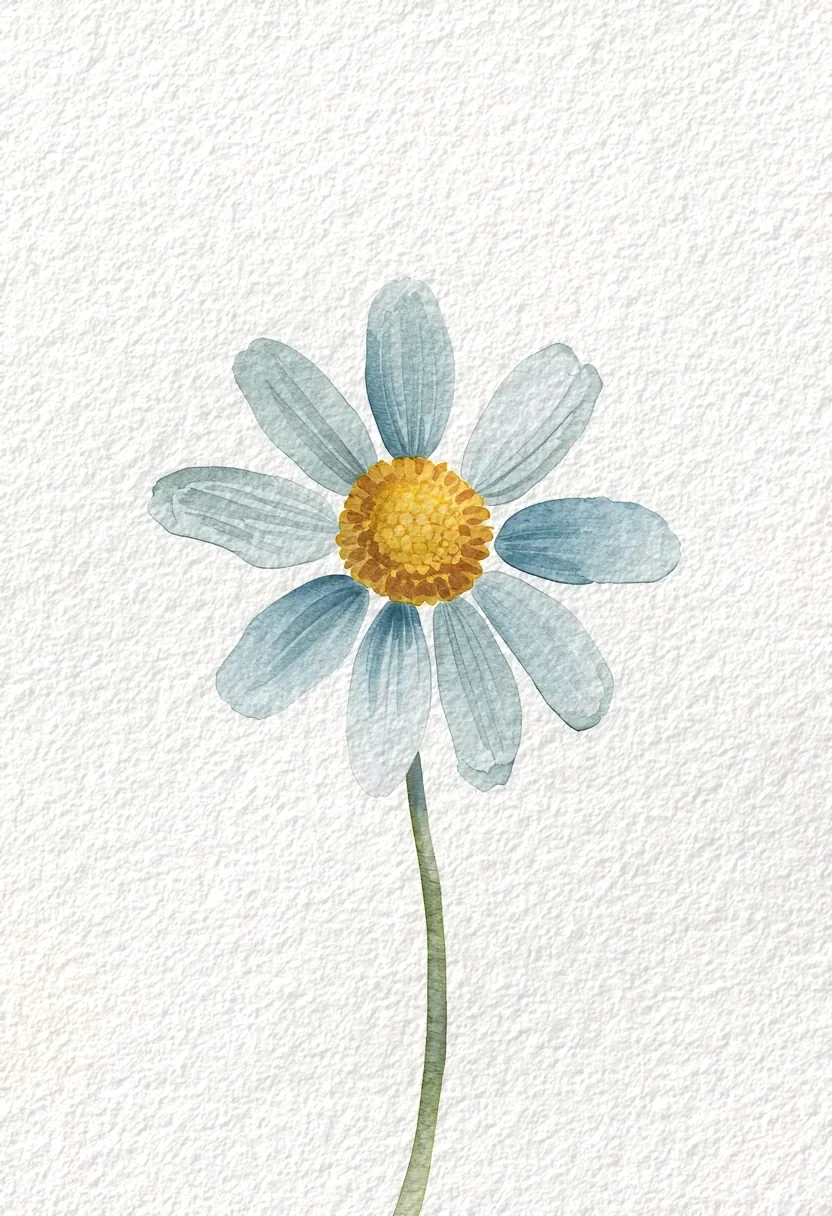 A daisy made from single presses of the brush, with a yellow center.
Five white or pale petals around a yellow center. The petals are bare paper edged with a hint of grey, so the flower is mostly what you leave alone.
- Palette: yellow (PY97), stem grey (PG7 + PV19), a little blue (PB29)
- Paper: 300 gsm cold press
- Time: about 10 minutes · Difficulty: easy
1. Press the petals. Load the brush with very watery blue-grey and press its belly to the paper five times around an empty center, each press pointing outward. 2. Drop in the center. While the petals are damp, dab a round of yellow in the middle. 3. Add the stem. When dry, pull a thin stem grey line downward with the brush tip.
2. Cherry Blossom Sprig
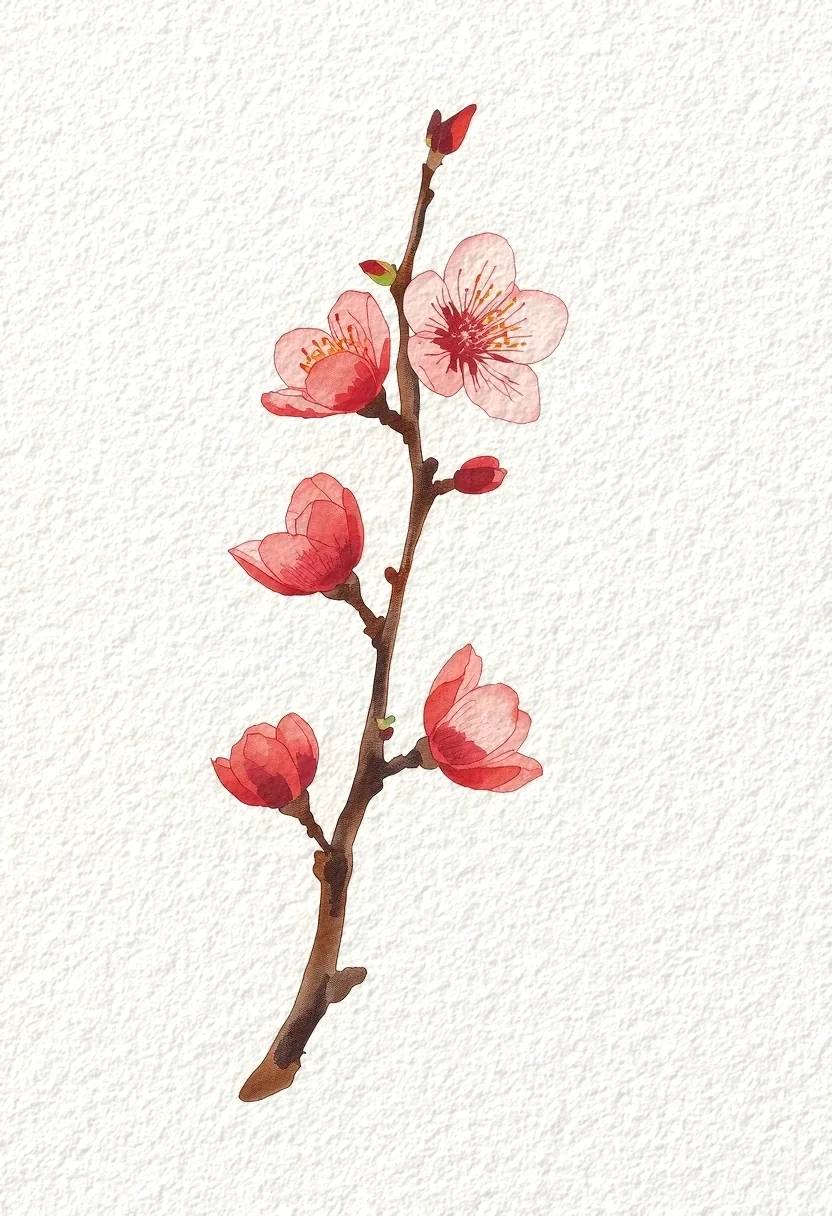 Blossoms and buds along one brown branch.
Three or four small five-petal blossoms in watery rose along a thin dark branch, with a few darker dots at each center.
- Palette: rose (PV19), stem grey (PG7 + PV19)
- Paper: 300 gsm cold press
- Time: about 15 minutes · Difficulty: easy
1. Press the blossoms. With watery rose, press five small petals around an empty center, three or four times along an imagined branch. 2. Deepen the centers. While the petals are damp, touch a stronger rose into the middle of each so it bleeds slightly outward. 3. Draw the branch. When dry, pull a thin, slightly crooked line of stem grey through the blossoms with a few short side twigs.
3. Cosmos
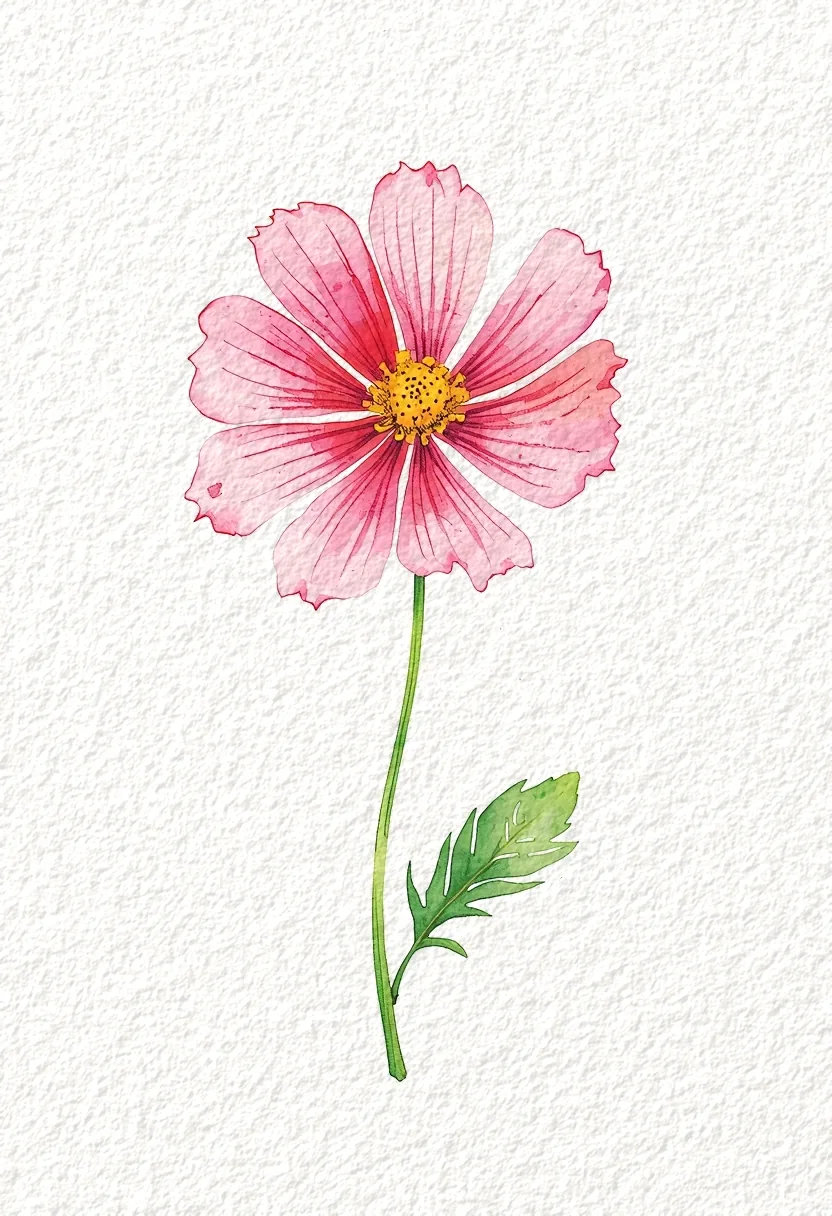 A cosmos with darker veins in each petal.
Eight long rose petals, slightly ragged at the outer edge, around a yellow center, on a thread-thin green stem.
- Palette: rose (PV19), yellow (PY97), leaf green (PG7 + PY97)
- Paper: 300 gsm cold press
- Time: about 15 minutes · Difficulty: easy
1. Press long petals. Load rose, press the brush belly and drag it outward a little before lifting, eight times around an empty center. 2. Center and dots. While damp, dab yellow in the middle, then a few darker rose dots at the base of the petals once that has dried. 3. Stem. Pull a thin leaf green stem down from the flower, with one feathery leaf made of three short strokes.
4. Sunflower Head
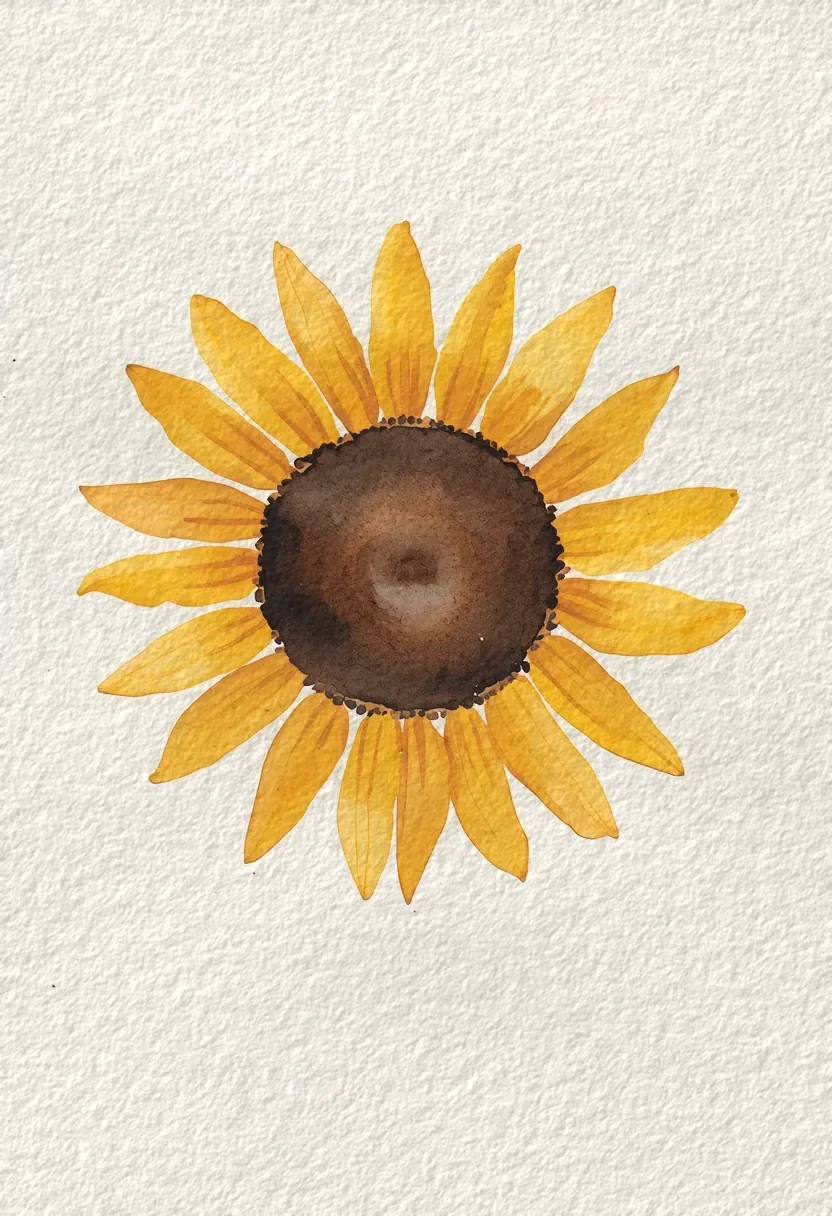 A sunflower head with a dark center and yellow petals.
A big yellow flower with a dark brown center and a ring of pointed petals. Two presses per petal, overlapping, so it looks fuller.
- Palette: yellow (PY97), rose (PV19), blue (PB29), green (PG7)
- Paper: 300 gsm cold press
- Time: about 25 minutes · Difficulty: easy+
1. Pencil a circle. Lightly draw a circle the size of a coin for the center. 2. Press the petals. Press yellow petals pointing outward all around the circle, then a second ring of slightly shorter petals between them while the first is damp. 3. Fill the center. When dry, fill the circle with a dark brown mixed from all three primaries, darker at the bottom edge.
GODEEPER: The pressed petal relies on the brush's belly holding plenty of paint and springing back. The brush guide explains which cheap synthetic rounds do that. Best Watercolor Brushes for Beginners: 3 Shapes to Buy →
Easy Watercolor Flower Ideas With One Pulled Stroke
These four flowers are built from single strokes pulled from the brush tip, so the shape comes from the hand moving, not the paint spreading.
5. Row of Tulips
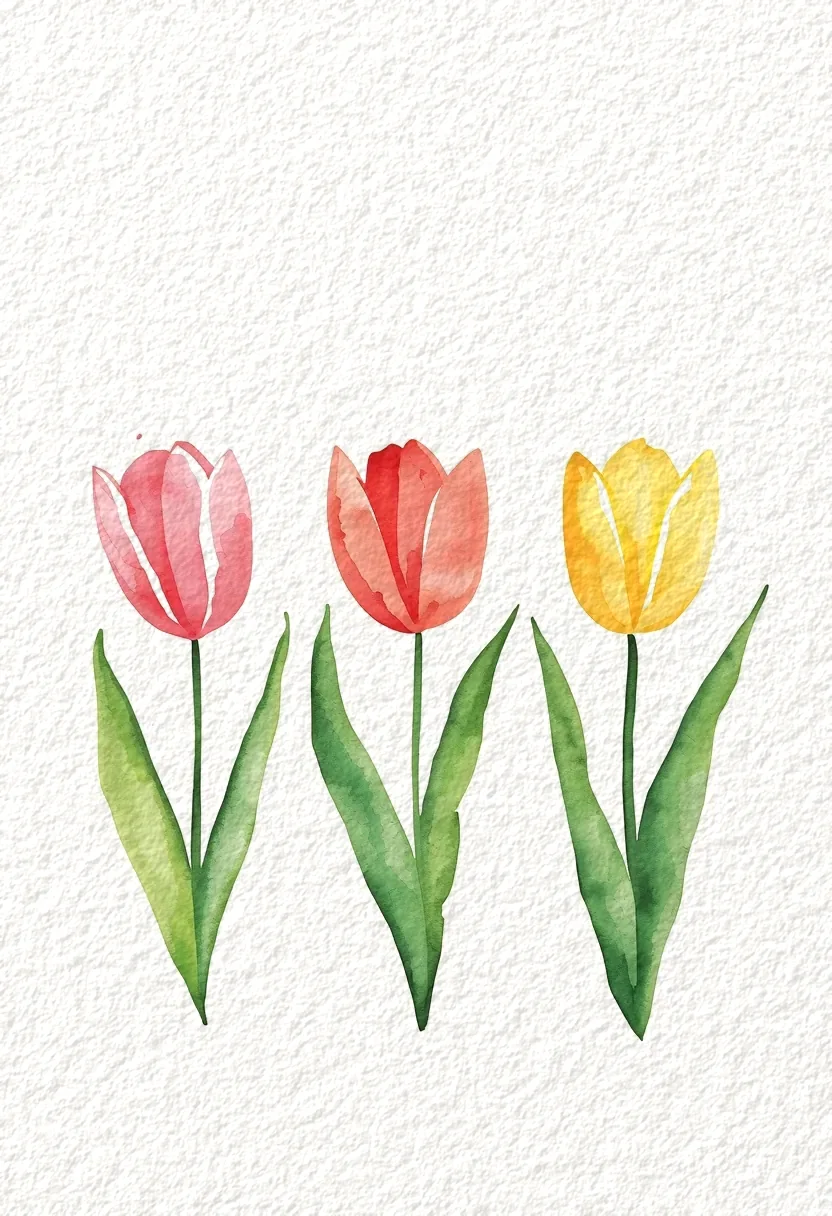 Three tulips in a row, each a different color.
Three tulips in rose, coral and yellow, each cup made from two curved strokes that meet at the bottom, on long green stems.
- Palette: rose (PV19), yellow (PY97), leaf green (PG7 + PY97)
- Paper: 300 gsm cold press
- Time: about 15 minutes · Difficulty: easy
1. Pull the cups. For each tulip, pull one curved stroke up and to the left and a second up and to the right, meeting at a point at the base. 2. Deepen the base. While damp, touch a stronger version of the color into the bottom of each cup. 3. Stems and leaves. When dry, pull three long green stems downward and one long tapering leaf beside each.
6. Lavender Sprigs
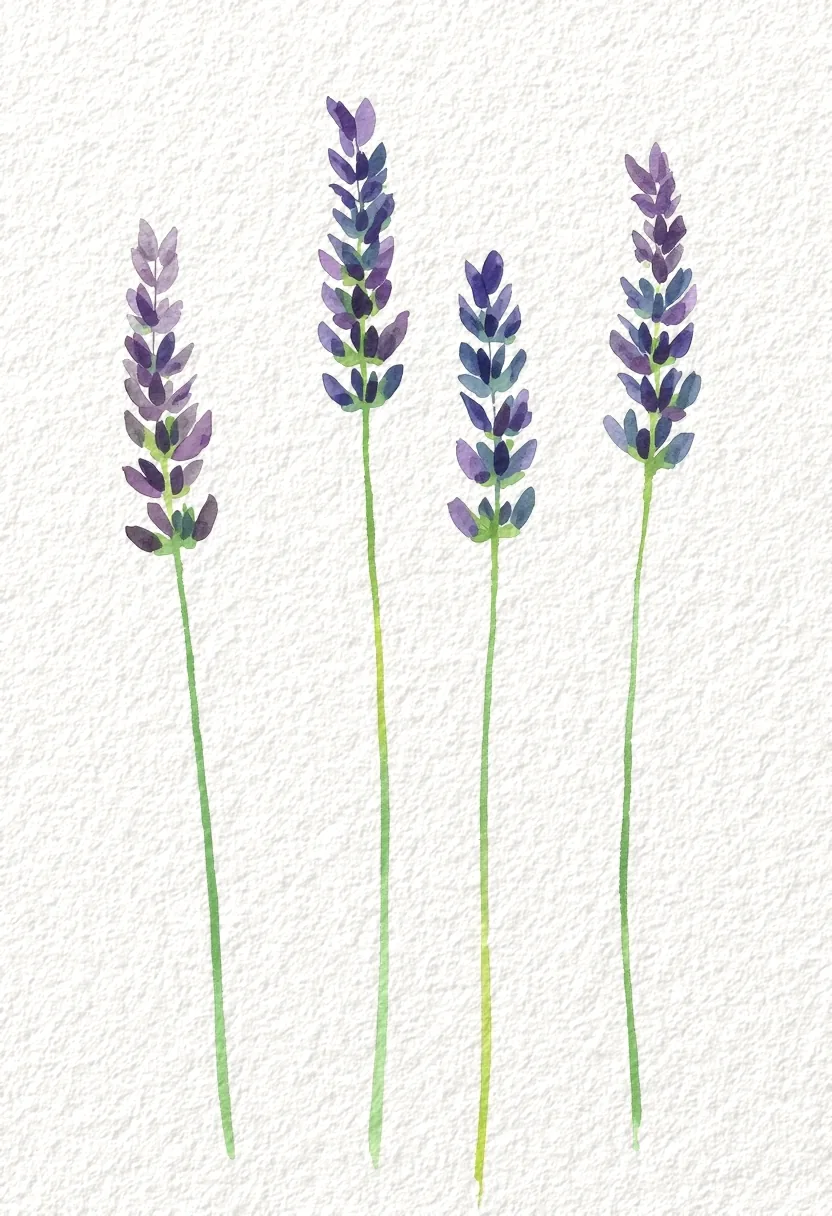 Four lavender sprigs of different heights.
Four thin green stems with clusters of small violet dashes up the top third of each, the oldest idea in the book and still the quickest.
- Palette: blue (PB29), rose (PV19), leaf green (PG7 + PY97)
- Paper: 300 gsm cold press
- Time: about 15 minutes · Difficulty: easy
1. Pull the stems. With the small round, pull four long, slightly curved leaf green lines upward. 2. Dash the flowers. Mix violet and make short angled dashes up each stem, dense at the top and sparse lower down. 3. Vary the violet. Before the dashes dry, touch a few of them with more blue so the cluster is not one flat color.
7. Leafy Eucalyptus Stem
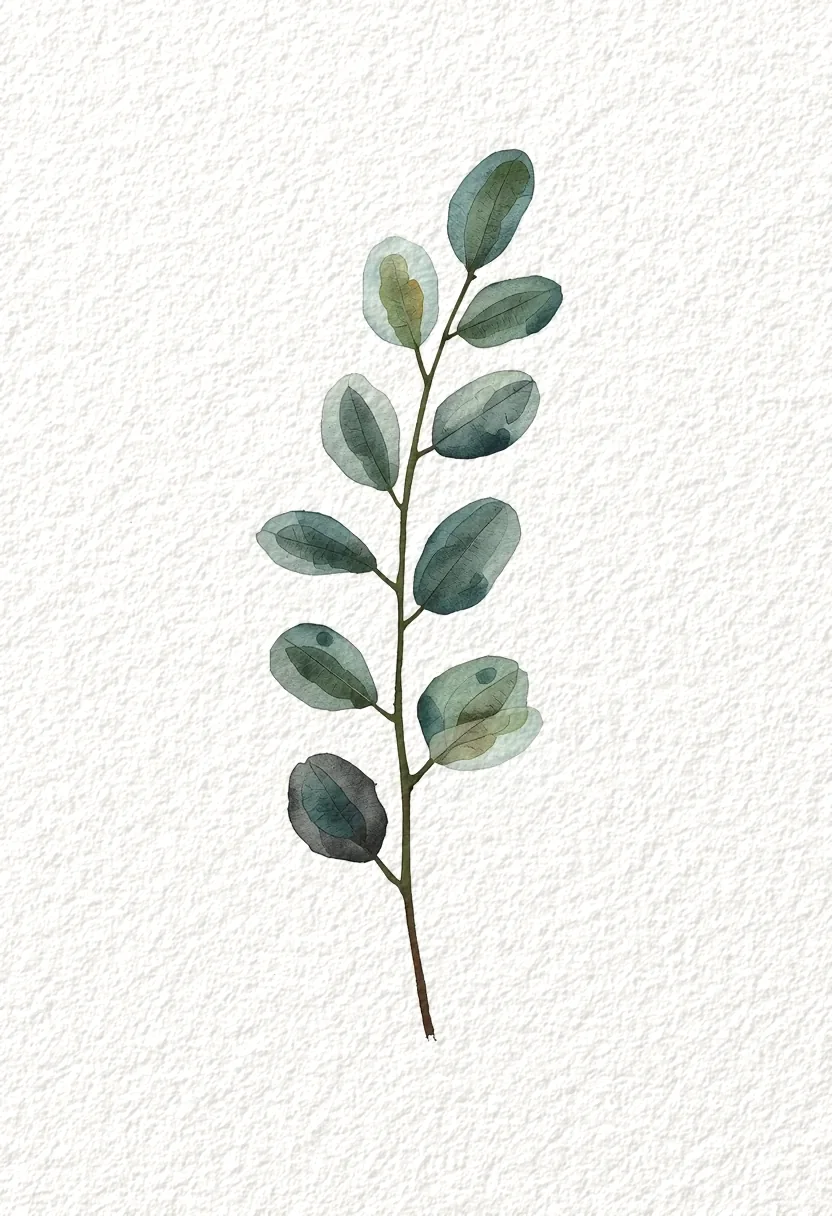 A eucalyptus stem in grey-green.
Not a flower, but the stem every bouquet needs: round grey-green leaves in pairs along a thin line.
- Palette: green (PG7), yellow (PY97), rose (PV19)
- Paper: 300 gsm cold press
- Time: about 15 minutes · Difficulty: easy
1. Mix the leaf. Make leaf green and dull it with a touch of rose to a grey-green. 2. Press the leaves. Press the brush belly to the paper once per leaf, in pairs up an imagined stem, smaller toward the tip. 3. Join them. When dry, draw a thin stem grey line through the pairs.
8. Loose Rose
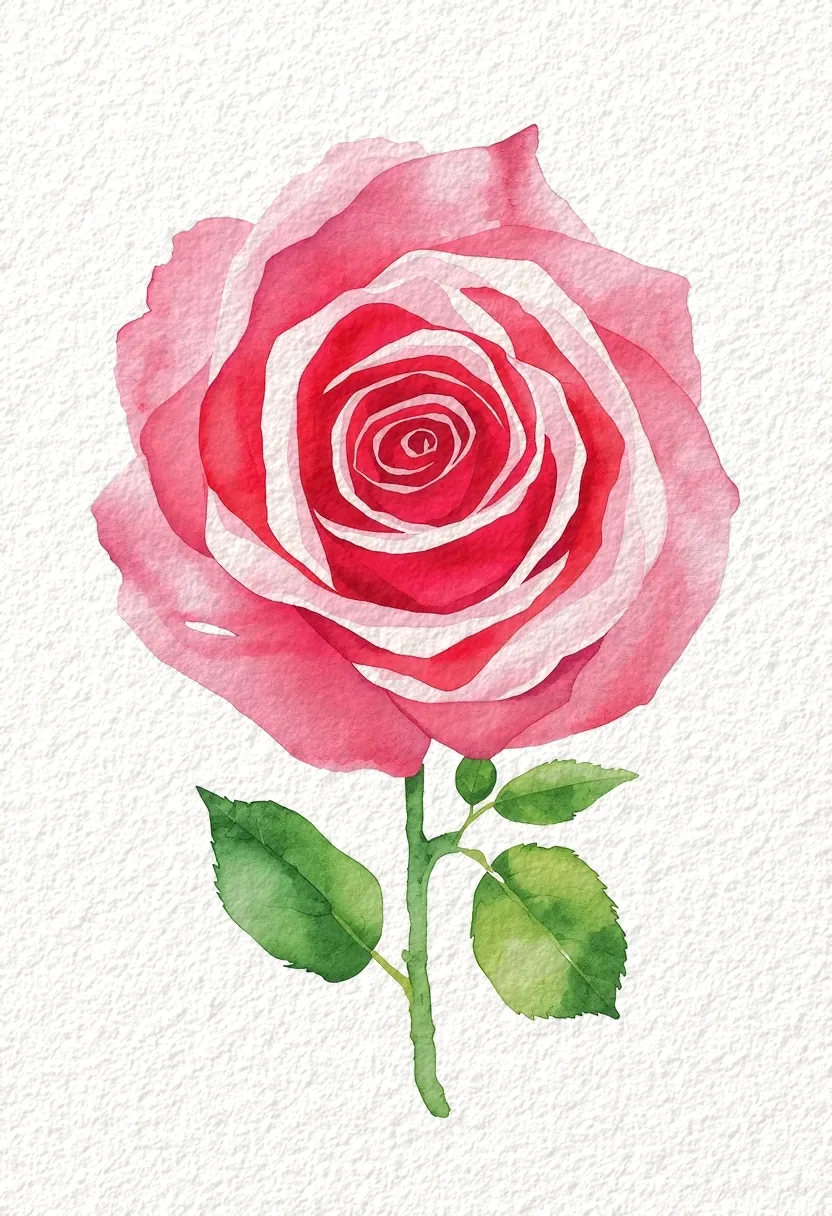 A loose rose with a spiral center.
A spiral of rose strokes that gets looser and paler toward the outside, with two leaves. The classic loose flower.
- Palette: rose (PV19), leaf green (PG7 + PY97)
- Paper: 300 gsm cold press
- Time: about 20 minutes · Difficulty: easy+
1. Spiral out. With strong rose on the brush tip, paint a tight spiral in the center, then let the strokes widen and separate as you move outward. 2. Water the edge. For the outer petals, dilute the rose on the palette so the outside of the flower is paler than the middle. 3. Leaves. When dry, add two single-stroke leaf green leaves tucked under the flower.
GODEEPER: Several flowers here drop a second color into a damp first stroke. The wet-on-wet guide covers how damp the paper should be for a soft bleed and when it is too wet. Wet-on-Wet Watercolor Technique: Complete Beginner Guide →
Easy Watercolor Flower Ideas Painted Wet-on-Wet
These four flowers start as a wet shape and get their detail from color dropped in while the paper is damp. They take a little longer because each needs a dry layer before the last touches.
9. Loose Peony
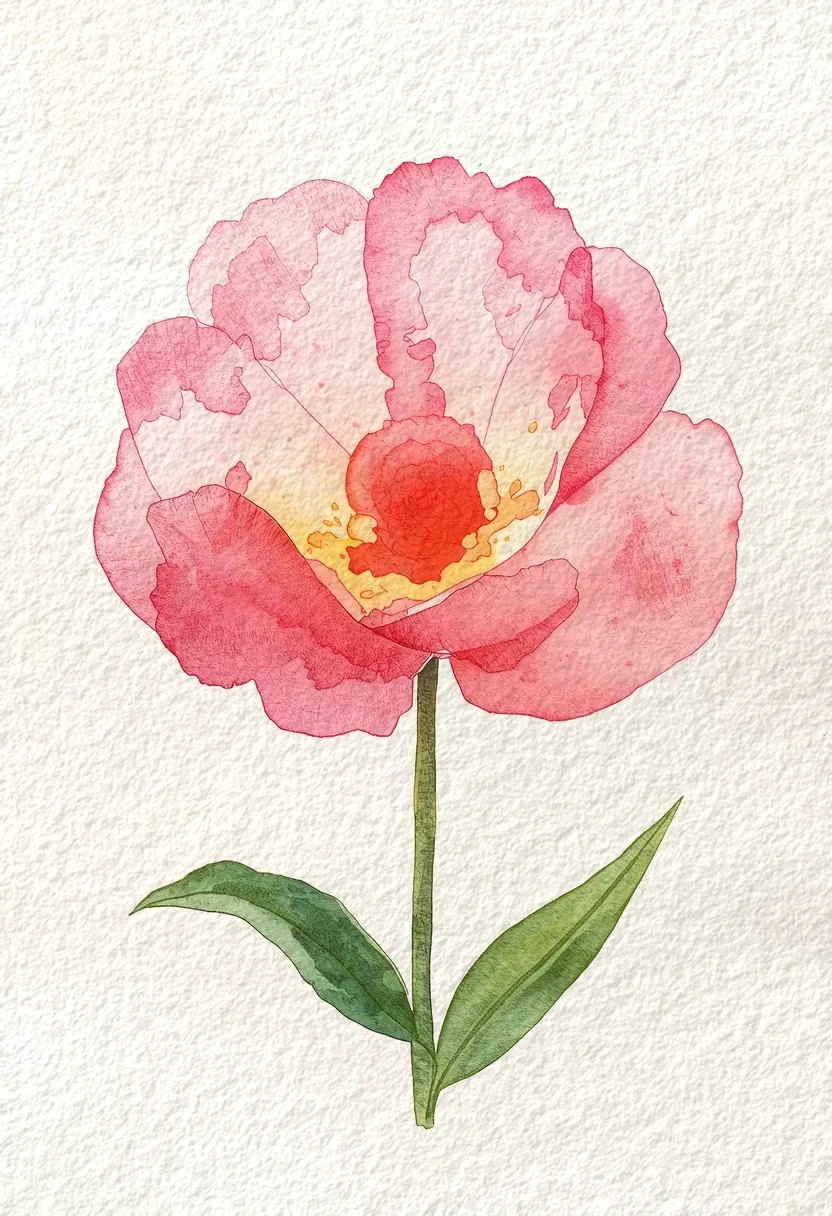 A peony with soft, uneven petals.
A big round blob of watery rose with stronger rose dropped into the center, so the petals are suggested by the bleed rather than painted.
- Palette: rose (PV19), yellow (PY97), leaf green (PG7 + PY97)
- Paper: 300 gsm cold press
- Time: about 30 minutes · Difficulty: easy+
1. Wet the shape. Paint a rough circle of very watery rose, leaving a few small gaps of bare paper inside it. 2. Drop in the center. While it is still shiny, touch strong rose into the middle and a dot of yellow beside it, and let them spread. 3. Define a few petals. When nearly dry, pull three or four short curved strokes of medium rose around the center to suggest petal edges, then add a leaf.
10. Hydrangea Head
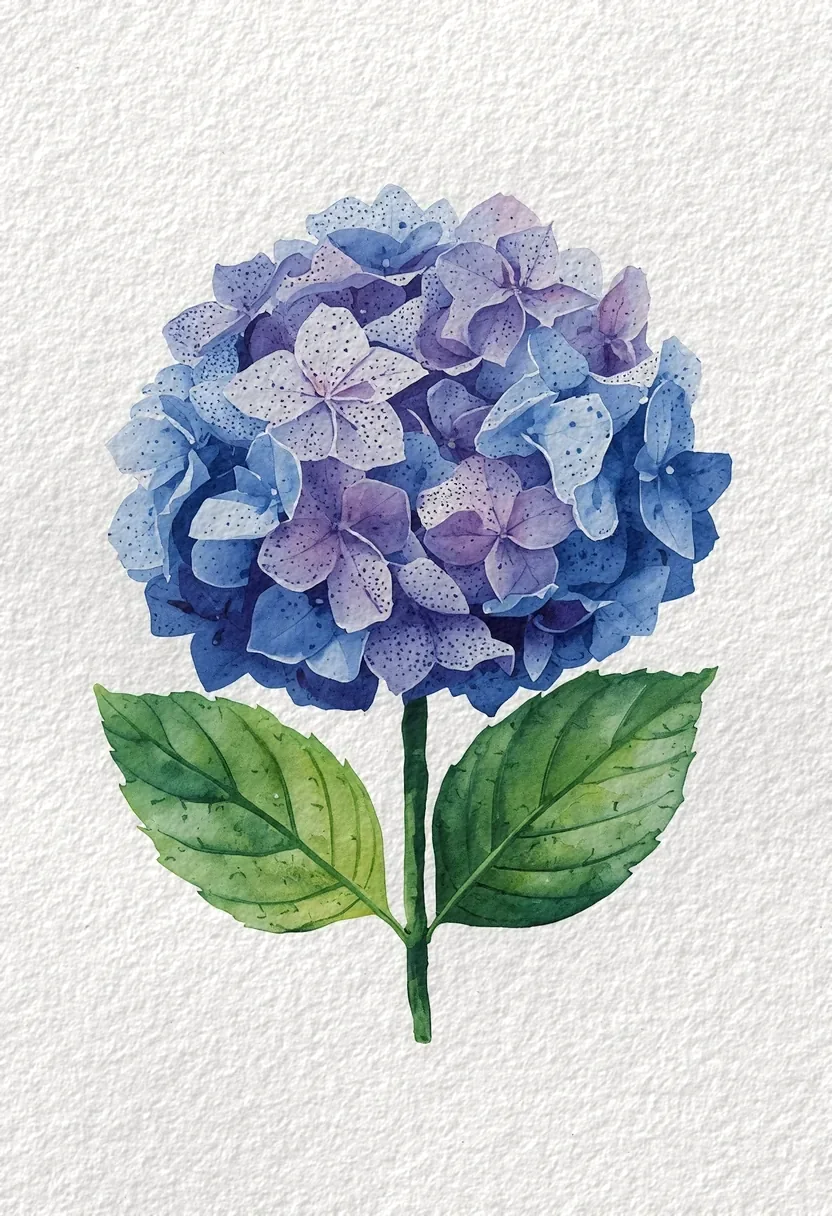 A hydrangea head built from small petal shapes.
A cluster of small four-petal florets in violet and blue that blur into each other, with a few crisp florets painted on top once dry.
- Palette: blue (PB29), rose (PV19), leaf green (PG7 + PY97)
- Paper: 300 gsm cold press
- Time: about 35 minutes · Difficulty: intermediate
1. Wash the ball. Paint a rough round of watery blue, then drop violet into one side while it is wet. 2. Let it granulate. Leave it flat to dry; the ultramarine settles into the paper's texture and gives the cluster its grain. 3. Add crisp florets. When dry, paint six or eight small four-petal florets in stronger violet over the wash, and two large leaves below.
11. Poppies in a Field
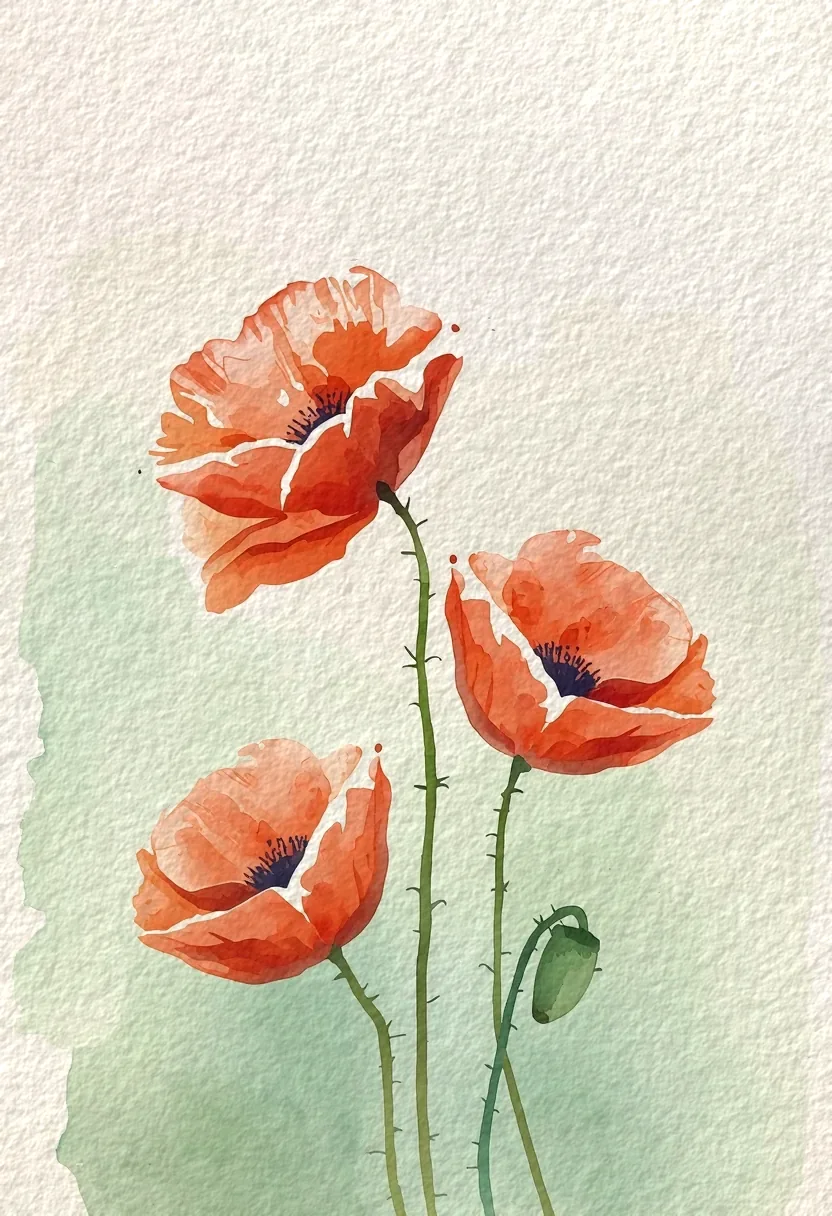 Three poppies over a pale green background.
Three loose red-orange poppies with dark centers over a soft green wash, the field painted first and the flowers on top.
- Palette: rose (PV19), yellow (PY97), green (PG7), blue (PB29)
- Paper: 300 gsm cold press
- Time: about 30 minutes · Difficulty: easy+
1. Wash the field. Wet the lower two thirds of the paper and drop in pale leaf green, darker at the bottom. 2. Paint the poppies. When dry, paint three cup shapes in coral, each from two or three overlapping presses, with a gap of paper at the top of each. 3. Centers and stems. When the poppies are dry, dot a dark blue-violet center in each and pull thin green stems down into the field.
12. Flower Wreath
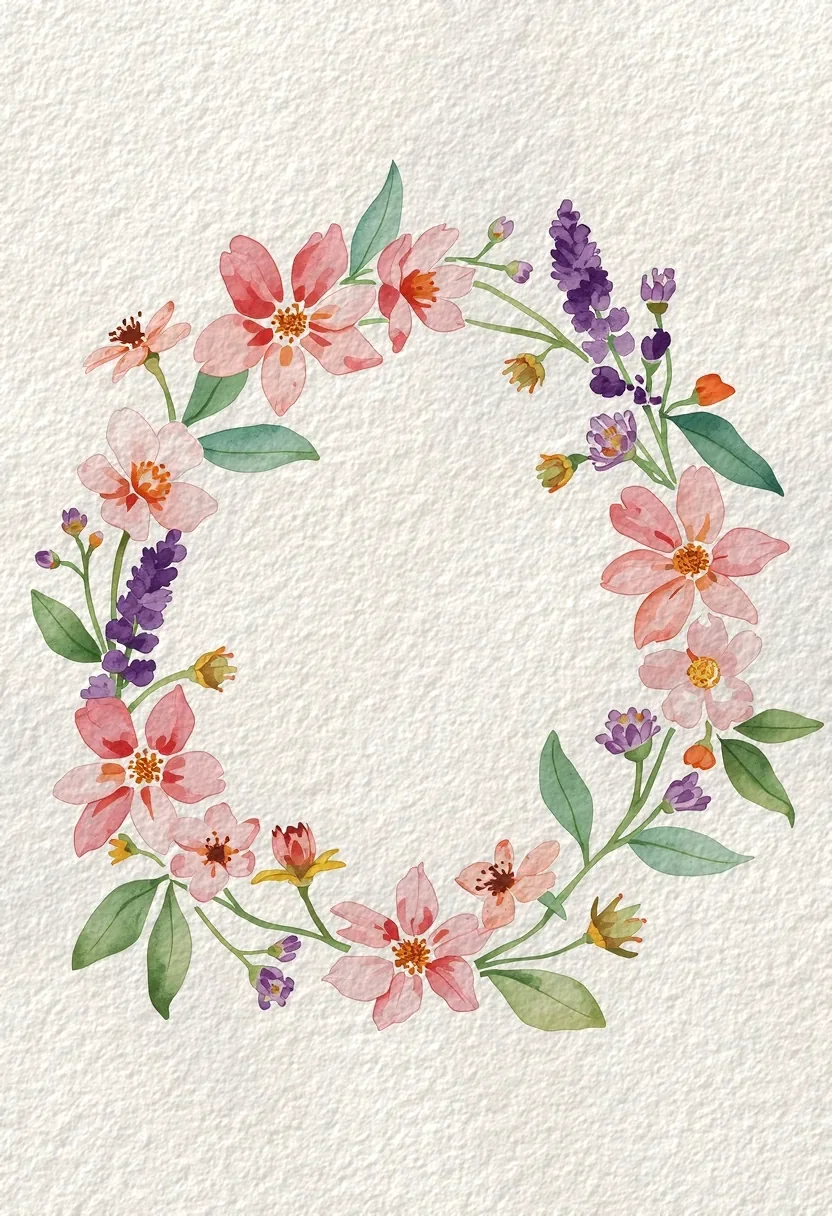 A wreath of small flowers around an empty center.
A ring of small pressed flowers and leaves around an empty center, for a card front or a monogram. Uses every move on the list.
- Palette: rose (PV19), yellow (PY97), blue (PB29), green (PG7)
- Paper: 300 gsm cold press
- Time: about 40 minutes · Difficulty: intermediate
1. Pencil a circle. Lightly draw a circle the size of a mug rim as a guide. 2. Place the flowers. Around the circle, paint three small daisies, three cherry blossoms and two lavender sprigs, spaced unevenly, and let them dry. 3. Fill with leaves. Press leaf green leaves in pairs between the flowers until the circle reads as a wreath, with a few bare gaps left on purpose.
Analysis: Which Flower to Paint First
Work through these easy watercolor flower ideas one brush move at a time. The daisy (idea 1) and the cherry blossom (idea 2) teach the pressed petal, which is the move half the list depends on. The cosmos (idea 3) stretches that press into a drag, and the sunflower (idea 4) stacks two rings of it.
The tulips (idea 5) and the lavender (idea 6) are your first pulled strokes, where the shape comes from the hand rather than the paint. The eucalyptus (idea 7) is a rest, and the rose (idea 8) is the pulled stroke made loose.
Save the wet-on-wet easy watercolor flower ideas for when you have waited for a wash to dry a few times. The peony (idea 9) is pure bleed, the hydrangea (idea 10) adds granulation and a crisp top layer, and the poppies (idea 11) put flowers over a dried wash. The wreath (idea 12) uses everything, which is why it is last.
All 12 easy watercolor flower ideas share four tubes, so paint in batches. Mix one pool of watery rose and the daisy, cherry blossom, cosmos, rose and peony are mostly painted from it. Mix one pool of leaf green for every stem and leaf on the list.
Frequently Asked Questions
What is the easiest flower to paint in watercolor? A five-petal daisy made with a pressed brush. You press the belly of a round brush to the paper five times around an empty center, and each press is one petal. There is no drawing, and a lopsided petal still reads as a flower. A first daisy takes about 10 minutes including drying.
What colors do I need for watercolor flowers? Four tubes cover every flower here: Quinacridone Rose (PV19), Hansa Yellow Medium (PY97), French Ultramarine (PB29) and Phthalo Green Blue Shade (PG7). Rose and yellow give orange and coral, blue and rose give violet, and green with yellow gives every leaf. You don't need a purple or an orange tube.
What paper is best for easy watercolor flowers? Cold-press watercolor paper at 300 gsm (140 lb). Its light texture holds a pressed-brush petal cleanly and takes the wet-on-wet flowers without buckling much. A cotton sheet gives you longer before a wash dries, which helps on the peony and the hydrangea, but a cellulose pad is fine for the one-stroke flowers.
How long does a simple watercolor flower take? Most flowers here take 10 to 30 minutes, including drying time. The daisy, the tulips and the lavender are the quickest. The peony, the hydrangea and the wreath take longer, around 40 minutes, because each has two or three layers that must dry in between before the next goes on.
Can I paint watercolor flowers without drawing first? Yes. Ten of the twelve flowers on this list are painted straight from the brush with no pencil. Only the sunflower center and the wreath circle benefit from a light pencil guide. Loose flowers look better without an outline, because a pencil line under a petal tends to show through the transparent paint.
Related Reading
- 12 Easy Watercolor Ideas for Beginners From 3 Tubes: twelve non-flower subjects in the same idea format, from three tubes.
- 10 Watercolor Birthday Card Ideas From 3 Tubes of Paint: the single-stem flower and the wreath both work at card size.
- Granulating Watercolors Explained: 7 Pigments That Settle: why French Ultramarine gives the hydrangea its grain.
- Flat Wash Watercolor Technique: Flat and Graded in 5 Steps: the green field under the poppies is a graded wash.
References

Written by
Marcus ReedTechnique Editor
Marcus Reed writes Watercolor Daily's step-by-step technique guides: wet-on-wet washes, glazing, dry brush, and the water control underneath them.
NextKeep reading
Features / 14 min
10 Watercolor Birthday Card Ideas From 3 Tubes of Paint
Features / 14 min
11 Christmas Watercolor Ideas to Paint With 5 Tubes
Features / 14 min
12 Easy Watercolor Ideas for Beginners From 3 Tubes
Features / 13 min
10 Easy Winter Watercolor Ideas From a 4-Tube Palette
Features / 15 min
12 Easy Watercolor Christmas Card Ideas for Beginners
Guides / 11 min
Dry Brush Watercolor Technique: 8 Tips for Broken Texture
Guides / 14 min
How to Clean Watercolor Brushes: 7 Steps, 3 Ways to Dry
Guides / 11 min
Flat Wash Watercolor Technique: Flat and Graded in 5 Steps
Disclaimer
This article is published for informational purposes and is not professional advice. Product formulations, pigment sources, packaging and store listings change. Check the details that matter to you (price, pigment content, regional availability) with the manufacturer or retailer before you buy.