Loading
Watercolor Daily · Features
Synthetic vs Kolinsky Sable Brushes: What You Pay For
Synthetic vs kolinsky sable brushes differ in hair, supply and care. What Kolinsky hair is, how synthetics copy it, and when a sable round is worth buying.
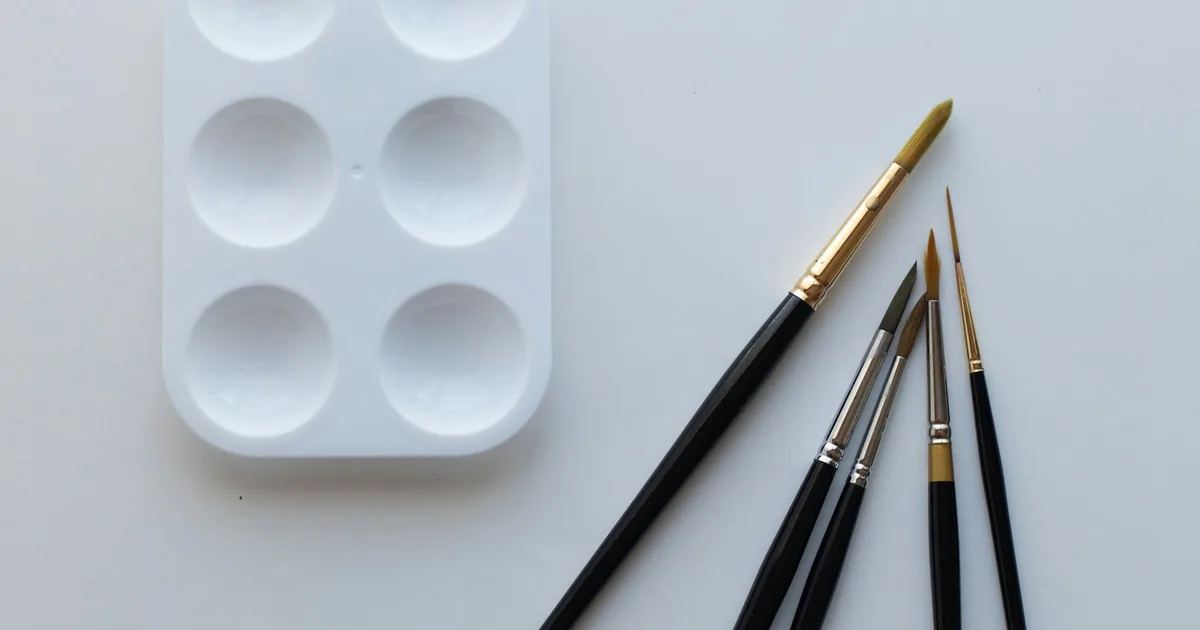
Photo: Sixteen Miles Out, Unsplash
Synthetic vs kolinsky sable brushes is mostly a choice about hair. One is an animal hair prized for its spring and point. The other is a man-made fiber built to copy it. The price gap is large, and the natural hair has been harder to get than many painters realize.
This comparison explains what Kolinsky hair is and how modern synthetics copy it. It covers why US imports stopped in 2013, and when a sable round is worth buying. It sticks to what makers and retailers publish. There are no timed lifting tests here, because I haven't run any.
In short: Kolinsky "sable" is tail hair from the Siberian weasel, prized for spring and a fine point. Synthetics such as Escoda Versatil and Princeton Aqua Elite are built to copy it. They cost a fraction of the price and use no animal hair. Buy synthetic first; add one Kolinsky round, such as a Winsor & Newton Series 7, once you know you want it.
Synthetic vs kolinsky sable brushes: which should you buy? (quick answer)
Buy synthetic brushes first. Modern synthetic Kolinsky lines come close to natural hair, cost far less and survive mistakes. Add one Kolinsky round later if you paint a lot of detail and want the extra water capacity and spring. Buy it only if you are ready to care for it.
Overview
A watercolor round has three jobs. Its belly, the full middle part, has to hold a lot of water and paint. Its tip has to come to a fine point. And the hair has to spring back to that point after each stroke. Kolinsky hair became the standard because it does all three well.
Winsor & Newton's Series 7 is the reference brush. The company says each one is hand-made in England by brush makers with over ten years' experience. It says the brush comes to "a crisp point" and "snaps back into shape during use." It dates the range's standard to 1866, when Queen Victoria asked for the finest brushes in her preferred size, No. 7.
Synthetic brushes started as a cheap substitute. They have since become a category of their own. Princeton says its Heritage Series 4050 was its first synthetic sable, introduced more than 30 years ago. Newer lines go further. Escoda's Versatil and Princeton's Aqua Elite are sold as synthetic Kolinsky, made to copy the natural hair's point and spring.
The comparison below covers the hair, the supply, how each type handles water and what each needs from you.
What Kolinsky Hair Is, and Why Supply Matters
Kolinsky is a trade name. The hair comes from the tail of the Siberian weasel (Mustela sibirica), which is not a true sable. Wikipedia notes a claim that the finest brushes use male hair only, while most use a mix. That claim is poorly documented, so treat brand grading language with caution.
Because the Siberian weasel is listed under CITES, the international agreement on trade in wild species, Kolinsky hair needs export paperwork. A US Fish and Wildlife Service official, quoted in a 2014 blog post, said India added the species to CITES Appendix III in 1989. From 2013, Kolinsky brush shipments to the United States were halted, and some were seized.
The cause was paperwork. Artists Network reported in 2015 that the existing export certificates had been used up. Imports resumed late in 2014, after two new certificates were issued, one from China and one from Russia. The animal itself is classed by the IUCN as least concern.
So Kolinsky prices and supply depend on a regulated trade that has already broken down once. If you'd rather not use animal hair at all, the synthetic lines below were made largely to fill that gap.
Synthetic vs Kolinsky Sable Brushes: Water, Point and Spring
Kolinsky holds a large load of water in the belly and lets it out steadily, while the tip stays fine. Synthetic makers treat, shape or blend their fibers to copy that.
The synthetic approaches differ. Escoda's Versatil fibers are described by retailers as specially treated filaments with a strong spring, made in Spain. da Vinci's Cosmotop Spin, according to retailer copy, mixes five fiber thicknesses. Thicker fibers sit on the outside and thinner ones in the middle, to hold color while keeping a point. Princeton's Aqua Elite is marketed as synthetic hair formulated to act like Kolinsky sable.
How close do they get? Retailers that sell both are careful about it. One listing for Escoda's synthetic Kolinsky warns that artists expecting a Kolinsky feel will notice subtle differences. Larry POST, an Australian retailer, says the Versatil travel brushes hold water "almost as well" as Escoda's Kolinsky Reserva, especially in larger sizes. Those are opinions, not measurements, but they agree. The gap is real but small, and it shows most in how long one load of water lasts.
For washes, the picture changes. Kolinsky rounds are detail and all-purpose brushes. For large, soft washes, a synthetic squirrel mop holds more water than either, as the watercolor brushes for beginners guide covers in detail.
GODEEPER: Brush hair matters most on paper that can hold water. The paper guide explains why 100% cotton is the first thing to get right. Best Watercolor Paper for Beginners: Why 100% Cotton Matters →
Size Numbers Across Synthetic and Kolinsky Lines
A size 8 round is not a fixed size. Each maker numbers its own line. The gap between two brands' size 8s can be bigger than the difference between hair types.
Blick and Utrecht list the Winsor & Newton Series 7 size 8 at 5.6 mm wide and 27 mm long. Larry POST lists the Escoda Versatil travel round size 8 at 4.4 x 22 mm. Escoda's size 8 is a short travel brush, so it's naturally smaller. Still, a "size 8" sable and a "size 8" synthetic are not the same size.
When you replace a sable with a synthetic, or the other way round, match the hair length and width in millimeters. Most specialist retailers list them.
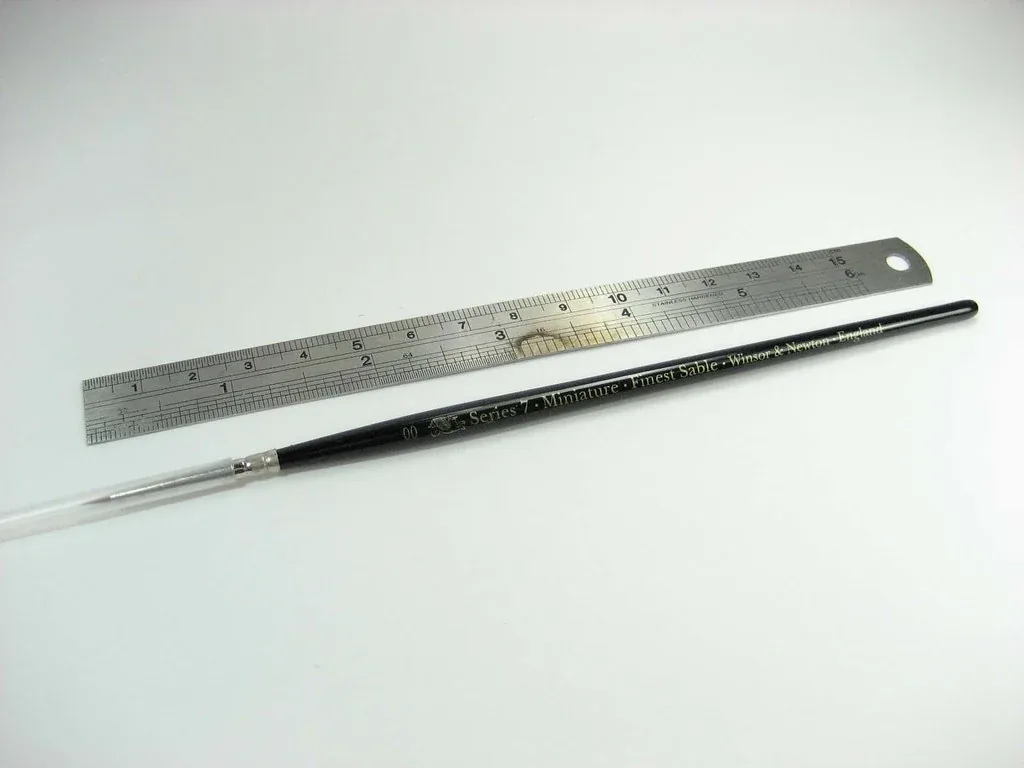 A Winsor & Newton Series 7 Miniature in size 00 beside a ruler. The size number only means something within one maker's line, so measure hair in millimeters when comparing. Photo: mechnine, Flickr, CC BY 2.0.
Care, Lifespan and Cost
Kolinsky hair rewards care and punishes neglect. Synthetics forgive almost everything. For many painters, that matters more than any difference on the paper.
Rinse a natural-hair round in clean water, gently reshape the point, and dry it lying flat. Leaving it standing in the water jar bends the tip. Harsh solvents and acrylic paint damage the hair. With that routine, a sable round lasts a long time. Without it, an expensive brush can lose its point in a season.
Synthetics tolerate scrubbing, lifting, masking fluid mishaps and the occasional night in the jar. They're also the practical choice for anyone mixing media, since acrylic dries hard in natural hair.
The cost gap is large and varies by shop and size, so check current prices. In general, a Kolinsky round costs many times as much as a synthetic of the same size. For a beginner, that money does more as cold press cotton paper and a few artist-grade paints.
GODEEPER: If the paint budget is the bigger question, the student vs artist grade comparison shows where an upgrade changes your results. Student vs Artist Grade Watercolor: 6 Pigments Compared →
Side-by-Side Summary
- Hair: Kolinsky: tail hair of the Siberian weasel / Synthetic: manufactured filaments, often treated, crimped or blended.
- Point and spring: Kolinsky: the traditional benchmark / Synthetic: close in good lines such as Versatil and Aqua Elite.
- Water capacity: Kolinsky: holds and releases gradually / Synthetic: slightly less, or releases faster, depending on line.
- Supply: Kolinsky: CITES-regulated, US imports halted in 2013 to late 2014 / Synthetic: no restrictions.
- Care: Kolinsky: gentle cleaning, no solvents or acrylic / Synthetic: tolerates scrubbing and mixed media.
- Animal hair: Kolinsky: yes / Synthetic: no, often sold as vegan.
Who Should Buy Which
Buy synthetic if you're learning, painting outdoors, mixing media, or prefer brushes without animal hair. A synthetic Kolinsky round in a medium size covers most watercolor work, and a lost or ruined one is easy to replace. Travel versions, such as Escoda's Versatil travel rounds or Jackson's synthetic Kolinsky travel brushes, suit a pocket paint box.
Buy one Kolinsky round if you paint a lot of detail, have a cleaning routine, and want the longest strokes from one load. One good round in a medium size gets the most use; it doesn't need to be a full set.
Consider a blend if you want a middle ground. Several makers sell natural and synthetic mixes, which the beginners brush guide describes.
For most painters, the synthetic vs kolinsky sable brushes decision ends the same way. Synthetics do most of the work, with at most one sable round for detail.
Frequently Asked Questions
What is Kolinsky sable hair? Kolinsky hair comes from the tail of the Siberian weasel, Mustela sibirica, not from a true sable. The name is a trade term. Brush makers prize it for its spring and fine point, and Winsor & Newton's hand-made Series 7 is the best-known Kolinsky watercolor brush line.
Are synthetic brushes as good as Kolinsky sable? Close enough for most painting. Lines such as Escoda Versatil and Princeton Aqua Elite are designed to copy Kolinsky's spring and point. Painters who use both still notice small differences in how much water the brush holds and how slowly it lets it go. Test one size before replacing a whole set.
Why are Kolinsky brushes so expensive? The hair is a limited natural material and the best brushes are shaped by hand. Winsor & Newton says its Series 7 brushes are hand-made in England by brush makers with over ten years of experience. Supply has also been disrupted, as when US imports stopped in 2013 over CITES paperwork.
Is it legal to buy Kolinsky brushes in the US? Yes, with the right export paperwork. The Siberian weasel is listed under CITES, and from 2013 the US Fish and Wildlife Service halted and in some cases seized Kolinsky shipments. Artists Network reported that imports resumed in late 2014 after new export certificates were issued from China and Russia.
Do synthetic watercolor brushes last longer than sable? They usually tolerate rough use better. Synthetics handle scrubbing, acrylic and accidental neglect, while natural hair needs gentle cleaning and careful drying. A Kolinsky round can last many years with good care, but one careless season can ruin its point, which is costly to replace.
What is a good synthetic alternative to Kolinsky sable? Look for a line marketed as synthetic Kolinsky or synthetic sable. Escoda Versatil, Princeton Aqua Elite and Princeton Heritage are common examples, and Jackson's sells a synthetic Kolinsky travel brush as a vegan-friendly alternative. Compare sizes in millimeters, since a size 8 differs between brands.
Related Reading
- Watercolor for Beginners: Essential Supplies & Buying Guide: where brushes fit in a first kit and how much to spend on each part.
- Wet-on-Dry Watercolor Technique: Crisp Edges in 6 Steps: the detail work where a fine point matters most.
- Rough Watercolor Paper: Granulation, Dry Brush and 6 Steps: dry brush, where the brush's spring shapes the mark.
References
- Winsor & Newton: Series 7 Kolinsky Sable Brush - Hand-made construction, point and the 1866 origin of the range.
- Wikipedia: Kolinsky Sable-Hair Brush - The Siberian weasel, CITES and the 2013 US shipment halt.
- Artists Network: Kolinsky Sable Brush Availability - Export certificates and the resumption of US imports in 2014.
- Blick: Winsor & Newton Series 7 Round, Size 8 - Listed width and length.
- Larry POST: Escoda Versatil 1548 Travel Brush, Size 8 - Synthetic Kolinsky alternative, size and description.

Written by
Arthur SterlingSupplies & Reviews Editor
Arthur Sterling writes Watercolor Daily's supply reviews and brand comparisons: paints, cotton papers, and brushes, compared on published specifications.
NextKeep reading
Guides / 16 min
Best Watercolor Brushes for Beginners: 3 Shapes to Buy
Guides / 14 min
How to Clean Watercolor Brushes: 7 Steps, 3 Ways to Dry
Features / 12 min
Watercolor Paper Weight GSM: 190 vs 300 vs 640 Explained
Features / 12 min
Ceramic vs Plastic Watercolor Palette: 5 Differences
Features / 11 min
Watercolor Block vs Pad vs Sheets: Cost per Square Inch

Features / 13 min
Best Watercolor Paints for Beginners: 5 Sets Compared

Features / 11 min
Best Travel Watercolor Sets: 5 Pocket Boxes Compared

Features / 12 min
Best Watercolor Sketchbooks: 4 With 100% Cotton Paper
Disclaimer
This article is published for informational purposes and is not professional advice. Product formulations, pigment sources, packaging and store listings change. Check the details that matter to you (price, pigment content, regional availability) with the manufacturer or retailer before you buy.