Loading
Watercolor Daily · Guides
Rough Watercolor Paper: Granulation, Dry Brush and 6 Steps
12 min readBy Elena Vance
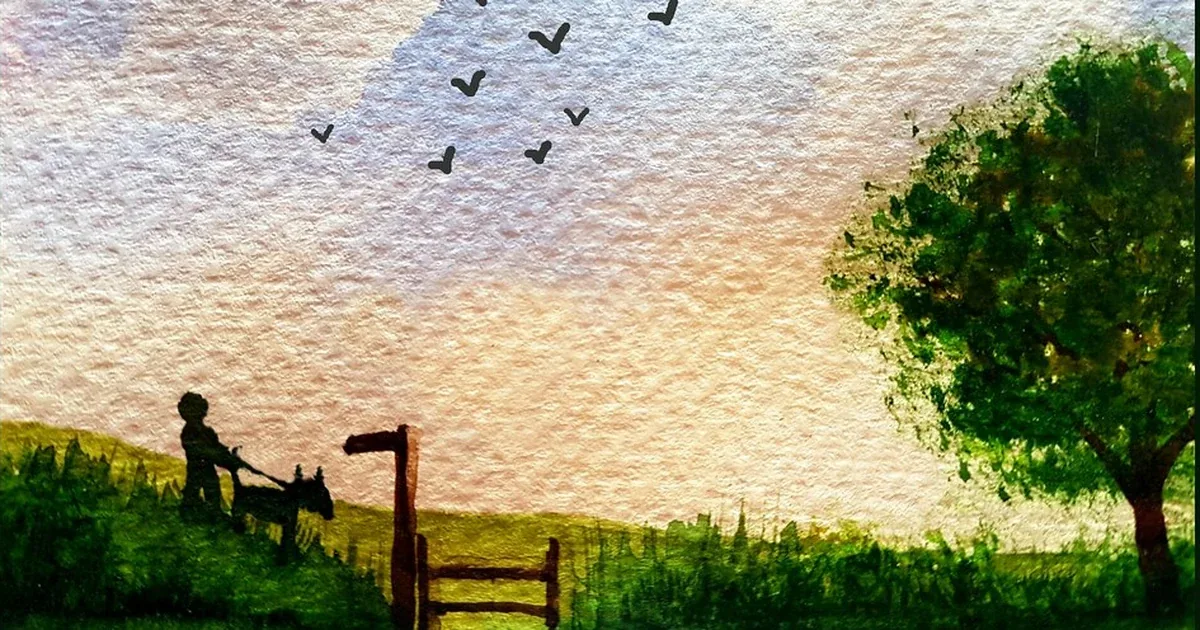
Painting and photo: CharmaineZoe's Marvelous Melange, Flickr, CC BY 2.0
Review
Rough Watercolor Paper
Rough watercolor paper is the most heavily textured of the three standard surfaces, and it changes what paint does more than any other sheet. Granulating colors settle into its hollows, and a dry brush skips across its peaks. Both effects make rough the usual choice for skies, water and stone.
This guide explains what rough paper is, which weights and formats you can actually buy it in, why it exaggerates granulation, and how to use it in a six-step granulating sky with dry-brushed water. The facts come from Arches, St Cuthberts Mill and Winsor & Newton.
In short: Rough paper is the most textured surface, with "deep valleys and peaks" that St Cuthberts Mill says aid granulation. Winsor & Newton lists rough papers for "maximum granulation." It only exaggerates paints that already granulate, such as French Ultramarine (PB29). Arches sells rough from 300 gsm up to 850 gsm, never in its lightest 185 gsm weight.
What is rough watercolor paper? (quick answer)
Rough watercolor paper is a sheet left with the most surface texture, made by pressing woollen felts into the wet paper and not smoothing them out. It suits granulating skies, dry brush and loose landscapes. It is harder to use for fine detail or perfectly flat washes.
Rough Watercolor Paper: Key Takeaways
- Most texture: St Cuthberts Mill calls rough "the most textured of the surfaces," chosen "for landscapes, seascapes, and bold expressive work."
- Granulation: Winsor & Newton says rough papers "accentuate granulated effects, as the pigment settles into the crevices of the paper."
- Paint matters: granulation depends on the paint, the paper and any medium. Rough exaggerates it; it doesn't create it.
- Weights: Arches rough runs from 300 to 850 gsm. Its 185 gsm paper is cold and hot pressed only.
- Dry brush: less water and quick strokes leave paint on the peaks and white paper in the hollows.
Overview
Every watercolor surface starts as a textured sheet. St Cuthberts Mill presses woollen felts into the wet paper to make the texture, and smooths it with heated rollers for cold and hot pressed surfaces. Rough is the surface left closest to the felt. The mill describes it as having "deep valleys and peaks to aid lots of lovely granulation."
The names vary by country. Rough is called torchon in French, and Arches sells glued pads labeled torchon that retailers list as rough. A label marked R, rough or torchon describes the same finish.
You can't buy rough in every weight. On its Aquarelle page, Arches lists rough sheets at 300, 356 and 640 gsm, plus an 850 gsm sheet sold only in rough and cold pressed. Rough also comes in 300 gsm blocks glued on all four sides, glued pads and rolls. The lightest Aquarelle, 185 gsm, comes only in cold and hot pressed. In the watercolor paper weight gsm guide, 300 gsm is the standard, so rough effectively starts at the standard weight. Saunders Waterford rough is sold by retailers as a 300 gsm block of 20 sheets, 100% cotton and gelatine sized.
Weight also changes the texture. Handprint notes that heavier sheets from one maker usually have a coarser texture within the same finish, so a 640 gsm rough is likely rougher still than a 300 gsm rough from the same mill.
GODEEPER: Rough is one of three surfaces, and how mills make each one explains what it does under a brush. Hot Press vs Cold Press Watercolor Paper: 3 Surface Types →
Why Rough Watercolor Paper Exaggerates Granulation
Rough paper exaggerates granulation because its deep hollows give heavy pigment particles somewhere to settle. Winsor & Newton ranks paper texture directly: "Maximum granulation: Rough texture papers," and "Moderate granulation: Medium texture papers." The paint still has to granulate in the first place.
Granulation is the speckled texture some paints leave as their pigment particles settle unevenly. Winsor & Newton names three things that control it: the paint, the paper and any medium you add. Rough paper is the paper half of that. It gives a granulating paint more hollows to collect in, so the speckle becomes coarser and more visible.
The paint matters as much as the sheet. Winsor & Newton lists French Ultramarine (PB29) as a granulating color, and it's the classic choice for a granulating sky. A smooth, staining paint won't granulate much on any surface. Check the maker's color chart before you buy: Daniel Smith, for example, labels each color on its Try-It dot card with a granulation rating, next to transparency and lightfastness. Painters often single out its Lunar Black for heavy granulation.
For a smooth paint, Winsor & Newton sells Granulation Medium, which it says "gives a mottled appearance to colours that would normally have a smooth wash." On rough paper the effect is stronger again.
Winsor & Newton suggests a simple test for any paint: wet the paper, apply the color, then "gently rock the paper to allow the pigment to settle." Run it on a scrap of the rough sheet you plan to use. If the swatch stays smooth, that paint won't give you a granulating sky.
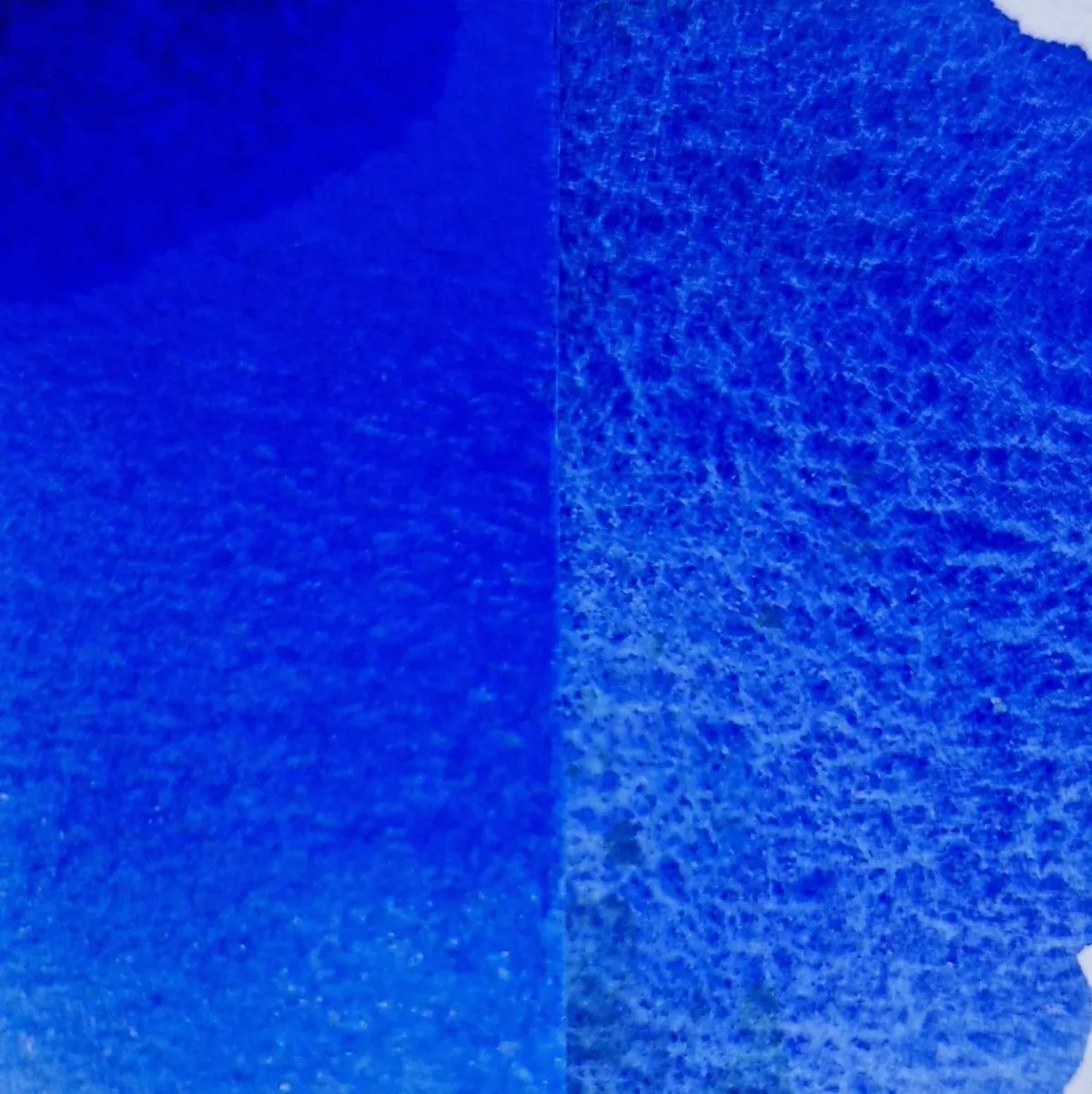 Ultramarine blue laid concentrated on the left and diluted on the right, where the pigment has settled into a speckled granulating texture. Photo: Les.aqua, Wikimedia Commons, CC0.
Dry Brush on Rough Paper
Dry brush means dragging a brush with thick paint and little water across dry paper, so the paint lands only on the high points of the texture. On rough paper the peaks are higher and the hollows deeper, so the stroke breaks up more and leaves more white paper showing.
Winsor & Newton describes dry brush as "using less water, to leave more pigmented, scratchy marks." Painters who teach the technique agree on how to hold the brush: use a flat or the side of a round, keep it low to the paper, and pull the stroke quickly. A slow stroke, or one with too much water, pushes paint down into the hollows and fills them in.
The result reads as light. A dry-brushed stroke across a rough-paper lake leaves specks of white that look like sun on water. The same stroke on tree bark or stone reads as texture. The underlying wash has to be completely dry first; on damp paper, the dry-brushed paint will spread and lose its broken edge, which is the wet-on-dry watercolor technique rule applied to texture.
Brush shape changes the mark. A flat gives a wide band of broken texture, while the side of a round gives narrower, more varied strokes. The watercolor brushes guide covers which shapes to own.
Step-by-Step
1. Tape or block the paper. Use a 300 gsm rough sheet glued in a block, or tape all four edges of a loose sheet to a board. Rough paper cockles under a wet sky like any sheet of its weight.
2. Reserve the whites. Mark any clouds or highlights you want to stay white with masking fluid and let it dry. Winsor & Newton notes that masking fluid flicked from a brush preserves the paper and creates "sharp shapes and starry textures when overlaid with a wash," which on rough paper keeps the paper's texture inside each white shape.
3. Lay a granulating sky. Wet the sky area with clean water. Drop in a granulating blue such as French Ultramarine, mixed wet enough to flow, and let it spread. Tilt or gently rock the board so the pigment moves and settles into the paper's hollows, as in Winsor & Newton's granulation test.
4. Leave it to settle and dry flat. Don't brush back into the wash. Granulation forms as the pigment settles, so lay the board flat and leave it. One painter's tip for stronger granulation is to slow the drying by dampening the back of the sheet first.
5. Dry brush the water or foreground. When the sky is fully dry, mix a thick, darker color with little water. Blot the brush, hold a flat or the side of a round low to the paper, and drag quick horizontal strokes across the water area. The paint catches the peaks and leaves white specks for sparkle.
6. Remove the masking and add the last details. Rub off the masking fluid once the paper is bone dry. Add the few dark accents the painting needs, such as tree trunks or a horizon line, with a round brush. Keep detail to a minimum, since rough texture breaks up fine lines.
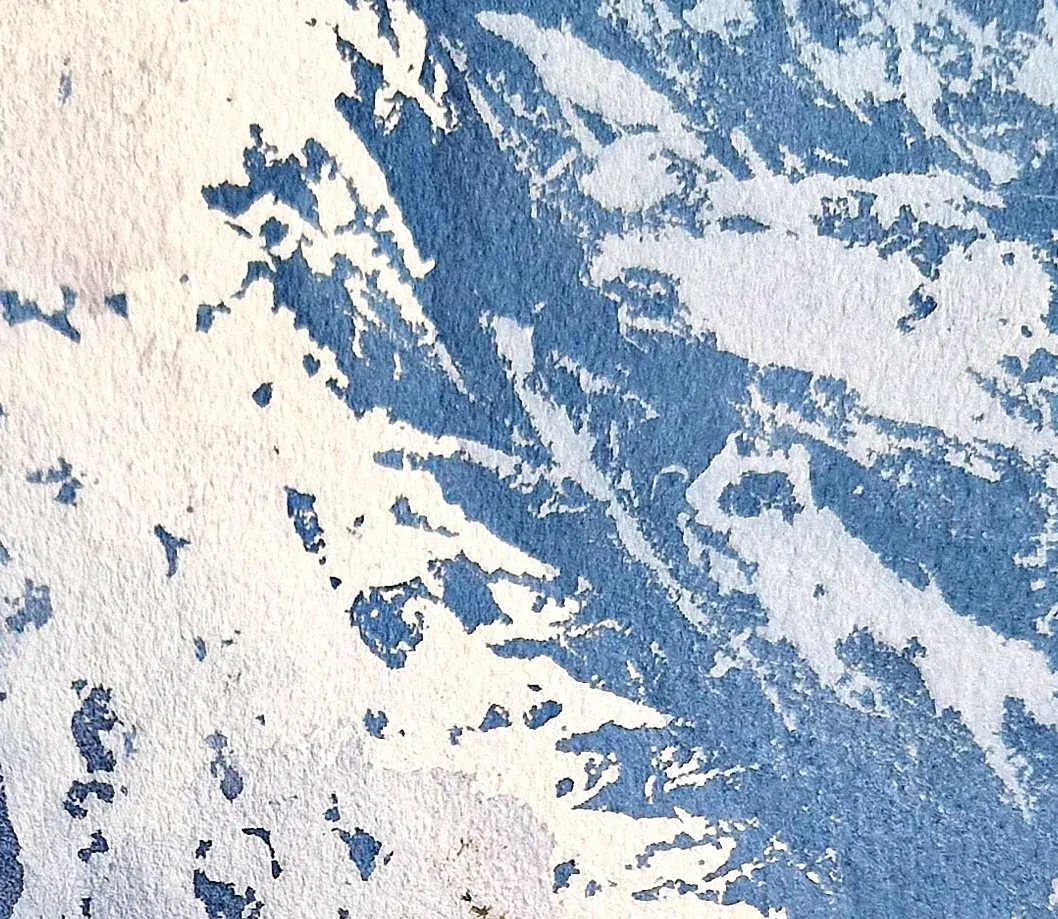 Blue wash painted over masking fluid and then unmasked: the protected areas stay white with sharp, irregular edges, and the paper's texture shows through the color. Photo: Les.aqua, Wikimedia Commons, CC BY 4.0.
Tips
Pick paints by their chart, not by name. The granulation rating on a color chart tells you more than the color name. French Ultramarine granulates. A smooth, staining blue won't, whatever paper you use.
Buy the heavier sheet for big wet skies. At 640 gsm, a rough sheet cockles far less, and Handprint's note that heavier sheets are coarser in the same finish means you also get more texture.
Keep a cold press block for detail. Rough breaks up fine lines and makes flat, even washes harder. A practical split is rough for skies and water and cold press for subjects that need detail.
Test the sheet's two sides. Mould-made rough paper has a felt side and a mould side. St Cuthberts Mill packs the felt side uppermost and treats it as the main painting side, though both sides can be painted.
Try a rough sketchbook before buying full sheets. Khadi's handmade 210 gsm cotton rag books come in a rough surface, which the watercolor sketchbooks comparison covers alongside three other cotton books.
GODEEPER: Rough paper exaggerates what the paint does, and wet washes are where granulation forms. The wet-on-wet guide covers timing those washes. Wet-on-Wet Watercolor Technique: Complete Beginner Guide →
Common Mistakes
Expecting rough paper to make any paint granulate. It won't. Use a granulating color, or add Granulation Medium to a smooth one.
Brushing back into a settling wash. Each pass stirs up the pigment and evens it out. Lay the granulating wash once and let it settle.
Dry brushing too slowly or too wet. A slow, wet stroke fills the hollows and gives a flat mark. Blot the brush and move fast.
Planning fine detail on rough. Small lettering, thin rigging lines and botanical detail fight the texture. Choose subjects that use the texture instead.
Frequently Asked Questions
What is rough watercolor paper used for? Rough paper suits landscapes, seascapes and loose, expressive painting. St Cuthberts Mill calls it the most textured of the three surfaces, with deep valleys and peaks that help granulation. Painters also use it for dry brush, where the paint catches only the peaks and leaves broken, sparkling strokes.
Is rough or cold press better for beginners? Cold press is the easier start. Its medium texture handles most techniques and still shows some granulation. Rough exaggerates texture, which is great for skies and water but makes fine detail and smooth flat washes harder. Learn on cold press, then add a rough block for textured work.
Does rough paper make all watercolors granulate? No. Winsor & Newton says granulation depends on the paint, the paper and any medium used. Rough paper exaggerates granulation in paints that already granulate, such as French Ultramarine, but a smooth, staining paint will still lay down fairly evenly. Granulation Medium can add a mottled look to smooth paints.
What weight does rough watercolor paper come in? Usually 300 gsm (140 lb) and heavier. Arches sells its Aquarelle rough in 300, 356 and 640 gsm sheets and an 850 gsm sheet, plus 300 gsm blocks and pads. Its lightest 185 gsm paper comes only in cold and hot pressed, so rough starts at the standard weight.
What is torchon watercolor paper? Torchon is the French name for a rough surface. Arches sells pads labeled torchon, and retailers list them as rough. Torchon, rough and R on a label all describe the most textured finish, the opposite end of the scale from smooth hot pressed paper.
How do you dry brush on rough watercolor paper? Use little water and thick paint. Winsor & Newton describes dry brush as using less water to leave more pigmented, scratchy marks. Load a flat brush or the side of a round, blot it, and drag it quickly and low across dry paper so the paint catches only the peaks.
Related Reading
- Best Watercolor Paper for Beginners: Why 100% Cotton Matters: fiber and sizing, the two things to check before surface.
- Daniel Smith vs Winsor & Newton: Pro Watercolor Review: two ranges with strong granulating colors.
- Split-Primary Palette Guide: Mix Any Color with 6 Tubes: a six-tube palette that includes a granulating ultramarine.
References
- St Cuthberts Mill: Watercolour Paper Surfaces - Rough as the most textured surface, and how felts make texture.
- Winsor & Newton: Granulation Techniques in Watercolour - Paper texture and granulation, the rocking test, Granulation Medium and dry brush.
- Winsor & Newton: Best Watercolour Paper for Granulation - Why rough papers accentuate granulation.
- Arches: Arches Aquarelle - Rough sheets, blocks, pads and rolls by weight.
- Handprint: Watercolor Paper Tests - Heavier sheets and coarser texture within one finish.
Was this guide helpful?

Written by
Elena VancePigments & Color Editor
Elena Vance writes Watercolor Daily's pigment and color coverage: Colour Index codes, lightfastness ratings, transparency, and palette building.
NextKeep reading
Features / 12 min
Watercolor Paper Weight GSM: 190 vs 300 vs 640 Explained
Features / 12 min
Best Watercolor Sketchbooks: 4 With 100% Cotton Paper
Features / 11 min
Hot Press vs Cold Press Watercolor Paper: 3 Surface Types
Guides / 11 min
How to Stretch Watercolor Paper: 3 Methods by Weight
Features / 11 min
Watercolor Block vs Pad vs Sheets: Cost per Square Inch
Guides / 9 min
Best Watercolor Paper for Beginners: Why 100% Cotton Matters
Guides / 11 min
Dry Brush Watercolor Technique: 8 Tips for Broken Texture
Guides / 14 min
How to Clean Watercolor Brushes: 7 Steps, 3 Ways to Dry
Disclaimer
This article is published for informational purposes and is not professional advice. Product formulations, pigment sources, packaging and store listings change. Check the details that matter to you (price, pigment content, regional availability) with the manufacturer or retailer before you buy.