Loading
Watercolor Daily · Guides
Masking Fluid Watercolor Guide: 7 Steps and 3 Products
12 min readBy Marcus Reed
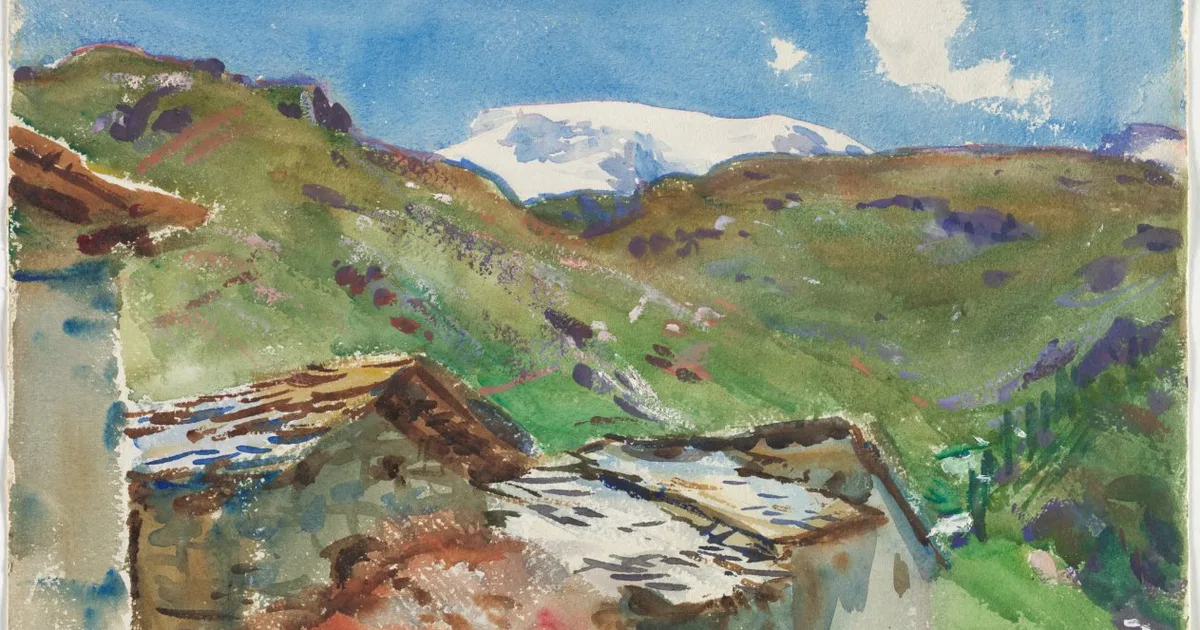
Review
Masking Fluid
Masking fluid watercolor painting saves the paper's white for you: a cloud edge, a fence post, the glint on a wave. You paint the liquid latex onto dry paper, wash color over the whole area, then rub the latex off to find clean white underneath. Done right it takes a minute. Done wrong it tears the paper, and most of the horror stories come from the same three mistakes.
This guide gives the seven steps in order, with the timing that matters, and compares the three products a beginner is most likely to buy.
In short: Apply masking fluid only to bone-dry paper, with an old brush rubbed on soap first. Let the fluid dry on its own for 10 to 20 minutes, paint, let the paint dry, then rub the latex off with a clean finger or a rubber cement pickup the same day. Winsor & Newton tells you to remove it as soon as possible, and Molotow sets a two-day limit. A gelatin-sized cotton sheet is the paper least likely to tear.
How do you use masking fluid in watercolor? (quick answer)
Paint the fluid onto dry paper where you want to keep the white, let it dry fully, paint your wash over it, let the paint dry, then rub the latex off with a clean finger. The whole masking fluid watercolor job works when the paper is dry at both ends and the latex comes off within a day. Everything else in this guide is detail around those two rules.
Overview
Masking fluid is a liquid latex. When it dries it forms a thin rubbery skin that water and pigment can't pass through. Watercolor only colors the paper it can soak into, so the skin keeps the paper under it white until you peel the skin away.
That makes it the right tool for small, sharp whites that would be slow to paint around: a row of fence posts, the ripples of light on water, snowflakes, the stems in a bunch of grass. It is the wrong tool for a large white shape, which you can simply paint around, and for soft-edged whites, because a masked edge is always hard.
Three things decide whether masking fluid watercolor work succeeds, and all three are about the paper rather than the fluid. The sheet must be dry, or the latex soaks in and bonds. The fluid must come off soon, before it has time to cure into the fibers. And the paper must have enough surface sizing to let the skin lift. Winsor & Newton's own guide says to use gelatin surface-sized paper, which will help prevent the fluid from adhering too strongly to the paper. Sizing is the coating a mill adds to control how fast water soaks in, and cotton sheets such as Arches carry gelatin sizing. The best watercolor paper for beginners guide explains which sheets have it.
The masked edge will be crisp. That is the point and also the limit. If you want a soft white, such as mist or a glow, leave the paper bare and paint around it on damp paper instead, as the wet-on-wet watercolor guide shows.
Which Masking Fluid Watercolor Product to Buy
Three masking fluid watercolor products cover most beginners. Prices are what the makers or Blick listed on 7 November 2026.
Winsor & Newton Art Masking Fluid. The standard bottle. Winsor & Newton describes it as a lightly tinted liquid for temporarily masking paper, and prints two warnings on the product page: do not apply on damp or soft sized paper, and remove as soon as possible after application. It comes in 75 ml (from $20.89 on the maker's US site) and 250 ml ($51.69). The light yellow tint shows you where it is. A colourless version exists for soft papers the tint might stain.
Molotow Grafx Art Masking Liquid pump marker. The same kind of latex in a pen, with a 2 mm or 4 mm tip, at $10.55 and $11.37 on Blick. It gives you lines of a fixed width without a brush, which suits grasses, rigging and lettering. Molotow says to remove the masking within two days, and Blick warns the pen becomes unusable if frozen in transit.
Winsor & Newton Permanent Masking Medium. Not a masking fluid in the usual sense. It is a non-removable water repellent ($11.79 for 75 ml) that stays in the paper and resists later washes, and it can be tinted with watercolor. Use it when you want a resist that never comes off, such as a pale pattern under several glazes. Do not buy it expecting to peel it.
The bottle is the best value and the pen is the most convenient. Buy the bottle first, and add the pen if you find yourself masking a lot of thin lines.
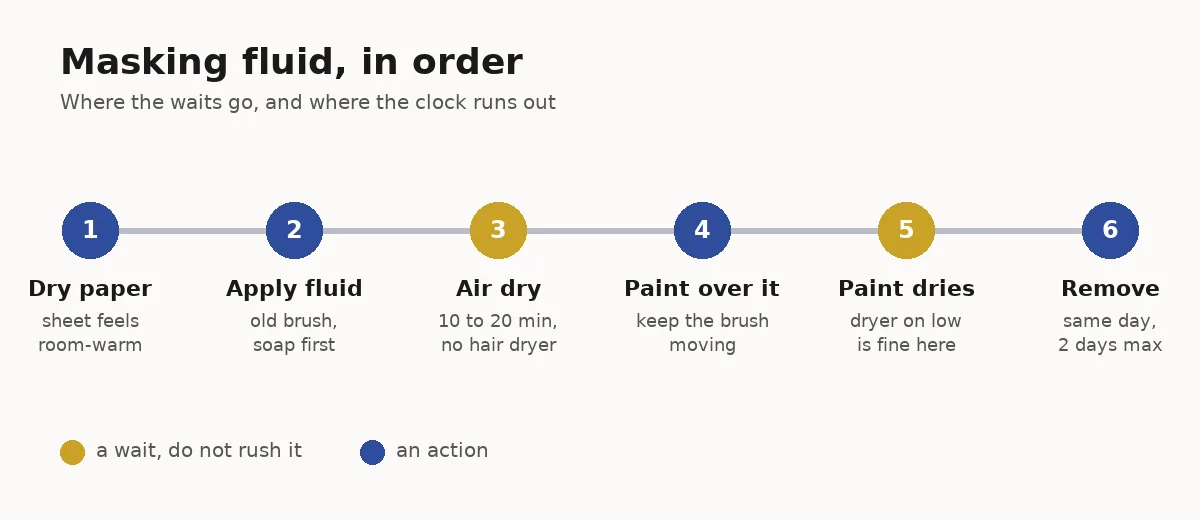 The sequence that avoids torn paper. The two waits are where beginners rush, and the removal is where they delay.
Step-by-Step: Masking Fluid Watercolor in 7 Steps
1. Start with dry paper. Touch the back of the sheet. If it feels cool, it is still damp and the latex will soak in. Give it another ten minutes or use a different sheet. 2. Prepare an old brush. Wet a synthetic brush you don't mind losing, rub it on a bar of soap until the hairs are coated, and shake off the excess. The soap stops the latex gripping the hairs. A dip pen or a silicone shaper needs no soap. 3. Shake the bottle and apply. Shake the fluid, then paint it exactly where you want white. Keep the layer thin and even. A thick blob takes far longer to dry and lifts in pieces. 4. Let the fluid dry on its own. Wait 10 to 20 minutes until the surface is matte, not shiny, and no longer tacky. Do not point a hair dryer at it. Heat makes the latex harder to lift. 5. Paint over it. Lay your wash straight across the mask as if it were not there. Keep the brush moving over the latex, since paint pools against its edge if you stop. 6. Let the paint dry fully. Rubbing the mask while the wash is damp drags color into the white. A hair dryer on low is fine at this stage, aimed at the paint and not held in one spot. 7. Remove the mask the same day. Rub gently with a clean, dry finger or a rubber cement pickup, rolling the latex off rather than pulling it. Work from one edge, and stop if the paper lifts with it.
Winsor & Newton's masterclass above shows the basic application, a flicking technique for spatter and a textured effect, all on the maker's own fluid.
GODEEPER: Masking is only one way to keep a white. The snow guide compares masking fluid, salt, lifting and opaque white, and says which to use when. How to Paint Snow in Watercolor: 9 Tips for Clean Whites →
Tips for Cleaner Masked Edges
Soften the edge afterward. A masking fluid watercolor white has a hard edge all round. Once the latex is off, run a damp brush along the side that faces away from the light and blot it, so the white has one soft edge and one crisp one. The wet-on-dry technique guide covers controlling edges like this.
Tint the white when it is too white. Bare paper inside a dark wash often looks cut out. A very pale wash of the surrounding color, or a touch of blue in a shadow, settles it back into the painting.
Mask in two sessions for layered whites. You can mask, paint, remove, then mask a smaller area and paint again. This gives whites at two values, which reads as light and shadow on snow or foam.
Spatter for texture. Load an old toothbrush with fluid and flick it for stars, sea spray or lichen. Cover the parts of the painting you don't want speckled with scrap paper first.
Test the paper. Before masking a painting you care about, paint a stripe of fluid on an offcut of the same sheet, wait an hour, and lift it. A cellulose pad that tears in the test will tear on the painting.
Keep the lid on. The fluid thickens as it dries in the bottle. Decant a little into a jar lid for each session and close the bottle.
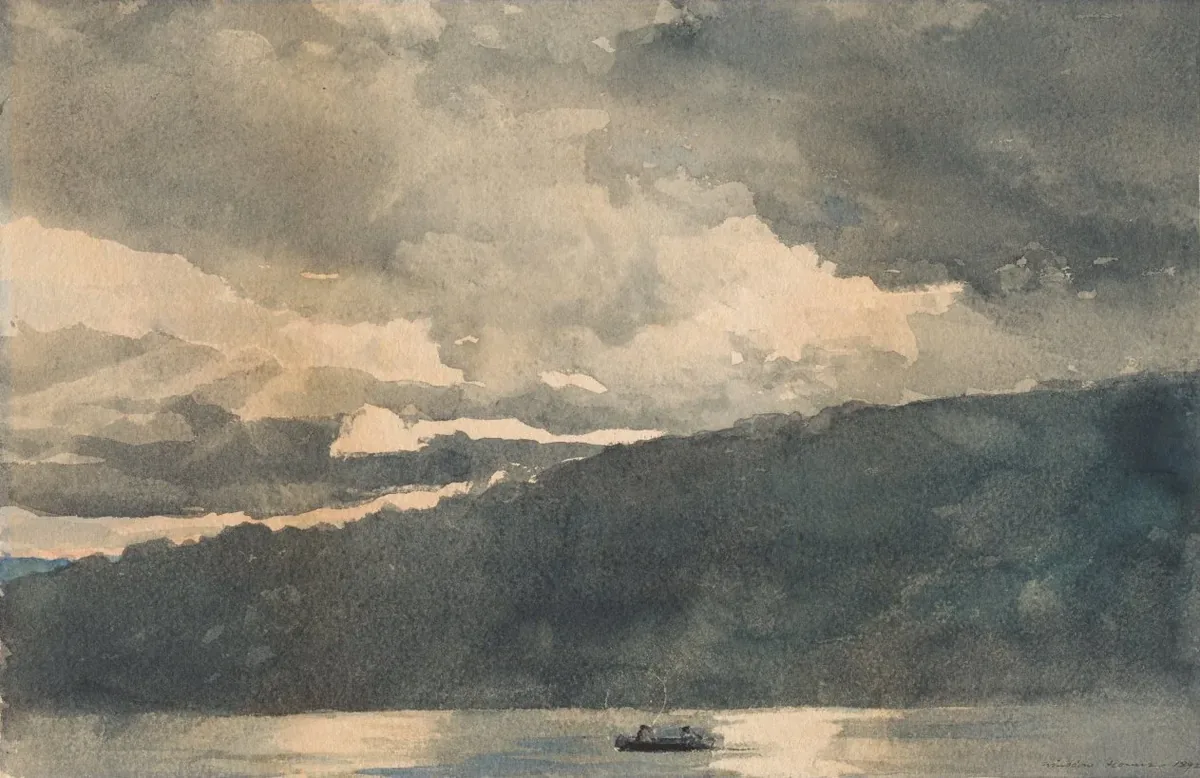 Winslow Homer, Mink Lake, Adirondacks, 1892, watercolor. The Cleveland Museum of Art, CC0. The brightest patches of sky and the strip of light on the water are the paper with little or no paint on it, the effect masking fluid is for.
Masking Fluid Watercolor Mistakes That Tear Paper
Almost every ruined sheet in masking fluid watercolor work comes from one of these.
Applying to damp paper. The latex soaks into wet fibers instead of sitting on top. When you rub it off, the fibers come with it. Winsor & Newton's warning not to apply on damp paper is the first line on its product page for a reason.
Leaving it on for days. Latex keeps curing after it dries. A mask removed the same evening rolls off. The same mask removed a week later has bonded to the sizing. If you must leave a painting, mask only what you will paint that day.
Soft paper. Student cellulose pads and some sketchbooks have light surface sizing. The latex grips the fibers directly and tears them. Masking fluid behaves best on gelatin-sized cotton, and the maker says so.
Rubbing while the paint is wet. The latex lifts, but the damp wash flows into the white. Wait until the paint is fully dry.
Heat on the mask. A hair dryer held over the latex to speed things up makes it stiffer and harder to lift. Air-dry the mask, and use the dryer only on the paint.
A good brush. Latex can't be dissolved once it dries. Winsor & Newton says that if it dries on anything, the latex can only be removed by picking at it or rubbing with an eraser, as there are no solvents available. That applies to brush hairs too.
GODEEPER: A soft cellulose sheet is the usual culprit when masking tears. The paper weight guide explains sizing and why 300 gsm cotton stands up to lifting and masking. Watercolor Paper Weight GSM: 190 vs 300 vs 640 Explained →
Frequently Asked Questions
How long can you leave masking fluid on watercolor paper? Remove it the same day if you can, and within two days at most. Winsor & Newton says to remove its Art Masking Fluid as soon as possible after application, and Molotow gives a two-day limit for its masking pen. Left longer, the latex bonds to the paper fibers and tears the surface when you rub it off.
Why did masking fluid tear my watercolor paper? Three causes cover most tears: the paper was damp when you applied the fluid, the fluid stayed on for days, or the paper is a soft cellulose sheet with weak surface sizing. Apply only to bone-dry paper, remove within a day, and use a gelatin-sized cotton sheet when the masking matters.
Can you use a hair dryer on masking fluid? Use it on the paint, not on the fluid. Warm air on low helps a wash dry before you remove the mask, but direct heat on the latex itself makes it harder to lift and can bake it into the paper. Let the fluid air-dry after application, which takes about 10 to 20 minutes in a normal room.
What brush should you use for masking fluid? An old synthetic brush, a dip pen or a silicone color shaper. Latex dries in the hairs within minutes and can't be dissolved afterward, so never use a brush you care about. Wet the brush and rub it on a bar of soap first, which keeps the fluid from gripping the hairs, and wash it in soapy water straight after.
What is the difference between masking fluid and permanent masking medium? Masking fluid is a removable latex skin that you rub off after painting to reveal clean paper. Permanent masking medium, such as Winsor & Newton's, is a non-removable water repellent that stays in the paper and resists later washes. It can be tinted with watercolor and painted directly, but it can't be taken off.
Related Reading
- How to Stretch Watercolor Paper: 3 Methods by Weight: a stretched sheet stays flat under the washes you paint over a mask.
- 12 Easy Watercolor Christmas Card Ideas for Beginners: two card designs that use masking fluid for snowflakes and stars.
- Rough Watercolor Paper: Granulation, Dry Brush and 6 Steps: why a rough surface holds onto latex harder than cold press.
- Best Watercolor Brushes for Beginners: 3 Shapes to Buy: which cheap synthetic to retire to masking duty.
References
- Winsor & Newton: Art Masking Fluid
- Winsor & Newton: How to use Art Masking Fluid
- Winsor & Newton: Permanent Masking Medium
- Blick: Molotow Grafx Art Masking Liquid Pump Markers
- Molotow: Masking Liquid pen
- Winsor & Newton Masterclass: How to use art masking fluid in a variety of ways (YouTube)
- The Cleveland Museum of Art: John Singer Sargent, In Austrian Tyrol, 1911 (hero image, CC0)
- The Cleveland Museum of Art: Winslow Homer, Mink Lake, Adirondacks, 1892 (CC0)
Was this guide helpful?

Written by
Marcus ReedTechnique Editor
Marcus Reed writes Watercolor Daily's step-by-step technique guides: wet-on-wet washes, glazing, dry brush, and the water control underneath them.
NextKeep reading
Guides / 12 min
Glazing Watercolor Technique: 6 Steps to Layer Clean Color
Guides / 11 min
Flat Wash Watercolor Technique: Flat and Graded in 5 Steps
Guides / 10 min
How to Paint Snow in Watercolor: 9 Tips for Clean Whites
Guides / 9 min
Wet-on-Wet Watercolor Technique: Complete Beginner Guide
Guides / 11 min
Dry Brush Watercolor Technique: 8 Tips for Broken Texture
Guides / 10 min
Wet-on-Dry Watercolor Technique: Crisp Edges in 6 Steps

Guides / 11 min
How to Stretch Watercolor Paper: 3 Methods by Weight
Guides / 14 min
How to Clean Watercolor Brushes: 7 Steps, 3 Ways to Dry
Disclaimer
This article is published for informational purposes and is not professional advice. Product formulations, pigment sources, packaging and store listings change. Check the details that matter to you (price, pigment content, regional availability) with the manufacturer or retailer before you buy.