Loading
Watercolor Daily · Guides
How to Stretch Watercolor Paper: 3 Methods by Weight
11 min readBy Arthur Sterling
Review
Watercolor Paper
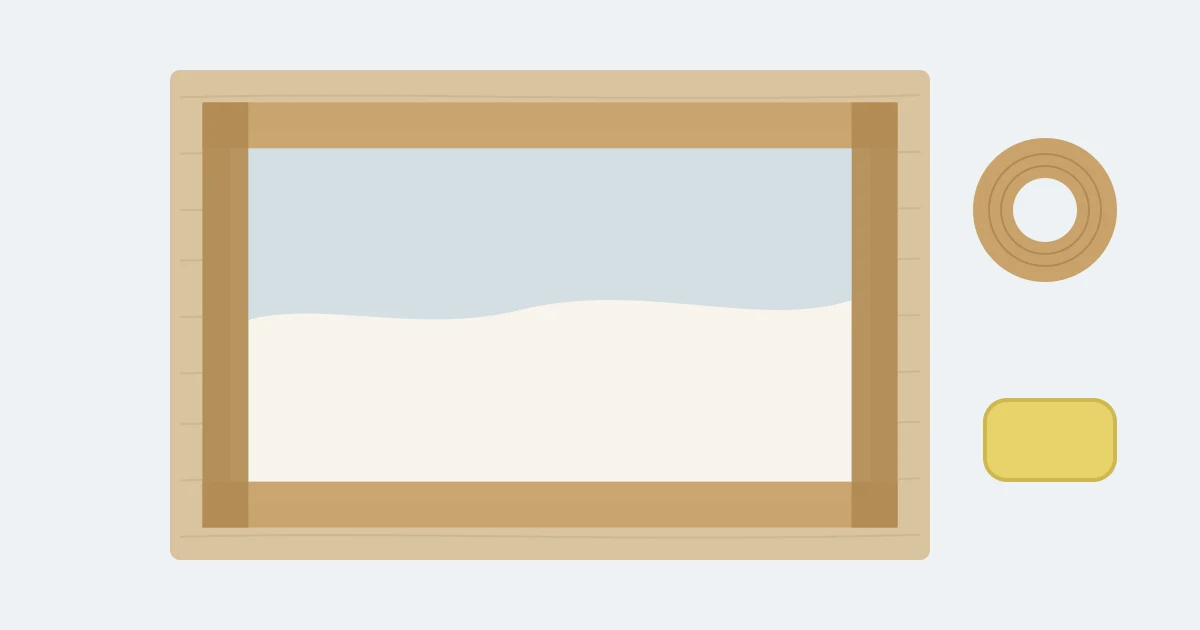
Learning how to stretch watercolor paper takes about ten minutes of work and one night of waiting. You soak the sheet, tape it wet to a board, and let it dry. As it dries it shrinks and pulls tight, so later washes stay flat instead of buckling into hills and valleys.
Below are the soak times that two paper makers publish for each weight (their figures differ), plus the weights that can skip stretching altogether.
In short: Soak the sheet in clean water (about 3 to 5 minutes for 190 gsm, 8 to 10 minutes for 300 gsm, 15 to 20 minutes for 640 gsm), lay it on a sealed board, and tape all four edges with damp gummed paper tape. Let it dry flat overnight. Paper of 425 gsm or more, or a block glued on four sides, usually does not need stretching.
How to stretch watercolor paper? (quick answer)
Soak the paper in clean water until it goes limp, let the excess drip off, and lay it on a flat, sealed board. Tape all four edges with water-activated gummed tape, then leave it to dry overnight. The sheet shrinks as it dries and ends up drum-tight on the board.
Overview
Stretching is a fix for cockling. Cockling is the wavy, ridged surface that wet paper takes on as it swells. Paint then pools in the dips and dries in hard lines. Winsor & Newton calls cockling "notoriously difficult to fix", which is why the fix happens before you paint.
Here is what you need:
- Watercolor paper. Any weight works, but stretching matters most for 190 to 300 gsm sheets. Gsm means grams per square meter. Our watercolor paper weight guide explains how gsm maps to lb.
- A board. Winsor & Newton recommends a spruce drawing board, or MDF sealed so water can't soak in. A 12 mm board suits paper under 24 inches square. Use a thicker board for bigger sheets so it doesn't warp.
- Gummed paper tape. This is brown paper tape with a dry glue that activates when wet. Cut four strips a little longer than each edge.
- A clean tray, sink or bath, plus a sponge and paper towels.
Cut the paper so the tape can overlap it by about an inch all round. Winsor & Newton allows 1 inch for the tape on every side. The skill level is beginner. The only hard part is waiting.
Do You Need to Stretch Watercolor Paper?
You need to stretch loose sheets under about 356 gsm if you paint wet washes. Heavier paper, or a block glued on four sides, usually stays flat enough without it. Small sketches with light washes often survive unstretched at any common weight.
The line comes from different sources. A materials guide from UCL's Slade School of Fine Art says paper "less than 356 gsm (260 lb) should be stretched before use, otherwise it's likely to warp." St Cuthberts Mill, which makes Saunders Waterford and Bockingford, suggests 425 gsm or heavier if you want to avoid stretching. Winsor & Newton says only that stretching "may not be necessary" for heavyweight paper.
| Weight | Same as | Stretch for wet work? |
|---|---|---|
| 190 gsm | 90 lb | Yes |
| 300 gsm | 140 lb | Yes, for loose sheets |
| 425 gsm | 200 lb | Usually not |
| 640 gsm | 300 lb | No, unless the painting is very wet and large |
Blocks are the shortcut. A watercolor block is a stack of sheets glued on all four sides, so each sheet is held like a stretched one. St Cuthberts Mill names blocks as its other way to skip stretching. The beginner paper guide lists blocks worth starting with.
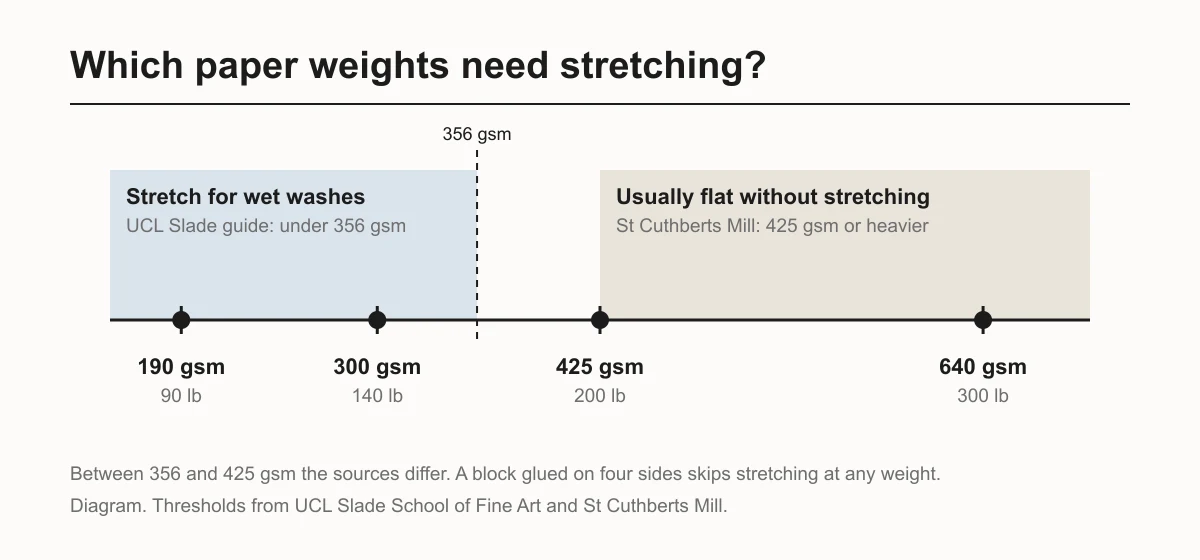 Diagram of where the two published thresholds fall. Between 356 and 425 gsm the sources disagree, so judge by how wet you paint.
How Long to Soak Watercolor Paper Before You Stretch It
Soak 190 gsm paper for about 3 to 5 minutes, 300 gsm for about 8 to 10 minutes, and 640 gsm for 15 to 20 minutes. The goal is a limp sheet whose fibers have fully swollen. Heavier paper is thicker, so water takes longer to reach the middle.
The makers' figures differ because their methods differ:
| Paper | St Cuthberts Mill (running tap) | Winsor & Newton (bath soak) |
|---|---|---|
| 150 to 190 gsm | 3 minutes | 4 to 5 minutes |
| 300 gsm | 8 minutes | not given |
| 640 gsm | not given | 15 to 20 minutes |
St Cuthberts holds the sheet under running water. Winsor & Newton submerges it in a full sink or bath. Moving water wets the paper faster, which may explain the shorter times. For a sheet too big to submerge, Winsor & Newton suggests soaking it on the board for up to 25 minutes per side.
Don't soak for an hour "to be safe". Once the sheet is limp, more time adds nothing, and some retailers warn that over-soaking can weaken the sizing. Sizing is the gelatin or starch in the paper that stops paint spreading like ink on a paper towel.
Watch for soap, too. St Cuthberts Mill warns that detergent residue in baths and sinks "attack[s] the sizing causing the paper to become very absorbent and unstable." Rinse the tub with plain water first, or use a clean plastic tray kept only for paper.
GODEEPER: Stretched paper is what lets a big, very wet wash stay flat while it dries. The wet-on-wet guide covers how to time those washes once your sheet is ready. Wet-on-Wet Watercolor Technique: Complete Beginner Guide →
Step-by-Step: How to Stretch Watercolor Paper With Gummed Tape
This is the standard board method, using the soak times above.
1. Prepare the board and tape. Wipe the board clean and cut four strips of gummed tape, each a few inches longer than the edge it will cover. 2. Soak the paper. Lay the sheet in clean water for the time its weight needs, and keep your fingers on the margins only. St Cuthberts Mill notes that wet paper is fragile and finger marks will show in later washes. 3. Drain it. Lift the sheet by two corners and let the excess water drip off for a few seconds. Don't wring or fold it. 4. Lay it flat. Place the sheet on the board and smooth it gently from the center outward with your palm or a clean sponge. 5. Blot the edges. Dab the outer inch dry with paper towel so the tape has a surface to grip. 6. Wet the tape, don't soak it. Run a damp sponge along the glue side of each strip. St Cuthberts Mill says to wet gummed tape without soaking it, since too much water washes the glue off. 7. Tape all four edges. Lay each strip so it covers the inch of paper margin and grips the board beyond it. Press it down firmly along its length. 8. Dry it overnight. Leave the board flat or on a slight tilt, away from direct heat, until the paper is dry and tight.
Blick Art Materials shows the whole routine in a short video:
The tape holds the edges while the middle shrinks. If the sheet still looks a little wavy while damp, leave it alone. It flattens as the last of the water leaves.
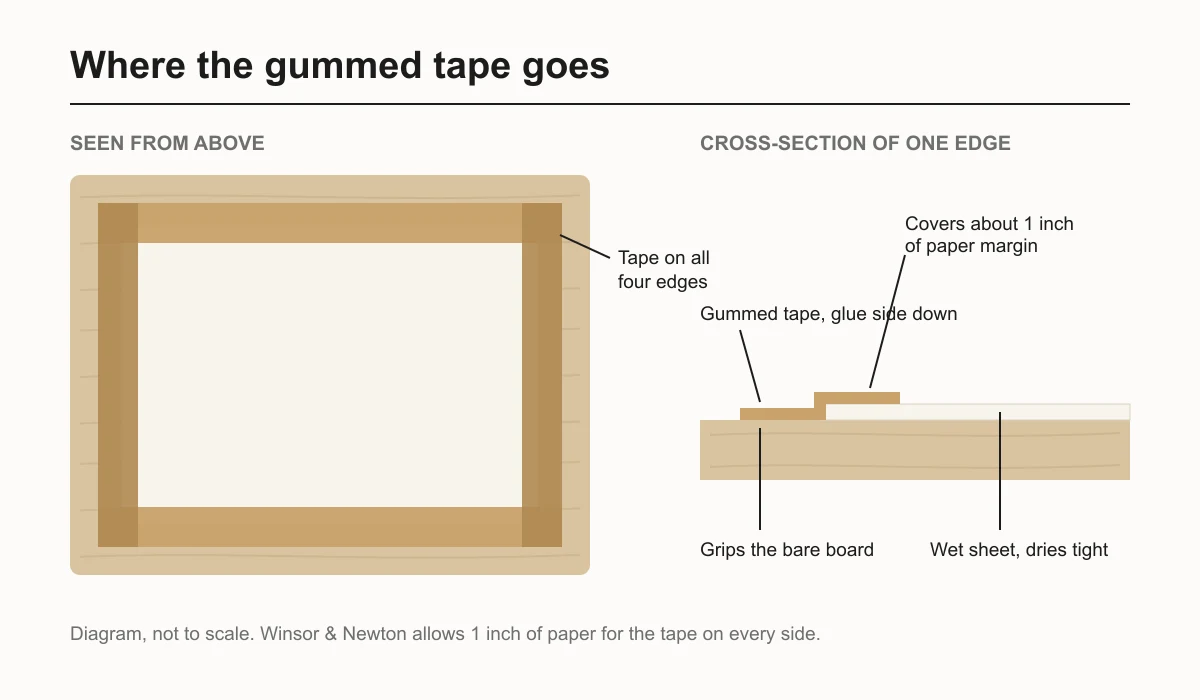 Diagram, not to scale. The tape bridges the paper's edge and the bare board, so the board holds the sheet as it shrinks.
Other Ways to Stretch: Staples, Frames and a Brush
Gummed tape isn't the only option. Staples and frames also hold the edges, and a wide brush can replace the soak.
Staples. Many painters staple the wet sheet all round the edge to a board that takes staples, such as plywood. Staples don't let go when the paper shrinks. Some add masking tape over the staples once the sheet is dry, which gives a clean border. You'll need a staple remover afterwards.
Purpose-made frames. Winsor & Newton names a second method, stretching the sheet on a frame. Art shops sell them as stretching boards or paper stretchers. Designs vary, so follow the instructions for your model. A frame is reusable, which helps if you stretch paper every week.
Brush wetting. No bath? St Cuthberts Mill shows a method for quarter sheets (38 x 28 cm). Brush clean water over both sides at least three times with a wide hake brush. Then let the paper sit for 5 to 10 minutes so the fibers swell. Tape it to a dry board as usual.
GODEEPER: The surface you stretch changes how the dried sheet takes paint. Hot press, cold press and rough each behave differently under a wash. Hot Press vs Cold Press Watercolor Paper: 3 Surface Types →
Tips
- Skip masking tape for wet paper. Masking and painter's tape stick to dry paper, not wet. The sheet pulls free as it shrinks. Retailer guides, including Jerry's Artarama's, advise gummed tape for this reason.
- Use both sides of the board. Winsor & Newton suggests standing the board on four ink bottles, so air reaches both sides and you can stretch a second sheet on the back.
- Stretch several sheets at once. Stretching is mostly waiting, so prepare two or three boards in one evening. You'll have paper ready for the week.
- Rough paper needs the same care. Its deep texture takes water unevenly, so soak it fully. Our rough paper techniques guide covers what to paint on it once it's flat.
- Cut the finished painting free. Run a sharp craft knife along the inner edge of the tape. St Cuthberts Mill warns you to be careful of your fingers here.
- Clean the board. To lift old tape, soak it with a wet sponge, wait 5 minutes, and repeat. Then ease it off with a palette knife and wipe the board down.
Frequently Asked Questions
Do you need to stretch 300 gsm (140 lb) watercolor paper? For wet washes on loose sheets, usually yes. A UCL Slade School guide says paper under 356 gsm should be stretched or it is likely to warp, and 300 gsm falls below that line. For small studies or light washes you can skip it, or buy a block glued on all four sides.
How long should you soak watercolor paper before stretching? It depends on weight. St Cuthberts Mill suggests 3 minutes under a running tap for 190 gsm and 8 minutes for 300 gsm. Winsor & Newton gives 4 to 5 minutes for 190 gsm and 15 to 20 minutes for heavy 640 gsm paper soaked in a bath of clean water.
Can you stretch watercolor paper with masking tape? Not reliably. Masking tape and painter's tape grip dry paper, but they lose their hold on a wet sheet, and the paper pulls free as it shrinks. Use water-activated gummed paper tape instead, or staple the wet sheet to the board and add masking tape later as a clean border.
Do you need to stretch 300 lb watercolor paper? Usually not. 300 lb paper weighs about 640 gsm, well above the 356 gsm line in the UCL Slade guide. St Cuthberts Mill names 425 gsm or heavier as a way to avoid stretching altogether. Some painters still stretch it for very wet, very large paintings, where even heavy paper can move.
How long does stretched watercolor paper take to dry? Plan on overnight. Both St Cuthberts Mill guides say to leave the taped sheet to dry overnight, flat or on a slight tilt. Let it dry at room temperature rather than forcing it with heat. Slow, even drying is what pulls the sheet tight against the tape.
Can you stretch watercolor paper without a bathtub? Yes. A St Cuthberts Mill guide wets the sheet with a wide hake brush instead, brushing both sides with clean water at least three times. You then let the paper sit for 5 to 10 minutes so the fibers swell before taping it down. It works best for quarter sheets and smaller.
Related Reading
- Watercolor for Beginners: Essential Supplies & Buying Guide: the short supply list, including where a board and tape fit in.
- Best Watercolor Sketchbooks: 4 With 100% Cotton Paper: bound cotton paper that you paint in without stretching.
- Wet-on-Dry Watercolor Technique: Crisp Edges in 6 Steps: the layering method that a flat, stretched sheet makes easier.
References
- Winsor & Newton: How to stretch watercolour paper
- Winsor & Newton: Do I need to stretch watercolour paper?
- St Cuthberts Mill: How to soak and stretch watercolour paper
- St Cuthberts Mill: Stretching watercolour paper without a bathtub
- UCL Slade School of Fine Art: Watercolour Paper
- Blick Art Materials: How to Stretch Watercolor Paper (YouTube)
- Jackson's Art: A Guide To Stretching Watercolour Paper (YouTube)
Was this guide helpful?

Written by
Arthur SterlingSupplies & Reviews Editor
Arthur Sterling writes Watercolor Daily's supply reviews and brand comparisons: paints, cotton papers, and brushes, compared on published specifications.
NextKeep reading
Features / 11 min
Watercolor Block vs Pad vs Sheets: Cost per Square Inch
Features / 12 min
Watercolor Paper Weight GSM: 190 vs 300 vs 640 Explained
Guides / 12 min
Rough Watercolor Paper: Granulation, Dry Brush and 6 Steps
Features / 12 min
Best Watercolor Sketchbooks: 4 With 100% Cotton Paper
Features / 11 min
Hot Press vs Cold Press Watercolor Paper: 3 Surface Types
Guides / 9 min
Best Watercolor Paper for Beginners: Why 100% Cotton Matters
Guides / 10 min
How to Paint Snow in Watercolor: 9 Tips for Clean Whites
Guides / 12 min
Masking Fluid Watercolor Guide: 7 Steps and 3 Products
Disclaimer
This article is published for informational purposes and is not professional advice. Product formulations, pigment sources, packaging and store listings change. Check the details that matter to you (price, pigment content, regional availability) with the manufacturer or retailer before you buy.