Loading
Watercolor Daily · Guides
Watercolor for Beginners: Essential Supplies & Buying Guide
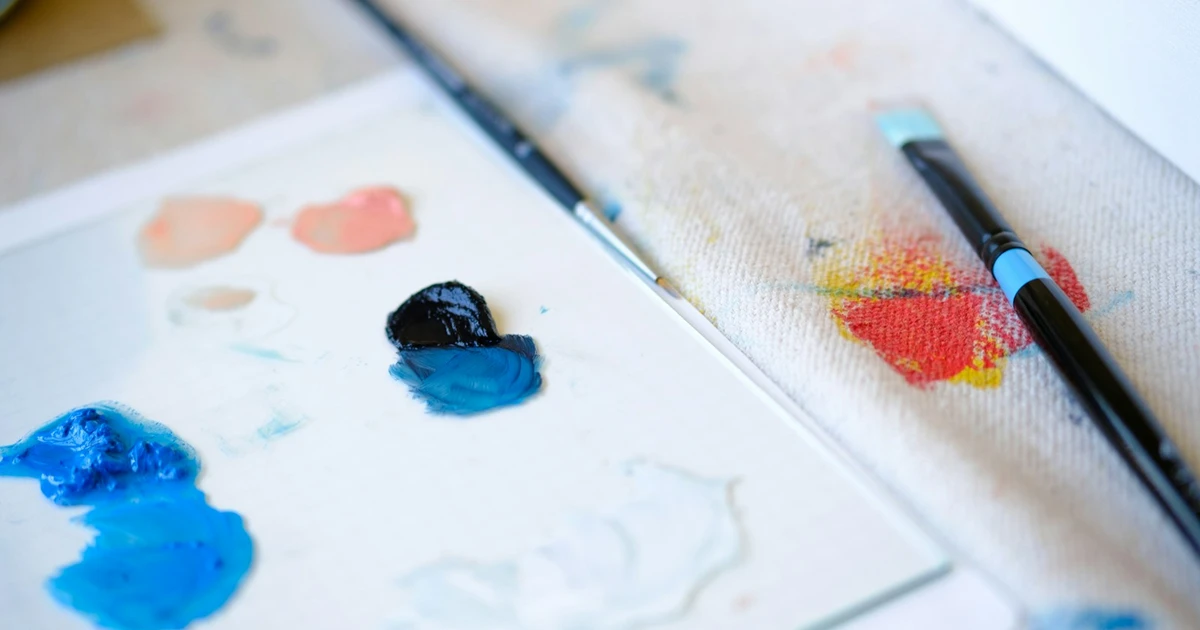
Watercolor for beginners comes down to three purchases: good paper, one good brush and a few tubes of paint. Art shops make it look harder than that, with walls of paint tubes, unfamiliar color codes and expensive brushes. You need very little of it. This guide covers what to buy first, what to skip, and how to set up your table for your first painting.
In short: Spend most of your first budget on 100% cotton paper that weighs 300 gsm (140 lb), and buy one size 8 round synthetic brush. Then buy six tubes of paint: a warm and a cool yellow, red and blue. That small palette mixes more colors, and cleaner ones, than a cheap box of 48 pans.
What do you need for watercolor for beginners? (quick answer)
Three things. Cotton paper of at least 300 gsm, one round brush that holds water and comes to a point, and six tubes of paint. Add two water jars, a white plate for mixing and a cloth, and you can start.
Overview: What Matters Most in Watercolor for Beginners
In watercolor, paper matters more than paint. That is the opposite of oil painting, where the paint does most of the work. Rank your spending like this:
- Paper, first. 100% cotton, 300 gsm, cold press.
- Brush, second. One size 8 round synthetic that springs back and holds water.
- Paint, third. Six tubes, each made from a single pigment.
The best paint on cheap wood-pulp paper still dries patchy and uneven. Modest student-grade paints on cotton paper give smooth washes and clean layers. If you have to save money, save it on paint.
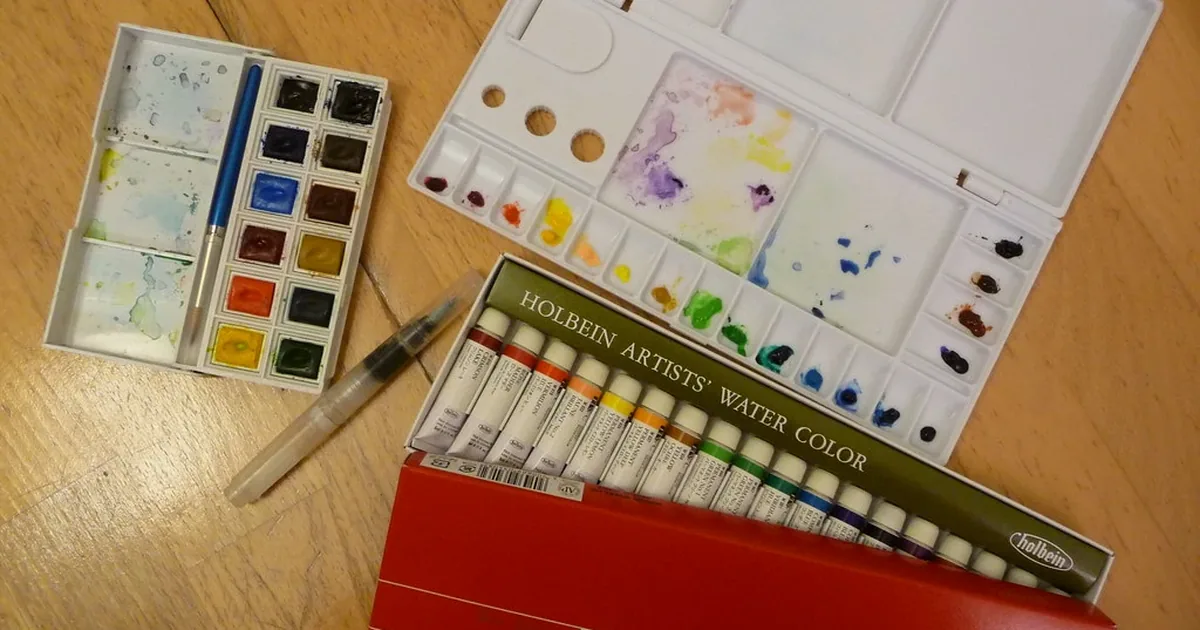
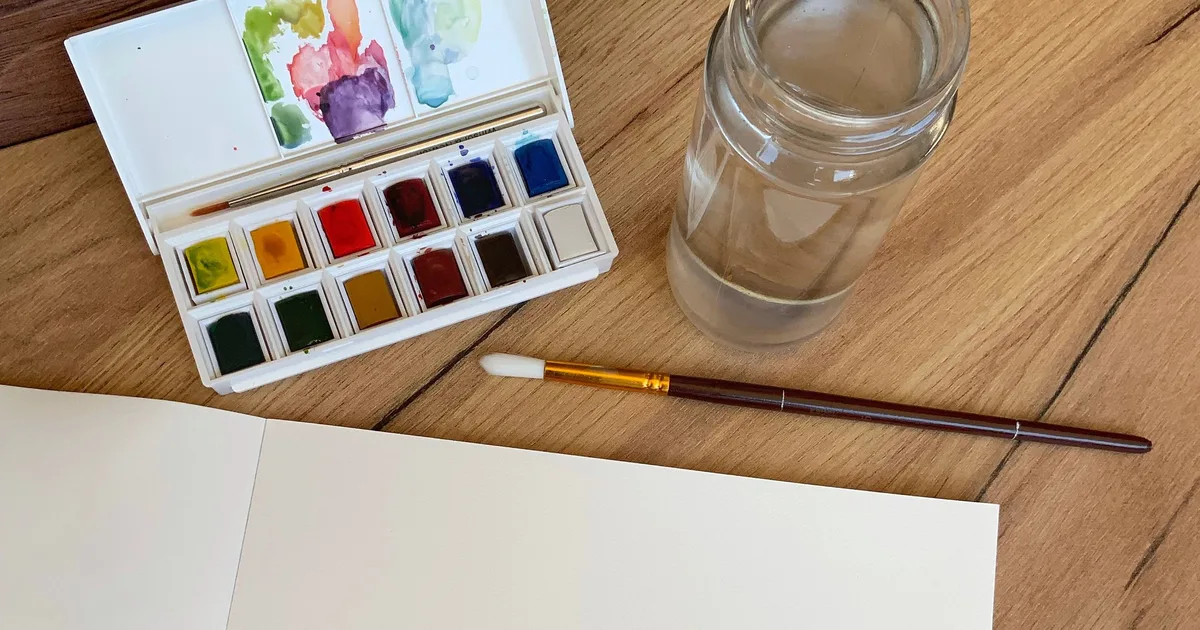
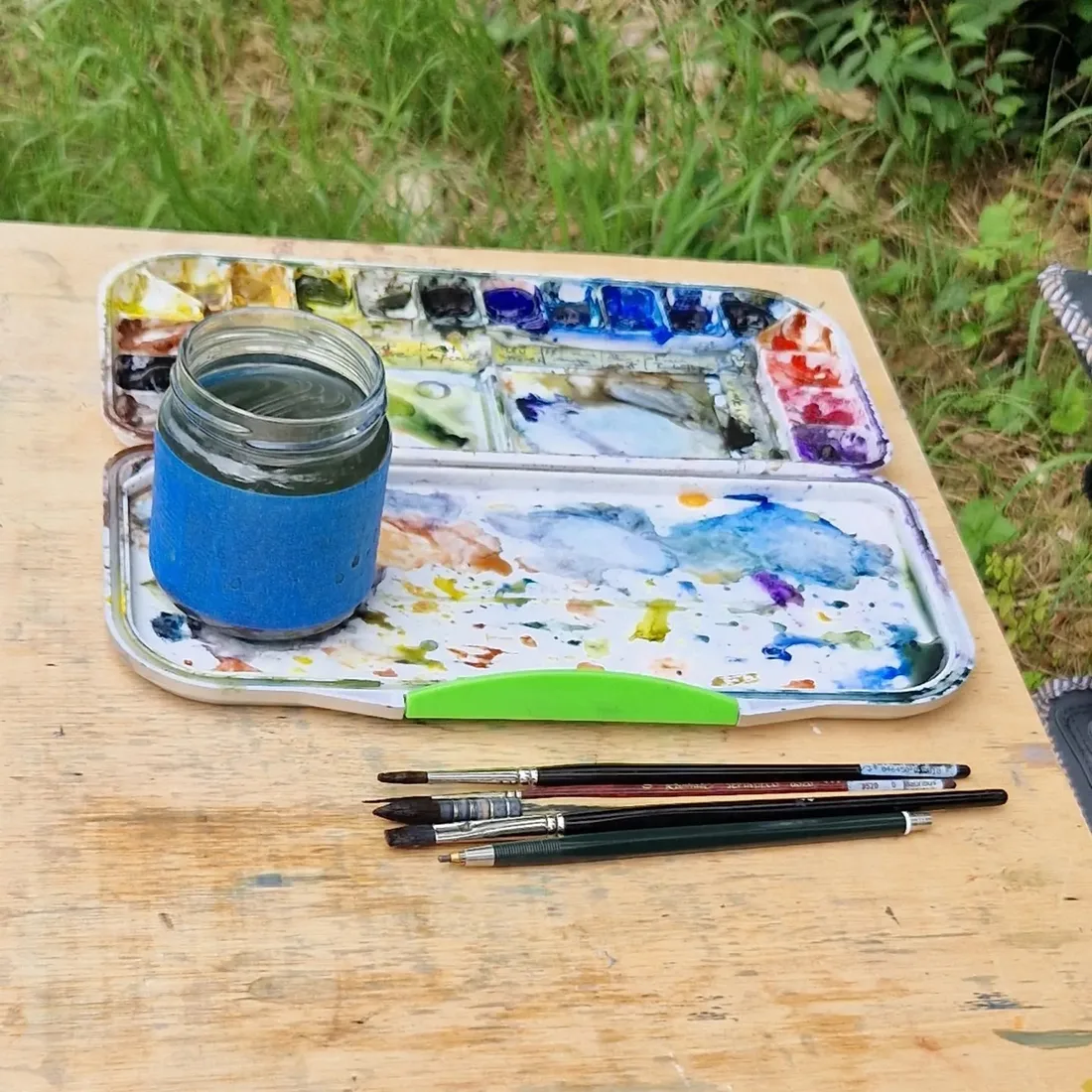 Les.aqua, CC0 via Wikimedia Commons. A complete outdoor kit: a folding palette of half pans with mixing wells, a water jar and a few brushes.
1. Watercolor Paper: The Most Important Buy
Your paper decides whether painting feels easy or frustrating. Three things describe a watercolor paper: what it is made of, how heavy it is, and how its surface feels.
Cotton or wood pulp?
Cheap pads labeled "watercolor paper" are usually made from wood pulp. Paint tends to sit on top of that kind of paper and dry with hard marks around the edges.
Cotton paper takes in water more evenly. Mills also add a sizing, a coating that controls how fast water soaks in; Arches uses gelatin. Together these give you more time to blend before the paint sets. The best watercolor paper for beginners explains the difference in more detail.
Why 300 gsm (140 lb)?
Paper weight is given in grams per square meter (gsm) or in pounds. Do not buy anything lighter than 300 gsm, which is the same as 140 lb. Lighter 190 gsm paper buckles into hills and valleys when it gets wet, and the paint runs into the dips. 640 gsm paper stays flat but costs much more. 300 gsm is the everyday standard.
Which surface?
Pick cold-press paper. It has a gentle texture that holds paint evenly and slows drying a little. Hot-press paper is smooth and dries faster, which is harder when you are learning. Rough paper has a strong texture that exaggerates granulation, the speckled look some paints get as they settle into the grain.
2. Watercolor Paints: Pans, Tubes and Grades
Watercolor paint is finely ground color, called pigment, held together by a binder that dissolves in water, usually gum arabic. The main difference between cheap and expensive paint is how much pigment is in it.
| Student grade (e.g., Cotman) | Artist grade (e.g., Daniel Smith) | |
|---|---|---|
| Pigment | Less pigment, more filler | More pigment |
| Layering | Can turn cloudy when you layer it | Stays clear when layered |
| Lightfastness (how well a color resists fading) | Varies by color; check the label | Listed for each color; check before buying |
| Price | Lower per tube | Higher per tube, priced by series |
Pans or tubes?
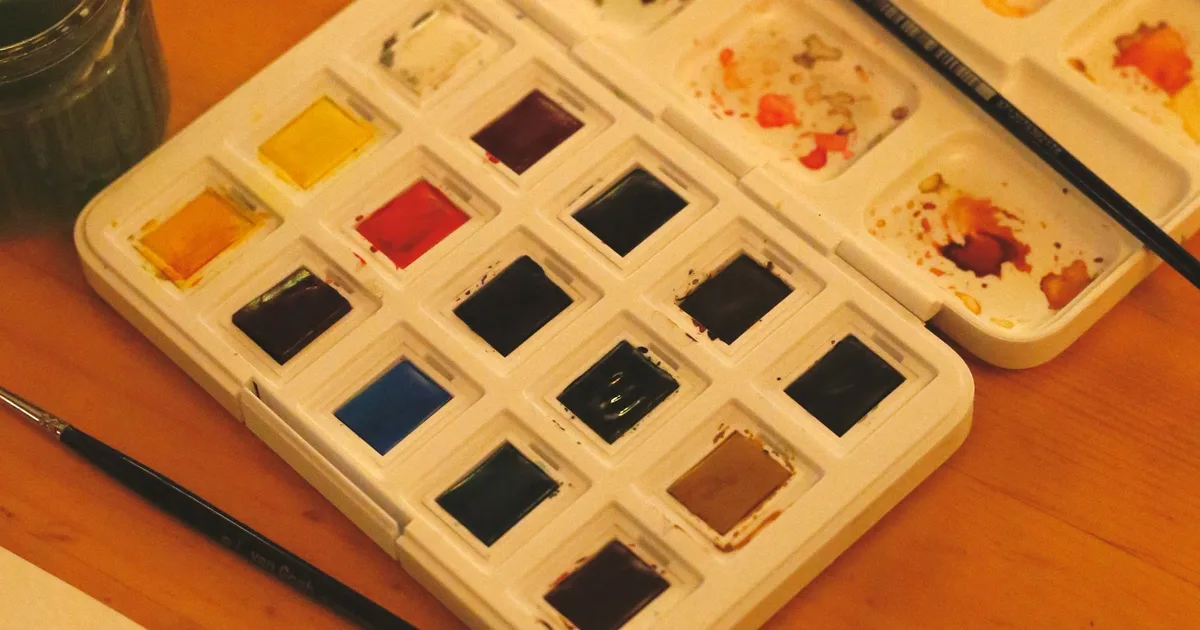
- Half pans are small blocks of dried paint. They are great for sketching on the go and take little space. You have to scrub them with a wet brush to wake the dried paint, so mixing a large puddle for a sky takes longer.
- Tubes hold soft, fresh paint. You squeeze some into a palette well and can mix a strong wash in seconds.
At home, tubes give you more control over how thick or thin your paint is.
A six-tube starter palette
Skip the big 36-color boxes. Many of their colors are mixes of several pigments, which turn muddy when you mix them again. Start with a split-primary palette: a warm and a cool version of each primary, each made from one pigment.
- Cool yellow: Hansa Yellow Light (
PY175) - Warm yellow: New Gamboge (
PY97orPY110) - Warm red: Pyrrol Scarlet (
PR255) - Cool red: Quinacridone Rose (
PV19) - Warm blue: French Ultramarine (
PB29) - Cool blue: Phthalo Blue Green Shade (
PB15:3) - Optional seventh tube: Burnt Sienna (
PBr7), a warm brown for landscapes and soft shadows.
The codes in brackets are each paint's pigment code. Two paints with the same code use the same pigment, whatever the brand calls them.
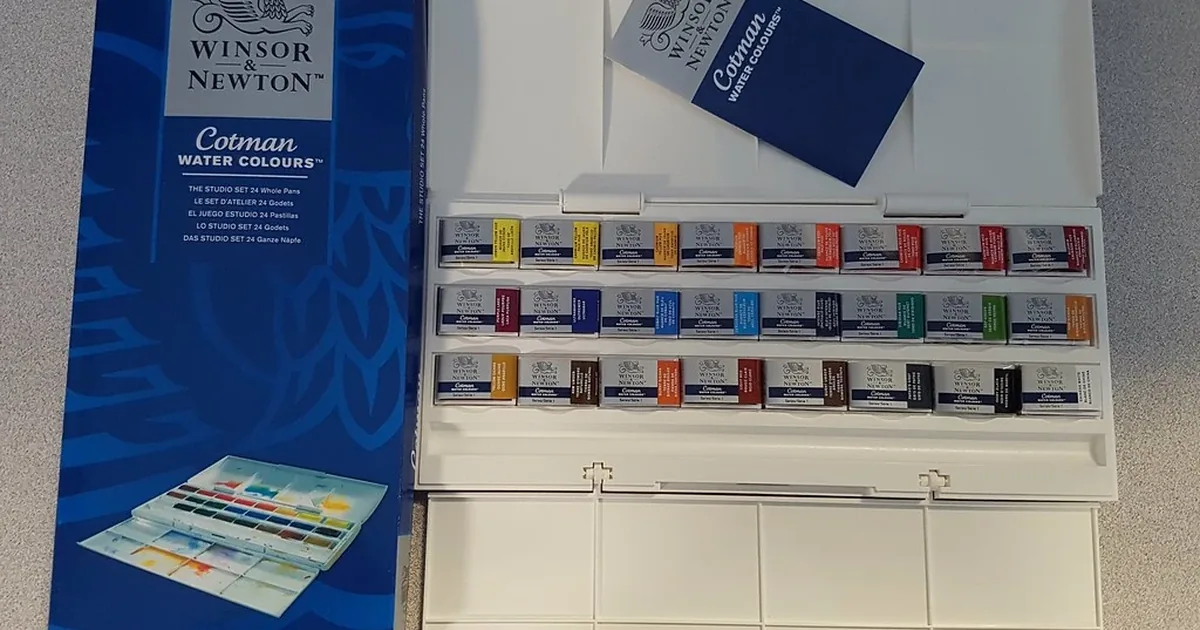
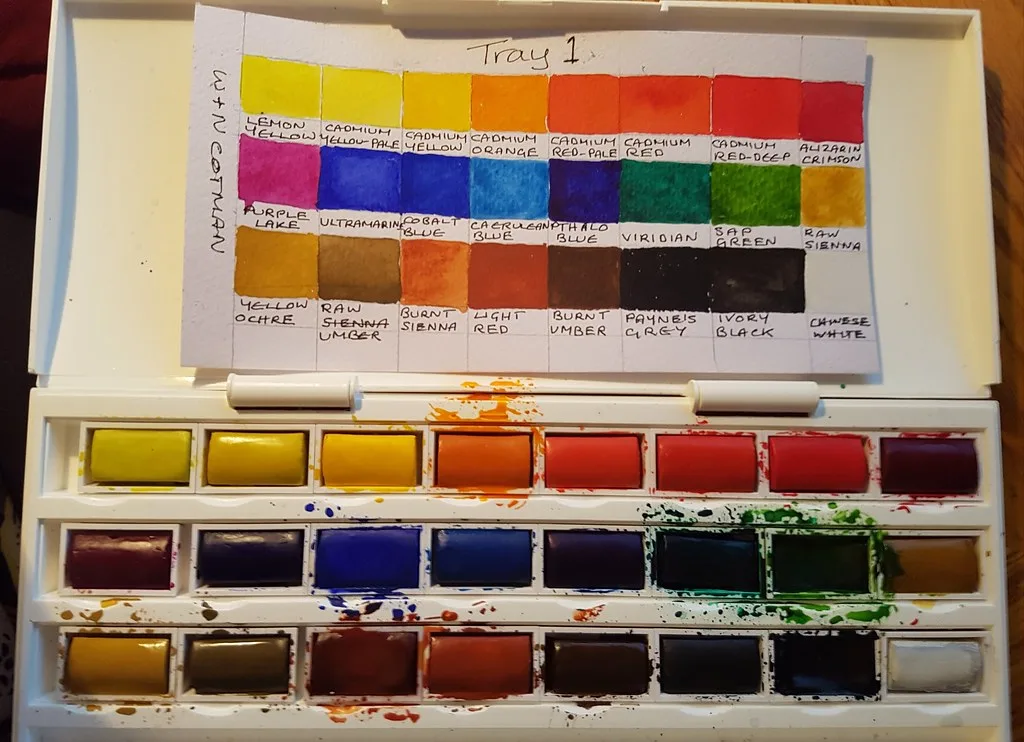 CharmaineZoe's Marvelous Melange, CC BY 2.0 via Flickr. A Winsor & Newton Cotman half-pan set, the brand's student range, with a swatch card painted from each pan.
3. Brushes: Size, Hair and Care
Skip the cheap packs of twenty thin brushes. A watercolor brush needs to hold a lot of water and still come to a sharp point.
Start with one size 8 round
If you buy only one brush, make it a size 8 round synthetic brush. Its full body holds enough water for a wash across a quarter sheet. Its tip can still paint a thin stem.
Synthetic or natural hair?
- Synthetic brushes, such as the Princeton Neptune or Escoda Perla, spring back well, last long and cost much less than natural hair. They are the best choice for beginners.
- Kolinsky sable holds a lot of water and springs back nicely, but it costs many times more than a synthetic of the same size and needs more care.
Look after your brushes
Never leave a brush standing tip-down in the water jar. The weight bends the tip and ruins the point. Rinse in cool water, reshape the tip with your fingers and let it dry flat on a towel.
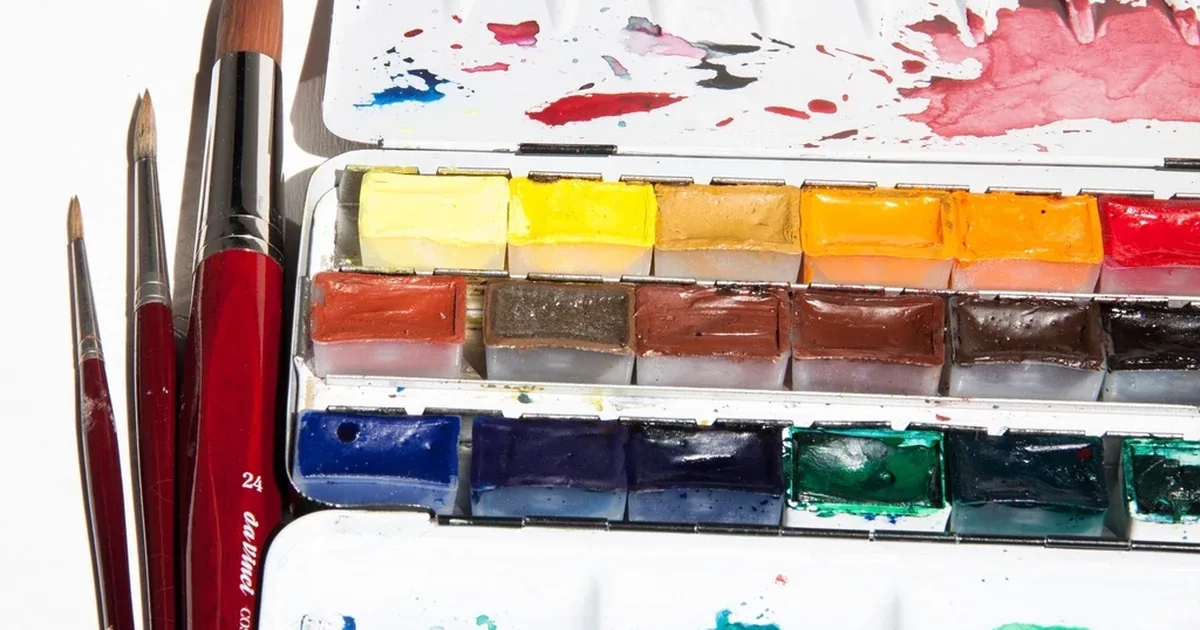
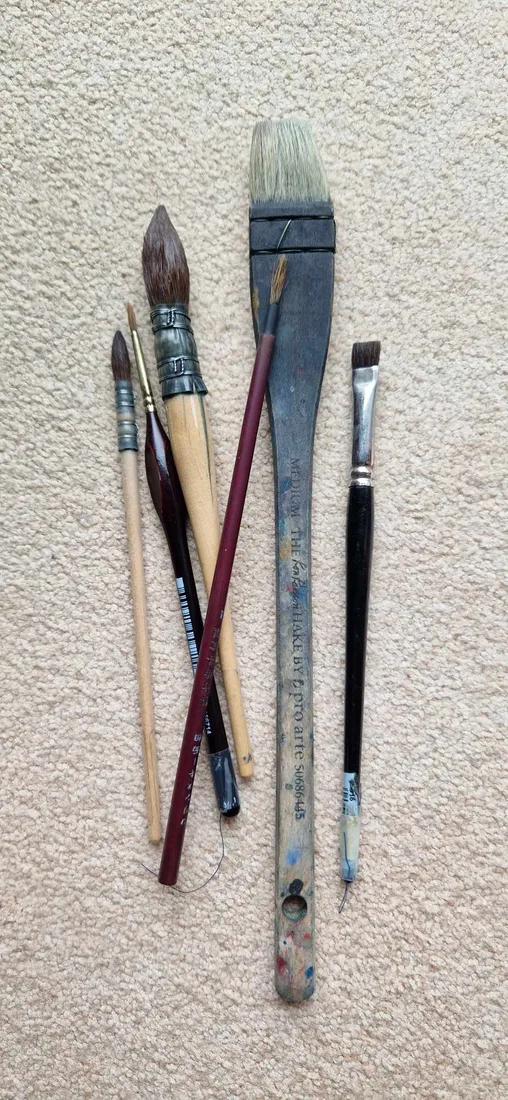 Les.aqua, CC BY 4.0 via Wikimedia Commons. A working set of brushes: a large pointed mop, a wide flat for washes, a small flat and several slim rounds.
Step-by-Step: Setting Up Your First Painting Table
A tidy table means less fiddling and fewer accidents. Set it up like this:
1. Use two water jars. Put them on the side of your painting hand. Rinse dirty brushes in the first jar and take clean water from the second. 2. Mix on a white plate. A white ceramic plate or a porcelain palette lets puddles of paint spread smoothly instead of beading up the way they do on new plastic. 3. Keep a cloth beside the jars. Touch your brush to it to take off extra water before it reaches the paper. 4. Tape the paper down. Tape all four edges of your cold-press paper to a board with low-tack tape so it stays flat. 5. Set out your paints. Squeeze a pea-sized amount of each tube into the palette wells, in order from yellow to red to blue.
Tips: Painting Habits for Beginners
- Learn the four water mixes. Painters compare paint thickness to drinks and food:
- Tea: mostly water with a little paint. For first, pale washes.
- Coffee: clearly colored but still runny. For most middle tones.
- Cream: thick enough to hold its shape for a moment. For strong color.
- Butter: almost straight from the tube. For dark accents and dry-brush marks.
- Work from light to dark. Watercolor is see-through, so the white of the paper is your lightest light. You cannot paint white over a dark color. Keep your highlights clear first and add the darkest shadows last.
- Leave wet washes alone. Going back into paint while it dries leaves streaks and blotches. Lay the wash, then let it dry.
Frequently Asked Questions
What is the single most important watercolor supply for beginners?
Paper. Get 100% cotton, cold-press paper of at least 300 gsm (140 lb). Cheaper wood-pulp paper buckles and streaks under wet paint, and no paint fixes that. Spend more on paper and less on paint while you learn, and you will see the difference in your first washes.
Should beginners buy pans or tubes of watercolor paint?
Either works. Pans are small blocks of dried paint that travel well and are ready to use. Tubes hold soft, fresh paint, which makes it quicker to mix a big puddle for a sky. For painting at home, tubes are usually easier, while pans suit sketching outdoors.
Is student-grade watercolor paint good enough to start?
Yes, for learning how to handle a brush and water. Good student ranges such as Winsor & Newton Cotman or Van Gogh are fine for practice. Six artist-grade tubes give richer, cleaner mixes, so they are a sensible next step once you paint regularly.
What size watercolor brushes should a beginner buy first?
One round synthetic brush in a size 6 or 8, such as a Princeton Neptune or Heritage. It holds enough water for a wash and still comes to a point for small details. Sizes vary between makers, so judge a brush by how full and pointed it is, not the number.
How many colors do you really need to start watercolor painting?
Six. Buy a warm and a cool version of each primary color: yellow, red and blue. This is called a split-primary palette, and you can mix almost any other color from it. A warm brown such as Burnt Sienna is a useful seventh tube for landscapes.
Related Reading
- Daniel Smith vs Winsor & Newton: Professional Watercolor Review
- 12 Easy Watercolor Christmas Card Ideas for Beginners: a first project that shares four pigments with this palette, plus a green
- Single pigment, defined in the Watercolor Daily glossary
References
- Handprint: Technical Guide to Watercolor Pigments, Paper, and Palettes - Bruce MacEvoy's reference on artist materials.
- ASTM D5067 Standard Specification for Artists' Watercolor Paints - The standard for watercolor paint content and lightfastness.
- Jackson's Art: Technical Guide to Watercolor Brushes and Paper Sizing - Supplier articles on synthetic brushes and paper sizing.
Was this guide helpful?

Written by
Elena VancePigments & Color Editor
Elena Vance writes Watercolor Daily's pigment and color coverage: Colour Index codes, lightfastness ratings, transparency, and palette building.
NextKeep reading
Guides / 12 min
Watercolor Pans vs Tubes: What to Buy First, Priced per ml
Features / 10 min
Student vs Artist Grade Watercolor: 6 Pigments Compared
Features / 12 min
Ceramic vs Plastic Watercolor Palette: 5 Differences
Features / 11 min
Best Travel Watercolor Sets: 5 Pocket Boxes Compared
Features / 13 min
Best Watercolor Paints for Beginners: 5 Sets Compared
Features / 12 min
Granulating Watercolors Explained: 7 Pigments That Settle
Features / 11 min
Watercolor Block vs Pad vs Sheets: Cost per Square Inch
Guides / 9 min
Wet-on-Wet Watercolor Technique: Complete Beginner Guide
Disclaimer
This article is published for informational purposes and is not professional advice. Product formulations, pigment sources, packaging and store listings change. Check the details that matter to you (price, pigment content, regional availability) with the manufacturer or retailer before you buy.
Brands in this article
Daniel Smith