Loading
Watercolor Daily · Features
Ceramic vs Plastic Watercolor Palette: 5 Differences
Ceramic vs plastic watercolor palette comes down to how paint pools and how much weight you carry. Beading, staining, sealing and the fixes for new plastic.
12 min readBy Arthur Sterling
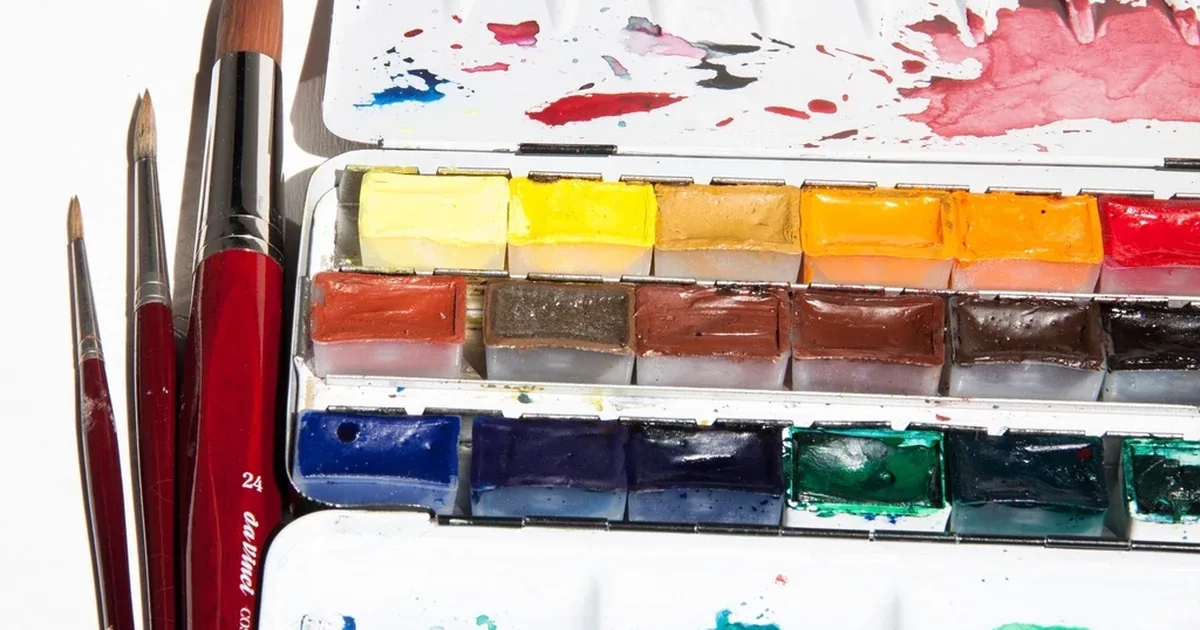
Photo: rawpixel, CC0
A ceramic vs plastic watercolor palette choice decides two things: how the paint behaves when you mix it, and how much weight you carry around. Glazed porcelain lets water spread into a single pool and wipes clean. Plastic is light and seals shut, but on a new palette the paint often breaks into beads, and some colors leave stains.
Neither material wins outright. What follows covers the five differences that decide it, using what retailers and makers publish about real palettes and what painters have documented, and it ends with the fixes for a plastic palette that beads.
In short: Ceramic (glazed porcelain) mixes better: paint pools evenly and doesn't stain. It is also heavy, at 625 g for a 28-well Art Spectrum palette about 18 x 15 cm, and it breaks if dropped. Plastic is light, survives drops, and sealed models such as the Mijello Fusion keep paint moist. New plastic beads, but roughening the mixing area fixes most of it.
Ceramic vs plastic watercolor palette: which is better? (quick answer)
Choose ceramic for painting at a desk, because glazed porcelain pools paint evenly and cleans without staining. Choose plastic for travel and outdoor work, because it is light, drop-proof and can seal paint in. Many painters own one of each.
Key Takeaways
- Mixing: porcelain lets water collect "in a big pool," per Parka Blogs; plastic can bead "unpredictably," even between wells of one palette.
- Staining: glazed porcelain is non-porous and resists stains. Plastic and coated metal stain and need scrubbing.
- Weight: a 28-well porcelain palette weighs 625 g, and a large studio one 1.65 kg.
- Sealing: only plastic boxes such as the Mijello Fusion close airtight, which keeps squeezed paint moist.
- Beading fix: new plastic beads because of a surface coating. Use and light abrasion wear it off.
Overview
A watercolor palette does two jobs: it holds paint in wells, and it gives you a flat area to mix on. The material matters most for the second job. Watercolor is mostly water, and how that water behaves on the surface decides whether a mix spreads into a smooth pool or breaks into droplets you have to chase around with the brush.
Three materials cover nearly every palette on sale. Ceramic palettes are almost always glazed porcelain, fired so the surface is smooth and non-porous. Plastic palettes range from cheap flat trays to sealed boxes such as Mijello's Fusion line, which Blick describes as high-impact plastic with a sealing ring. Metal palettes, such as Holbein's, are aluminum or steel with a white coating on the inside, and the type of coating matters, as covered below.
This comparison draws on Parka Blogs' side-by-side of porcelain, plastic and metal palettes (Teoh Yi Chie, 2019), watercolor artist Jenna Rainey's notes on beading, and retailer specifications for weight and size. I haven't run my own drying or staining tests, so there are no timed results here.
Ceramic vs Plastic Watercolor Palette: Mixing and Beading
Porcelain mixes more predictably than plastic. On glazed porcelain, water spreads and collects in one pool, so a mix stays together. On plastic, especially new plastic, water can break into beads, and the beading can vary from one well to the next on the same palette.
Teoh Yi Chie of Parka Blogs put the porcelain result plainly: "the water tends to collect in a big pool and don't break into separate smaller pools." For plastic, the verdict was that "the behaviour of paint on plastic palette can be unpredictable and inconsistent." Beading matters more than it sounds. When a mix breaks into droplets, you can't judge its strength by eye, and each droplet dries at its own rate. Mixing a wash big enough for a wet-in-wet sky becomes a chore.
The cause is the palette's surface finish. Jenna Rainey links beading to a coating left on new palettes and notes that it wears off, and a WetCanvas forum member blamed a residue from manufacturing. That's why a plastic palette that has been in use for a year often mixes far better than the identical one still in its packaging.
Metal palettes sit in between, depending on their coating. Parka Blogs found its coated metal palette behaved "similar to that of plastic." A reader later pointed out that this is a coating question. Polymer coatings act like plastic, while true vitreous enamel, which is glass fused onto metal, acts more like porcelain. Retailers describe Holbein's palettes as aluminum with a white enamel interior, but that doesn't say which kind.
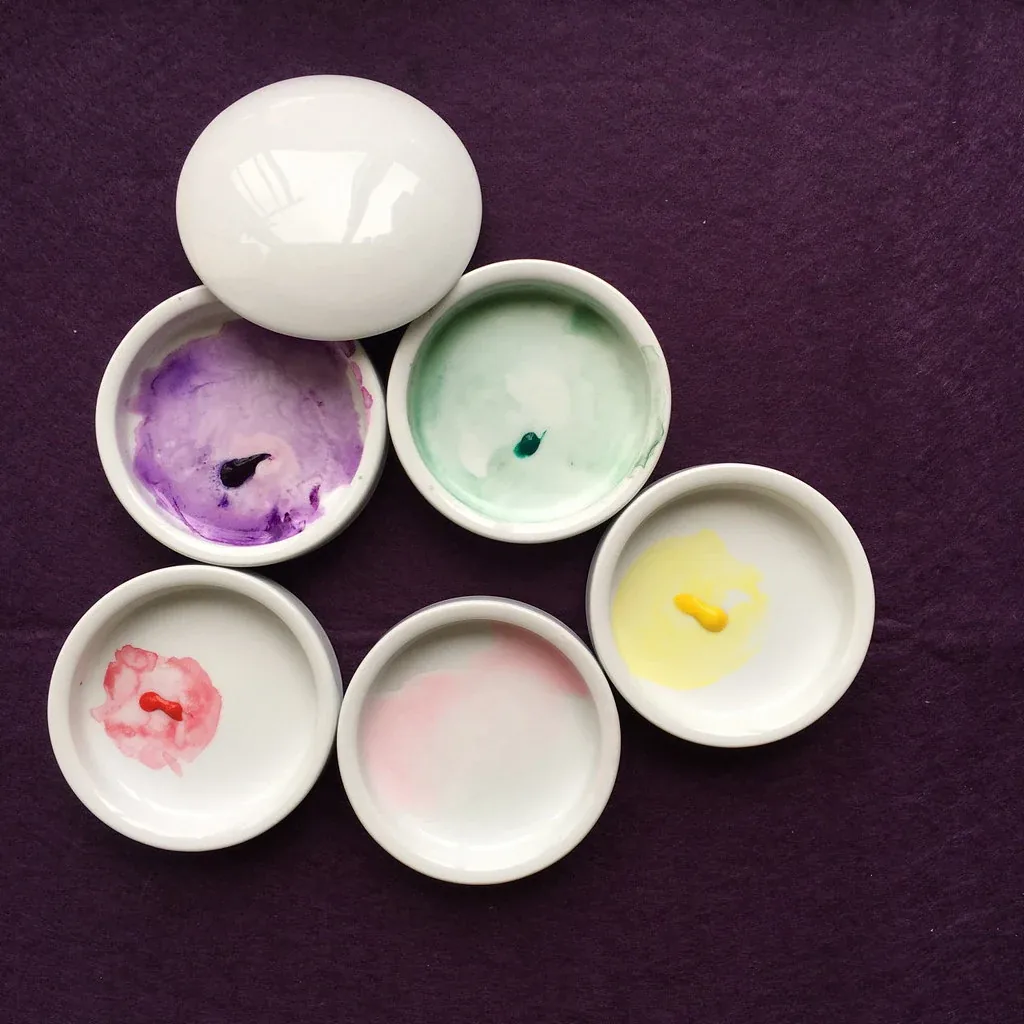 Small glazed ceramic dishes sold as an ink palette, each with a dab of color thinned into a pool. On glazed ceramic the water spreads into one puddle instead of breaking into beads. Photo: inkston, Flickr, CC BY-SA 2.0.
GODEEPER: A palette that mixes cleanly makes a split-primary palette easier to read, since each secondary has to come from two tubes. The palette guide gives the pigment codes and mixing pairs. Split-Primary Palette Guide: Mix Any Color with 6 Tubes →
Staining and Cleaning
Glazed porcelain resists stains and plastic doesn't. Parka Blogs calls porcelain palettes "absolutely water impermeable," and says that "plastic and metal will also stain so to clean them thorough, you have to really scrub them."
Staining depends on the paint as well as the palette. Manufacturers flag staining colors on their color charts. Winsor & Newton, for example, lists Winsor Blue (Green Shade, PB15) and Permanent Rose (PV19) as staining, and paints like these leave a tint in plastic wells. A quick rinse removes non-staining colors from either material. Staining ones come out of porcelain with a wipe and out of plastic only with effort.
For plastic, Larry POST, which sells Mijello palettes in Australia, recommends "a bathroom creme cleanser to reduce the stain." Note the word "reduce": a faint tint often stays in an old plastic palette. It doesn't change your mixes once the surface is clean and dry, but it does make it harder to read a pale color against the well.
Porcelain has its own weak spot. The glaze is what keeps it stain-free, so a chipped edge or an unglazed foot can hold pigment like any porous surface.
Weight, Breakage and Sealing for Travel
Plastic wins away from the desk. Porcelain is heavy and breaks when dropped, and it can't seal. A sealed plastic box is light, survives a fall and keeps squeezed paint moist between sessions.
Art Spectrum's glazed porcelain palette with 28 round wells, about 18.2 x 14.6 cm, is listed at 625 g by Art Shed Online. MEEDEN's studio porcelain palette, 33 x 24.8 cm with 17 wells and two mixing areas, is listed at 1.65 kg. On a desk that weight is a plus, because the palette doesn't slide when you work a brush in it. In a bag, it's a lot to carry for a palette, and Parka Blogs' warning that porcelain can "break when dropped" applies on every trip.
Sealing is the other travel point. The Mijello Fusion line is built around a lid with a sealing ring, described by retailers as airtight and leakproof. Jerry's Artarama says it keeps paints wet for one to two days without adding water. That's a retailer claim and depends on the seal staying clean, and at least one buyer review reports a leak. Still, no porcelain dish offers anything like it. The 18-well Fusion folds to about 27 x 13 cm, with three large mixing areas under a removable tray.
If you paint from tubes, a sealed box also changes what's worth carrying. As the pans vs tubes guide explains, tube paint squeezed into wells either dries into pans or stays moist, depending on the box you squeeze it into.
GODEEPER: Pairing a light palette with the right book matters for painting on location. The sketchbook guide compares four 100% cotton books by weight and binding. Best Watercolor Sketchbooks: 4 With 100% Cotton Paper →
How to Fix a Plastic Palette That Beads
Wear down the coating on the mixing area. Light abrasion with a melamine sponge or very fine sandpaper works for many painters, and regular use does the same job more slowly. Avoid harsh methods, and test any fix on one well first.
These are the methods painters report, from gentlest to harshest:
- Use it. Jenna Rainey says the coating wears off with regular painting, and she no longer needs any fix on her own palettes.
- Rub with a melamine sponge. Parka Blogs suggests a Magic Sponge or Magic Eraser to roughen the surface.
- Use very fine sandpaper or a sand eraser. Parka Blogs lists both. Work only on the mixing areas, not the paint wells.
- Try a glue stick. Rainey rubs a thin layer of glue stick over the mixing area and buffs it with a paper towel. One commenter on her post found it didn't help and was hard to remove, so treat it as optional.
Rainey also warns against the extremes: a wire scrubber is "too aggressive," and she's emphatic about heat: "don't burn plastic!"
Side-by-Side Summary
- Mixing surface: Ceramic: water pools evenly / Plastic: new surfaces bead, improves with use
- Staining: Ceramic: resists stains while the glaze is intact / Plastic: stains, needs scrubbing
- Weight: Ceramic: 625 g for a 28-well palette, 1.65 kg for a large studio one / Plastic: light
- Durability: Ceramic: breaks if dropped / Plastic: high-impact models survive drops
- Sealing: Ceramic: open dish / Plastic: sealed boxes such as Mijello Fusion keep paint moist
- Best for: Ceramic: desk and studio mixing / Plastic: travel, outdoor work, classrooms
Who Should Buy Which
Buy ceramic if you paint mostly at one table and mix large washes. The even pooling and easy cleaning matter every session, and the weight stops the palette from sliding. A flat porcelain dish next to your pan box also works as extra mixing space, without replacing anything.
Buy plastic if you paint outdoors, carry your kit, or squeeze tube paint that you want to keep moist. Pick a sealed model if moist paint matters. Expect some beading at first and some staining over time, and use the fixes above.
Consider metal only once you know which coating it has. True vitreous enamel gets you close to porcelain at a fraction of the weight, while a polymer-coated tin mixes like plastic.
For most beginners, the ceramic vs plastic watercolor palette question has a cheap answer. Start with whatever plastic palette came with your paint, and add a small porcelain dish for mixing when the beading starts to bother you.
Frequently Asked Questions
Is a ceramic or plastic palette better for watercolor? Ceramic is better for mixing at a desk. Glazed porcelain is non-porous, so paint spreads into one pool instead of beading, and it doesn't stain. Plastic is better for travel because it is light, won't shatter when dropped, and the sealed models keep paint moist between sessions.
Why does watercolor bead up on a new plastic palette? Most painters trace it to a coating left on the plastic from manufacturing. Watercolor artist Jenna Rainey says the beading fades as the coating wears off with use. Roughening the mixing area with a melamine sponge or very fine sandpaper speeds that up, according to Parka Blogs.
Do ceramic palettes stain? Glazed porcelain resists staining because the glaze is non-porous. Parka Blogs calls porcelain palettes absolutely water impermeable, while plastic and coated metal palettes stain and need hard scrubbing to clean. An unglazed or chipped area of a ceramic palette can still hold pigment.
How heavy is a porcelain watercolor palette? Heavier than most painters expect. An Art Spectrum glazed porcelain palette with 28 wells, about 18 x 15 cm, is listed at 625 g. A larger MEEDEN studio porcelain palette, 33 x 25 cm, is listed at 1.65 kg. That weight keeps it steady on a desk but rules it out for a backpack.
Are metal enamel palettes like ceramic or plastic? It depends on the coating. Parka Blogs found that a coated metal palette mixed much like plastic, with beading. A reader pointed out that polymer coatings behave like plastic while true vitreous enamel, a fused glass layer, behaves more like porcelain. Check which coating a metal palette has before buying.
How do you get stains out of a plastic watercolor palette? Scrub it. Parka Blogs says plastic stains and needs a real scrub to come clean. Larry POST, an Australian retailer of Mijello palettes, recommends a bathroom cream cleanser for high-staining pigments. Some faint tint may stay, which doesn't affect mixing once the surface is clean and dry.
Related Reading
- Watercolor for Beginners: Essential Supplies & Buying Guide: where a palette fits in a first kit, next to paper and brushes.
- Daniel Smith vs Winsor & Newton: Pro Watercolor Review: two artist-grade ranges you might be squeezing into those wells.
- Student vs Artist Grade Watercolor: 6 Pigments Compared: what changes in the paint itself when you upgrade.
References
- Parka Blogs: Porcelain vs Plastic vs Metal Palettes for Watercolour - Mixing, beading, staining and weight compared across three materials.
- Jenna Rainey: How to Stop Paint From Beading on a Plastic Palette - The coating explanation and the glue stick method.
- Blick: Mijello Fusion Airtight/Leakproof Palettes - High-impact plastic and the sealing ring.
- Larry POST: Mijello Fusion Palette, 18 Well - Dimensions, mixing areas and stain cleaning advice.
- Art Shed Online: Art Spectrum Glazed Porcelain 28 Well Palette - Fired porcelain, dimensions and weight.
- Art to Art: MEEDEN Studio Porcelain Watercolour Palette - Dimensions, wells and weight of a large porcelain palette.

Written by
Arthur SterlingSupplies & Reviews Editor
Arthur Sterling writes Watercolor Daily's supply reviews and brand comparisons: paints, cotton papers, and brushes, compared on published specifications.
NextKeep reading

Features / 11 min
Best Travel Watercolor Sets: 5 Pocket Boxes Compared
Features / 10 min
Student vs Artist Grade Watercolor: 6 Pigments Compared
Guides / 12 min
Watercolor Pans vs Tubes: What to Buy First, Priced per ml
Features / 13 min
Best Watercolor Paints for Beginners: 5 Sets Compared

Guides / 9 min
Watercolor for Beginners: Essential Supplies & Buying Guide
Features / 12 min
Watercolor Paper Weight GSM: 190 vs 300 vs 640 Explained
Features / 10 min
Synthetic vs Kolinsky Sable Brushes: What You Pay For
Features / 11 min
Watercolor Block vs Pad vs Sheets: Cost per Square Inch
Disclaimer
This article is published for informational purposes and is not professional advice. Product formulations, pigment sources, packaging and store listings change. Check the details that matter to you (price, pigment content, regional availability) with the manufacturer or retailer before you buy.