Loading
Watercolor Daily · Features
Hot Press vs Cold Press Watercolor Paper: 3 Surface Types
Hot press vs cold press watercolor paper differs in surface, not in how much water it takes. How mills make each finish, and which one suits your painting.
11 min readBy Elena Vance
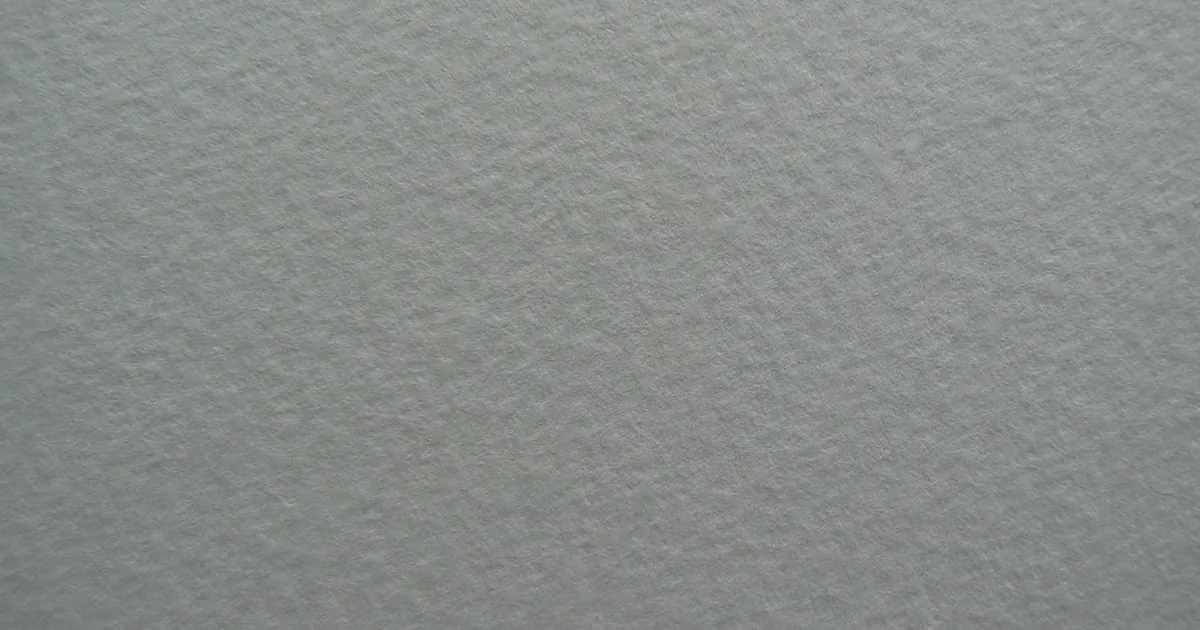
Photo: cannam, Flickr, CC BY 2.0
Hot press vs cold press watercolor paper is a difference in surface. The smooth sheet and the textured one can come from the same mill, the same cotton and the same sizing. What changes is how the surface was finished: woollen felts press texture into the sheet, and heated rollers flatten it again. Knowing that tells you what each surface will do under a brush, and also what it won't do, because how fast a sheet drinks water is decided by its sizing.
The comparison below covers the three standard surfaces, hot pressed, cold pressed and rough, using what two mills, Arches and St Cuthberts Mill, publish about how they make them.
In short: Hot press is smooth, cold press has a medium tooth, and rough has the deepest texture. St Cuthberts Mill makes the texture with woollen felts and smooths it with heated rollers called calender stacks, which gave hot pressed paper its name. Absorbency comes from sizing, not surface. Start on cold press, and move to hot press for detailed work.
Hot press vs cold press watercolor paper: which should you use? (quick answer)
Use cold press for most watercolor painting, because its medium texture holds pigment and forgives uneven washes. Use hot press for fine detail, botanical work and anything mixed with pen or pencil. Choose rough when you want granulation and broken texture in landscapes.
Key Takeaways
- Hot press, cold press and rough are surface finishes. A mill such as Arches sells its 300 gsm (140 lb) Aquarelle sheets in all three.
- St Cuthberts Mill creates texture with woollen felts and smooths it with heated rollers called calender stacks.
- NOT, CP and cold pressed are three names for the same medium surface.
- Absorbency is set by sizing. St Cuthberts Mill makes Millford deliberately less absorbent than Saunders Waterford.
- Recommendation: learn on cold press, then buy hot press for detail and rough for texture.
Overview
Every watercolor paper has a surface finish, and most artist papers come in three. Arches lists its Aquarelle paper in "3 textures: cold pressed, hot pressed and rough," in weights of 185, 300, 356, 640 and 850 gsm. St Cuthberts Mill sells Saunders Waterford in HP, CP (NOT) and Rough. Both papers are 100% cotton and made on a cylinder mould machine.
The names come from old papermaking. Hot pressed sheets were smoothed under heat. NOT is a British label that simply means "not hot pressed," and St Cuthberts Mill calls it "a rather confusing expression" for what Americans call cold press. Rough is the sheet left closest to its felt texture.
Arches is careful not to rank them. Its product page says "texture is a matter of personal choice for the artist," which is fair: each surface helps some kinds of painting and works against others.
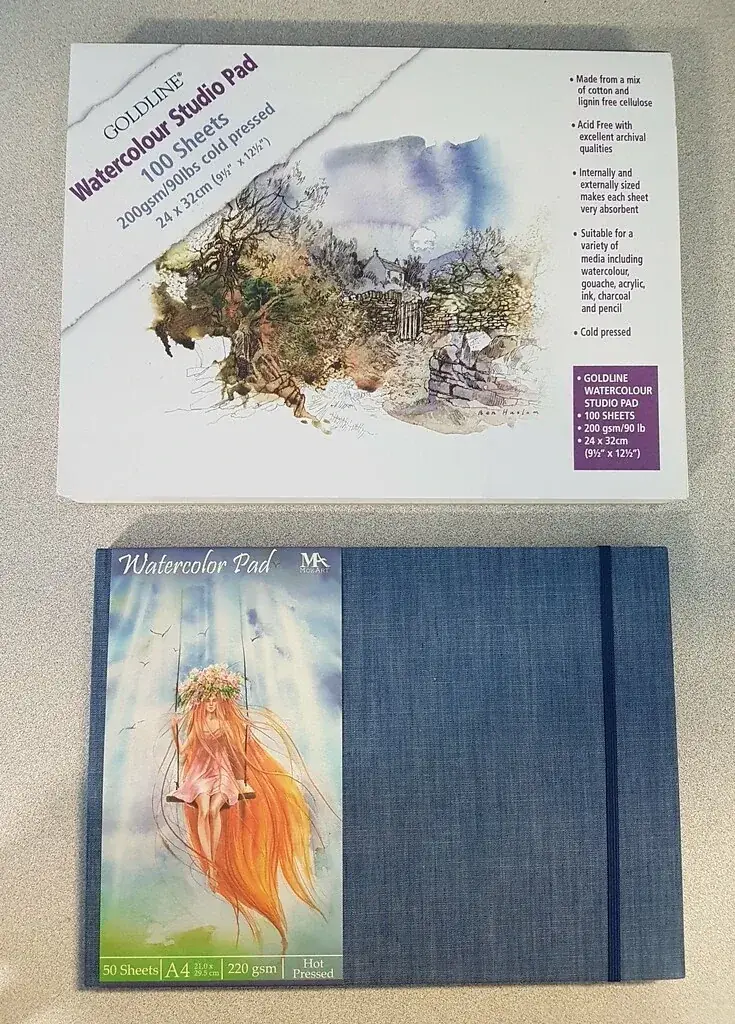 Two student pads with the surface printed on the cover: 200 gsm cold pressed above, 220 gsm hot pressed below. Neither is a mould-made cotton paper, but the labels read the same way on artist sheets. Photo: CharmaineZoe's Marvelous Melange, Flickr, CC BY 2.0.
Hot Press vs Cold Press Watercolor Paper: How the Surface Is Made
Mills press texture into the paper with woollen felts and remove it with heated rollers. St Cuthberts Mill explains both steps in its own advice article, and the second step is where hot pressed paper gets its name.
At St Cuthberts Mill, the surface texture comes from felts made of sheep's wool, pressed into the wet sheet. The mill chooses wool because the texture it leaves is random, with no repeating pattern to catch the eye. The felts wear out, the mill says, "sometimes in a matter of weeks," so the papermakers keep adjusting the pressure to keep each batch the same.
Smoothing is done with calender stacks, which the mill describes as "the heated rollers, where the 'hot pressed' papers take their name." The calender isn't reserved for hot press, which surprised me. The mill also uses the heated rollers to take texture out of its other surfaces when a batch comes off the felts too rough. So cold press and hot press sit on one scale: more felt texture left in, or more of it ironed out.
The sheet also has two sides. The top is the felt side, which met the woollen felts. The underside is the mould side, which lay on the wire mesh of the cylinder mould and can show a faint square pattern. St Cuthberts Mill treats the felt side as the better painting side and packs it uppermost, but says both sides of its watercolor papers can be painted.
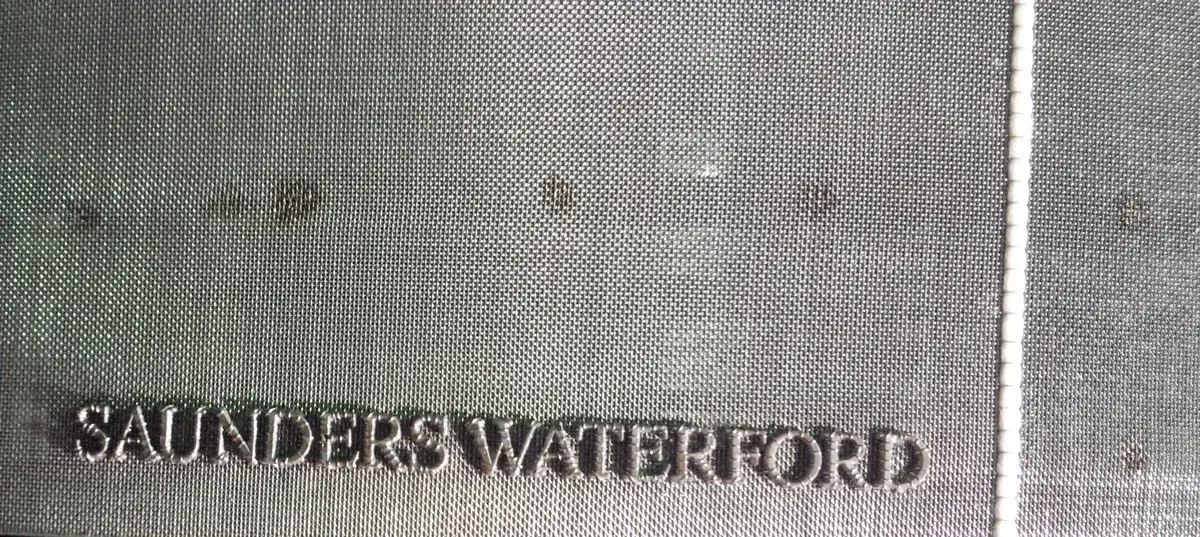 The wire cover of the cylinder mould St Cuthberts Mill uses for Saunders Waterford. The raised letters form the watermark, and this mesh is the side of the sheet the mill calls the mould side. Photo: St Cuthberts Mill, Wikimedia Commons, CC BY-SA 4.0.
GODEEPER: Surface is only one of three things to check on a watercolor paper. Fiber and weight matter as much, and the paper guide explains both. Best Watercolor Paper for Beginners: Why 100% Cotton Matters →
Hot Press vs Cold Press Watercolor Paper: Painting Analysis
Cold press holds pigment in its texture and softens mistakes. Hot press keeps paint on a smooth surface, so every edge and brush mark shows, and that decides which paintings each sheet suits.
On cold press, St Cuthberts Mill describes "lots of lovely peaks and troughs for the pigment to sit," with a surface that "isn't too overpowering for finer work." Paint settles into the low points of the texture. A wash that went down unevenly looks less patchy because the texture breaks up the variation, and granulating pigments such as ultramarine collect in the dips and show their grain.
Hot press shows far more of what the brush did. St Cuthberts Mill says its HP surface still has "a very fine 'tooth'," so it is not "glassy smooth like a Bristol surface," but the tooth is slight. Hard edges stay crisp, fine lines stay fine, and the mill notes the surface is "favoured by botanical artists, detailed work." The same quality works against beginners laying their first flat washes, because streaks and backruns stay visible.
Rough takes the opposite direction. The mill calls it the most textured surface, with "deep valleys and peaks to aid lots of lovely granulation," chosen "for landscapes, seascapes, and bold expressive work." A dry brush dragged across rough paper hits only the peaks, leaving broken strokes that read as sparkle on water or texture on bark.
Pen, ink and pencil favor the smooth sheet. A nib skips over the peaks of rough paper, while hot press gives a continuous line.
 A small landscape painted on rough paper. The texture shows through every pale wash in the sky, which is what rough paper does to flat color. Painting and photo: CharmaineZoe's Marvelous Melange, Flickr, CC BY 2.0.
Does the Surface Change How Fast Paper Absorbs Water?
Mostly no. A paper's absorbency comes from its sizing, which the mill sets separately from the surface. Many comparison articles say hot press dries faster or slower than cold press. They don't agree on which, and the mill's own explanation points somewhere else.
St Cuthberts Mill says it controls absorbency with an internal sizing agent added to the pulp, activated as the sheet passes over heated drying cylinders. It makes Saunders Waterford and Bockingford to what it calls a standard "1-1 sizing." Millford, by contrast, "is deliberately made to be less absorbent," and "stays in its wettest stage for longer." Those are three papers from one mill with the same three surface options and different absorbency.
So if hot press seems to dry differently from cold press, part of what you're seeing is probably how the paint sits: on a smooth sheet the water spreads across the surface instead of pooling in texture, and that changes how edges form. The rate the paper drinks the water depends on the sizing, and that varies by brand and product line.
You can test it yourself. The mill suggests leaving a drop of water on the sheet and watching how long it stays on the surface before soaking in. The shorter the time, the more absorbent the paper.
GODEEPER: How long a sheet stays wet decides how far a wet-on-wet stroke spreads. The wet-on-wet guide covers the wetness stages to watch for. Wet-on-Wet Watercolor Technique: Complete Beginner Walkthrough →
Side-by-Side Summary
- Surface: Hot press: smooth, very fine tooth / Cold press: medium texture / Rough: deepest texture
- Other names: Hot press: HP / Cold press: CP, NOT / Rough: rough
- How it is finished: Hot press: texture removed with heated calender rollers / Cold press: felt texture partly kept / Rough: most felt texture kept
- Edges and brush marks: Hot press: crisp and visible / Cold press: softened by texture / Rough: broken, textured
- Granulation: Hot press: least visible / Cold press: visible / Rough: most visible
- Best for: Hot press: botanical, detail, pen and wash / Cold press: general painting, learning / Rough: landscapes, expressive work
- Absorbency: set by the paper's sizing, not by the surface
Who Should Use Which Surface
Use cold press if you are learning, painting landscapes and still lifes, or want one paper that handles most techniques. It's the surface St Cuthberts Mill calls the most popular of the three, and it forgives the uneven washes everyone makes at first.
Use hot press if you paint botanical studies, detailed illustration, or combine watercolor with ink or graphite. Expect every edge to show, which is the point for detailed work and a frustration for loose washes.
Use rough if you want texture to do some of the work: granulating skies, dry-brush water, broken light on stone. It is harder to paint fine detail on, so pair it with subjects that don't need it.
For a first purchase in the hot press vs cold press watercolor paper choice, buy cold press. Add a small block of hot press once you know you want sharper edges, rather than buying it first and fighting the surface while you learn washes.
Frequently Asked Questions
What is the difference between hot press and cold press watercolor paper? Hot press paper is smooth and cold press has a medium texture. Mills such as St Cuthberts Mill make the texture by pressing woollen felts into the sheet, and smooth it with heated rollers called calender stacks, which is where the name hot pressed comes from.
Is hot press or cold press better for beginners? Cold press is the usual starting point. St Cuthberts Mill calls it the most popular of the three surfaces: its texture holds pigment and softens edges, while hot press shows every brush mark and hard edge, which suits detailed botanical work more than early wash practice.
What does NOT mean on watercolor paper? NOT is the British name for cold pressed paper. It is an old papermaking term meaning not hot pressed, according to St Cuthberts Mill. A sheet labeled NOT, CP or cold pressed has the same medium texture, between smooth hot press and heavily textured rough.
Does hot press paper absorb water faster than cold press? Not because of its surface. St Cuthberts Mill says a paper's absorbency is set by its sizing, which the mill adjusts for each paper. Its Millford paper is made deliberately less absorbent than Saunders Waterford. Compare papers by their sizing, not only by HP or CP on the label.
Is hot press watercolor paper completely smooth? No. St Cuthberts Mill describes its hot pressed surface as having a very fine tooth, so it is not glassy smooth like a Bristol board. That slight texture is why hot press still takes watercolor washes, while a truly glassy surface would let the paint bead and slide.
Related Reading
- Watercolor for Beginners: Essential Supplies and Buying Guide: where paper fits in a first kit, alongside paint and brushes.
- Best Watercolor Brushes for Beginners: 3 Shapes to Buy: the brushes that carry a wash across any of these surfaces.
- Watercolor Pans vs Tubes: What to Buy First, Priced per ml: the paint format that suits large washes on cold press or rough.
References
- St Cuthberts Mill: Watercolour Paper Surfaces - Woollen felts, calender stacks and the three surfaces.
- St Cuthberts Mill: Absorbency in Paper - Sizing levels for Saunders Waterford, Bockingford and Millford, and the water-drop test.
- St Cuthberts Mill: Can I Paint on Both Sides? - Felt side and mould side of a mould-made sheet.
- St Cuthberts Mill: Glossary - Definitions of NOT, calendered paper and tooth.
- Arches: Arches Aquarelle - Textures, weights, cylinder-mould making and gelatin sizing.

Written by
Elena VancePigments & Color Editor
Elena Vance writes Watercolor Daily's pigment and color coverage: Colour Index codes, lightfastness ratings, transparency, and palette building.
NextKeep reading

Features / 12 min
Best Watercolor Sketchbooks: 4 With 100% Cotton Paper

Guides / 12 min
Rough Watercolor Paper: Granulation, Dry Brush and 6 Steps
Features / 12 min
Watercolor Paper Weight GSM: 190 vs 300 vs 640 Explained
Guides / 9 min
Best Watercolor Paper for Beginners: Why 100% Cotton Matters
Guides / 11 min
How to Stretch Watercolor Paper: 3 Methods by Weight
Features / 11 min
Watercolor Block vs Pad vs Sheets: Cost per Square Inch
Features / 10 min
Synthetic vs Kolinsky Sable Brushes: What You Pay For
Features / 12 min
Ceramic vs Plastic Watercolor Palette: 5 Differences
Disclaimer
This article is published for informational purposes and is not professional advice. Product formulations, pigment sources, packaging and store listings change. Check the details that matter to you (price, pigment content, regional availability) with the manufacturer or retailer before you buy.